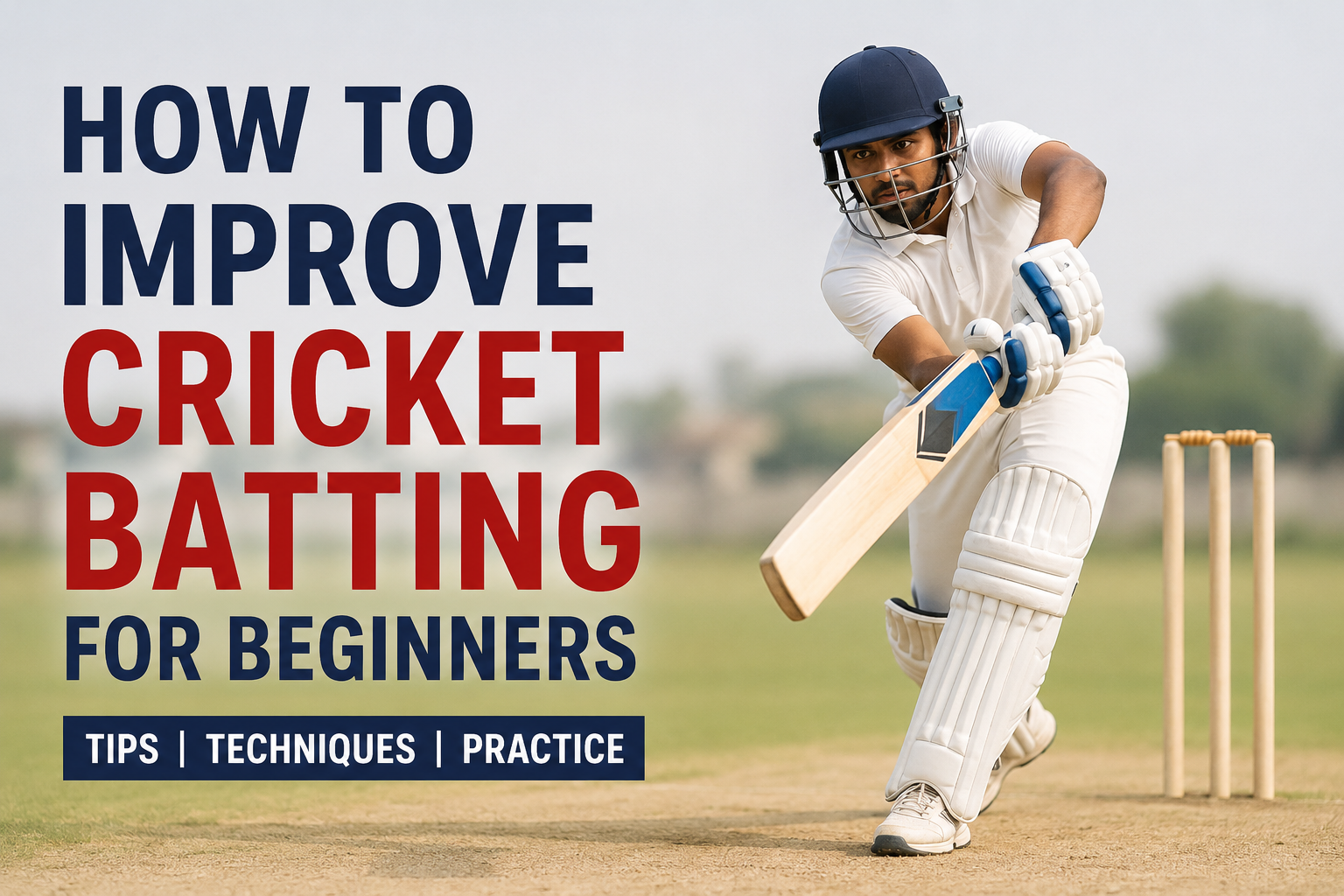
Cricket batting looks simple when we watch experienced players, but when I started thinking about batting from a beginner’s point of view, I realized that there are many small things that make a big difference. A good cricket batsman is not only someone who can hit the ball hard. Good batting is about balance, timing, concentration, footwork, shot selection, and regular practice.
If you are a beginner and want to improve cricket batting, you do not need to learn everything at once. I believe the best approach is to build your basic technique first and then slowly develop more advanced skills. With consistent practice, even a player who struggles to make runs can become a confident batsman.
Understand the Basic Batting Stance
The first thing I would recommend to any beginner is learning a comfortable batting stance. Your stance is the foundation of your batting technique. If your body position is uncomfortable, it becomes difficult to play different types of cricket shots.
Stand with your feet approximately shoulder width apart. Keep your knees slightly bent and distribute your weight comfortably between both feet. Your head should remain steady, and your eyes should be focused toward the bowler.
The cricket bat should be held comfortably with both hands. Avoid gripping the bat too tightly because a relaxed grip helps you control the bat better.
I have found that beginners often focus too much on holding the bat perfectly while forgetting about balance. A comfortable and balanced stance is more important than trying to copy another player’s exact position.
Improve Your Bat Grip
A proper cricket bat grip can make your batting much easier. Hold the bat with both hands while keeping your grip relaxed. Your hands should work together rather than fighting against each other.
If you grip the bat too tightly, your arms can become stiff. This can reduce your ability to time the ball. A relaxed grip allows the bat to move naturally and helps you play both defensive and attacking shots.
Spend some time practicing your grip before facing actual deliveries. Pick up the bat, take your stance, and practice moving the bat toward different areas. This simple exercise can improve your confidence.
Keep Your Eyes on the Ball
One of the most important cricket batting tips for beginners is to watch the ball carefully.
Many new players decide which shot they want to play before the ball reaches them. This can create problems because the delivery may move, bounce differently, or arrive at a different length than expected.
I believe the safest habit is to watch the ball from the bowler’s hand until it reaches the bat. Your eyes should follow the ball as closely as possible.
When you consistently watch the ball, your reaction time can improve. You also become better at judging whether a delivery is short, full, straight, or outside the off stump.
Work on Your Footwork
Good footwork is one of the biggest differences between a beginner and an experienced batsman.
You should learn how to move your feet toward the ball instead of reaching for every delivery with your hands. For a full delivery, you may need to move your front foot forward. For a shorter delivery, you may need to move backward and create enough space.
Start with simple drills. Ask a partner to throw balls toward different areas and practice moving your feet before playing the shot.
You do not need complicated footwork when you are starting. The main goal is to develop the habit of moving into a good position.
Learn Defensive Batting
Some beginners think that good batting means hitting boundaries. In my opinion, learning to defend the ball is just as important as learning to attack.
A defensive shot helps you survive difficult deliveries and gives you time to understand the conditions. When the ball is moving or the bowler is accurate, a solid defense can protect your wicket.
Practice your forward defense and back foot defense regularly. Focus on keeping your head over the ball and presenting the full face of the bat.
A good defensive technique also builds confidence. Once you know that you can protect your wicket, you can become more comfortable playing attacking shots.
Improve Your Straight Drive
The straight drive is one of the most useful cricket shots for beginners to practice. It teaches you about timing, balance, and bat control.
When playing a straight drive, move your front foot toward the ball and keep your head steady. Bring the bat down in a controlled movement and try to hit the ball along the ground.
Do not focus only on power. Timing is much more important.
I would rather see a beginner hit a beautifully timed shot along the ground than swing the bat as hard as possible and lose balance.
Practice the Front Foot Shot
Front foot batting becomes important when the bowler delivers a full or good length ball that can be played safely from the front foot.
Practice moving forward with confidence. Your front foot should move toward the line of the ball while your head stays balanced.
Start with slow bowling or throwdowns. Once you become comfortable, increase the pace gradually.
This method allows you to develop technique without becoming afraid of fast deliveries.
Develop Your Back Foot Technique
Beginners should also learn how to play back foot shots. When a delivery is shorter, moving backward can give you more time and space.
Practice getting onto your back foot while keeping your eyes on the ball. Depending on the delivery, you can work on the back foot defense, square cut, or pull shot.
Do not try to master every back foot shot immediately. Start with control and balance before worrying about hitting the ball hard.
Practice Shot Selection
Shot selection is an important part of becoming a better batsman.
A beginner may try to hit almost every ball. This usually creates unnecessary mistakes. Instead, learn to understand which balls should be attacked and which balls should be respected.
For example, a well pitched ball in your scoring area may offer an opportunity to score. A delivery far outside off stump may be better left alone, depending on the situation.
Good batsmen do not play every ball. They choose their shots carefully.
This is one area where watching quality cricket can help. Pay attention to how experienced players leave difficult deliveries and wait for balls they can score from.
Build Hand Eye Coordination
Hand eye coordination is essential for cricket batting. You can improve it through simple exercises even when you do not have access to a cricket ground.
Try catching a tennis ball with one hand. You can also ask a partner to throw a tennis ball toward you from different angles.
Another useful exercise is to bounce a tennis ball against a wall and practice catching it. These activities can improve your reactions and coordination.
Better coordination can help you connect the bat with the ball more consistently.
Practice With a Tennis Ball
Tennis ball cricket can be an excellent way for beginners to improve batting skills.
A tennis ball is easier to manage than a hard cricket ball, especially when you are learning basic technique. You can practice timing, footwork, defensive shots, and attacking strokes without putting too much pressure on yourself.
Try different types of practice. Ask someone to throw the ball at different lengths and directions. Your goal should be to react naturally rather than predicting every delivery.
Once your basic technique improves, you can gradually move toward regular cricket practice.
Use a Bowling Machine or Throwdowns
If you have access to a bowling machine, it can be very useful for batting practice. You can repeat similar deliveries and focus on one specific shot.
For beginners, however, throwdowns from a coach or experienced player can also be extremely effective.
Start with slower deliveries. Work on your stance, head position, foot movement, and timing. As your confidence improves, increase the pace.
Repetition is important because batting technique develops through practice.
Improve Your Batting Against Fast Bowling
Facing fast bowling can feel difficult when you are new to cricket. The key is not to panic.
Watch the bowler carefully and stay balanced. Avoid closing your eyes or turning your head away from the ball.
Practice against gradually increasing speeds. Begin with a tennis ball or slower bowling and move toward faster deliveries as your confidence grows.
Remember that you do not have to attack every fast ball. Learning to defend and leave difficult deliveries is an important part of batting.
Improve Your Batting Against Spin
Spin bowling requires patience and good footwork.
Watch the ball carefully and try to read the delivery from the bowler’s hand. Depending on the length, you may move forward or backward.
Against spin, using your feet can help you reach the pitch of the ball, but beginners should first learn to control their movement.
Practice defending spin bowling before attempting aggressive shots. Once you become comfortable reading the bowler, you can gradually add scoring options.
Build Your Physical Fitness
Batting is not only about technique. Fitness can also improve your performance.
Work on basic exercises such as running, squats, lunges, planks, and light strength training. These exercises can improve your balance, movement, and stamina.
You do not need an extreme fitness program. Consistency is more important.
Even twenty to thirty minutes of regular physical activity can help you feel more comfortable during long batting sessions.
Work on Your Concentration
Mental strength is another important part of cricket batting.
Sometimes you may get out after playing a good shot. Other times you may score runs even after making technical mistakes. Cricket can be unpredictable.
I believe beginners should focus on the next ball instead of worrying about the previous one.
If you get out, think about what happened and learn from it. Then move forward. If you hit a boundary, enjoy it but remain focused on the next delivery.
This mindset can help you become a more consistent batsman.
Create a Regular Batting Practice Routine
Improvement becomes easier when you have a simple routine.
You could spend the first few minutes practicing your stance and bat movement. Then work on defensive shots, followed by straight drives and other basic strokes.
After that, practice different lengths of deliveries. Finish with a short match simulation where you focus on shot selection and concentration.
You do not need to practice for several hours every day. Regular focused practice is usually more useful than occasional long sessions.
Record Your Progress
One useful habit is to keep track of your batting progress.
Write down how many runs you score, which shots you struggle with, and what types of deliveries get you out.
If possible, record some of your practice sessions on a phone. Watching yourself bat can reveal problems that you may not notice while playing.
You might discover that your head is falling over, your feet are not moving, or you are playing shots too early.
Small corrections can make a major difference over time.
Common Mistakes Beginners Should Avoid
There are several common mistakes that can slow down cricket batting improvement.
One mistake is trying to hit every ball for a boundary. Another is gripping the bat too tightly. Some beginners also move their head away from the ball or use their hands instead of moving their feet.
Trying advanced shots too early can also create problems.
My advice is to focus on basic technique first. Once your foundation becomes strong, advanced shots will become easier to learn.
Final Thoughts
Learning how to improve cricket batting for beginners is mainly about patience, practice, and consistency. You do not need to become a perfect batsman overnight.
Start with a comfortable stance, proper grip, good balance, and strong concentration. Then gradually work on footwork, defensive batting, straight drives, back foot shots, shot selection, and timing.
The most important thing is to enjoy the process. Every practice session gives you an opportunity to learn something new.
In my opinion, the best beginner batsman is not the player who tries to hit the biggest shots. It is the player who watches the ball carefully, makes good decisions, stays balanced, and keeps practicing even after making mistakes.
With regular practice and the right mindset, your cricket batting can improve significantly. Focus on one skill at a time, measure your progress, and give yourself enough time to develop confidence at the crease.