Fielding is one of the most important parts of cricket, but it is often the skill that beginners practice the least. From my point of view, good fielding can change the entire result of a cricket match. A player who can stop boundaries, take simple catches, throw accurately, and move quickly around the field can give the team a big advantage.
The good thing is that you do not need expensive equipment or advanced training facilities to improve your fielding. With some basic cricket fielding drills, regular practice, and the right technique, beginners can develop strong fielding skills.
In this article, I will share some of the best cricket fielding drills for beginners that I believe are simple, practical, and useful for players at different skill levels.
Why Fielding Practice Is Important in Cricket
When I think about fielding, I do not consider it only about catching the ball. Good fielding includes quick movement, balance, throwing, stopping the ball, catching, and understanding where you need to be before the ball is played.
A strong fielder can save runs that may eventually decide a match. Sometimes one good stop near the boundary can be as valuable as scoring several runs with the bat.
For beginners, regular fielding practice also improves confidence. Once you become comfortable moving toward the ball and using your hands correctly, you naturally become more confident during matches.
1. Basic Ground Ball Fielding Drill
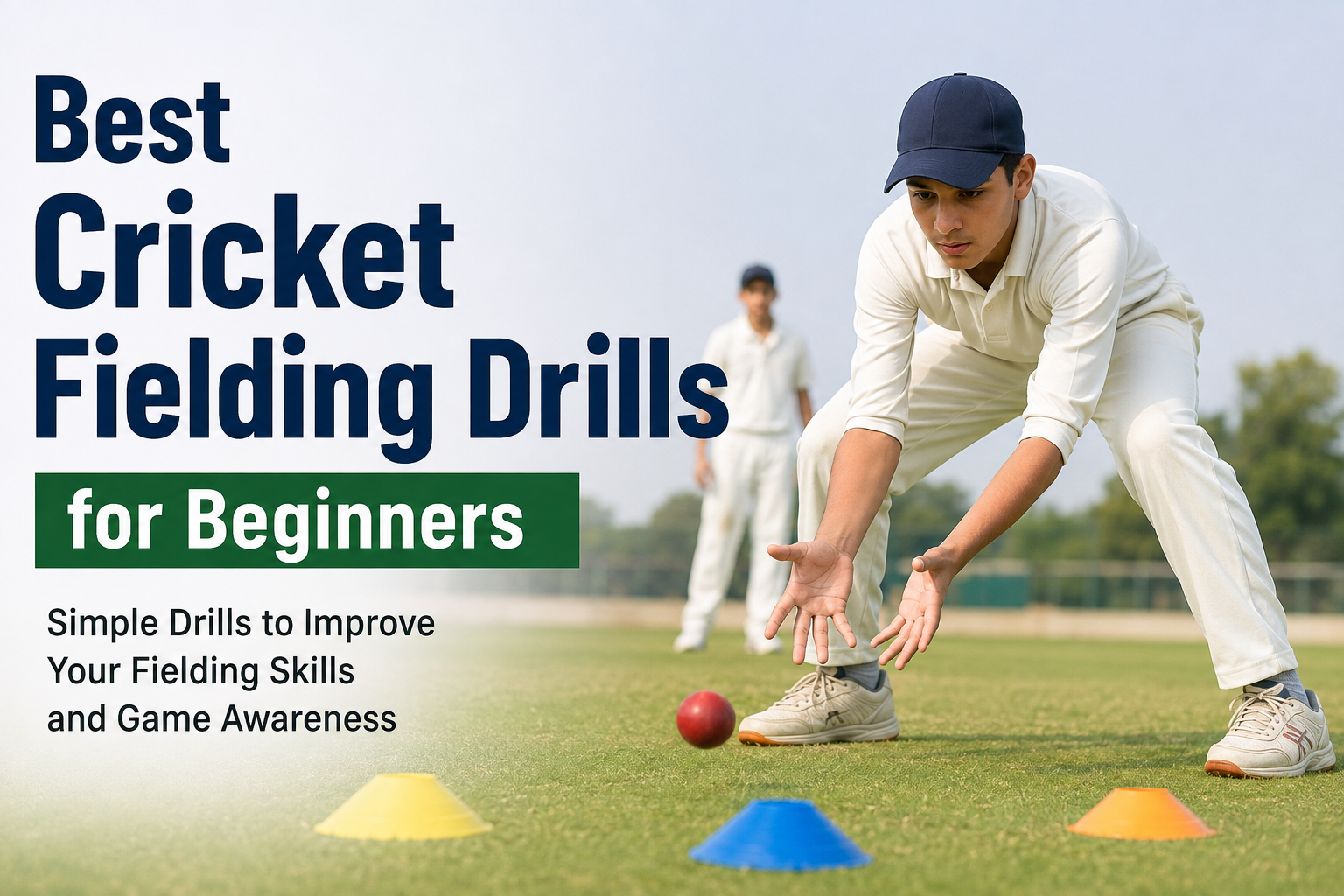
The ground ball fielding drill is one of the best cricket fielding drills for beginners because it teaches the basic technique of stopping the ball.
Ask a partner to roll the cricket ball slowly toward you. Start from a short distance and gradually increase the distance as your confidence improves.
Stand with your feet comfortably apart and keep your knees slightly bent. Move toward the ball instead of waiting for it to reach you. Keep your eyes on the ball and place your hands close to the ground.
I recommend practicing this drill with both hands and then progressing to one hand when you become comfortable.
The main goal is to develop soft hands and good body position.
2. Pick Up and Throw Drill
Stopping the ball is only the first part of fielding. After collecting it, you need to return it quickly and accurately.
For this drill, place a few balls on the ground at different positions. Move toward each ball, pick it up using the correct technique, and throw it toward a target.
Try to keep your throwing arm relaxed and focus on accuracy before power.
In my opinion, beginners often make the mistake of trying to throw as hard as possible. I believe accuracy should come first. Once your technique becomes natural, you can gradually increase throwing speed.
This drill helps improve ground fielding, hand coordination, throwing accuracy, and movement.
3. Cone Movement Fielding Drill
Quick footwork is extremely important for a good fielder. You can improve it with a simple cone drill.
Place four or five cones in a small area. Start in the middle and move quickly toward each cone before returning to the starting position.
You can perform this drill forward, backward, and sideways. Keep your body balanced and avoid crossing your feet when moving sideways.
After practicing the movement without a ball, add a partner who rolls a ball toward different cones. You then move quickly, collect the ball, and return it.
This is a simple way to combine footwork with actual fielding skills.
4. One Hand Fielding Drill
One hand fielding is useful when the ball is moving quickly or is slightly away from your body.
Start with a soft ball if you are completely new to the drill. Ask a partner to roll the ball slowly toward your left or right side.
Move toward the ball and use the nearest hand to collect it. Keep your fingers relaxed and try to control the ball rather than hitting it away.
Once you become comfortable, increase the speed of the ball.
I recommend spending a few minutes on each side because many beginners naturally become better with their dominant hand. Practicing both sides helps create more balanced fielding ability.
5. Wall Throwing Drill
A wall can become a useful training partner when you are practicing alone.
Stand a few meters away from a solid wall and throw a cricket ball against it. As the ball comes back, collect it and throw again.
Start with simple chest height throws. Then throw the ball at different angles so that it returns to different positions.
This drill is excellent for improving hand eye coordination. It also helps beginners become comfortable catching the ball repeatedly.
If you are using a hard cricket ball, make sure the practice area is safe and that there are no people or valuable objects nearby.
6. High Catching Drill
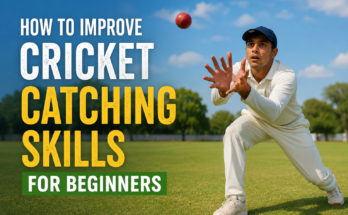
Catching is one of the most important cricket fielding skills. Beginners should practice high catches regularly.
A partner can throw the ball high into the air. Move underneath the ball and keep your eyes on it until it reaches your hands.
Try to position your body before attempting the catch. Your hands should form a comfortable catching position, and you should absorb the ball rather than letting your hands become stiff.
Start with easy catches and slowly increase the height and difficulty.
One thing I always believe is that beginners should not be embarrassed about practicing simple catches. Repetition is what builds reliable catching skills.
7. Reaction Catch Drill
Reaction catches can help improve your speed and concentration.
Stand a short distance from your partner. Ask them to throw or bounce the ball unexpectedly toward your left or right side.
Your goal is to react quickly and catch the ball.
You can make this drill more challenging by reducing the distance between you and your partner or using a smaller ball.
This cricket fielding drill is especially useful because it teaches you to react instead of predicting exactly where the ball will go.
8. Direct Hit Throwing Drill
A direct hit can create a run out opportunity in cricket, so throwing accuracy is extremely valuable.
Place a stump or another safe target several meters away. Start with a stationary ball. Pick it up, turn toward the target, and try to hit it with a controlled throw.
Once you become comfortable, ask a partner to roll the ball toward you. Field it, quickly collect it, and throw at the target.
Focus on a smooth movement from fielding the ball to releasing it.
Speed matters, but accuracy should remain your main goal.
9. Boundary Fielding Drill
Boundary fielding requires control, speed, and awareness.
Place cones a few meters inside the boundary. Ask a partner to hit or roll balls toward the boundary. Your job is to reach the ball before it crosses the line, stop it, and return it quickly.
Practice approaching the ball under control. Do not simply run at full speed without thinking about your body position.
This drill can help beginners understand how important it is to save runs in cricket.
10. Sprint and Field Drill
Fielders often need to sprint before stopping or catching the ball. A simple sprint and field drill can prepare your body for this situation.
Set two cones several meters apart. Sprint from one cone to the other, immediately receive a rolled ball, field it, and make a throw.
Rest briefly and repeat.
This drill combines fitness with cricket fielding practice. It can improve your acceleration, coordination, and ability to perform skills while tired.
How Often Should Beginners Practice Fielding?
From my experience, beginners do not need extremely long fielding sessions to see improvement. Consistency is more important.
You can start with three or four fielding sessions each week. Even 20 to 30 minutes of focused practice can be useful if you perform the drills correctly.
A simple session can include ground fielding, catching, throwing, and footwork. As your skills improve, increase the speed and difficulty.
Always begin with a short warm up. Light jogging, movement exercises, and dynamic stretches can prepare your body for training.
Common Fielding Mistakes Beginners Should Avoid
One common mistake is standing too upright while waiting for the ball. A slightly lower position can help you react more quickly.
Another mistake is watching the target instead of watching the ball. Keep your eyes on the ball during the entire fielding process.
Many beginners also focus too much on throwing power. Accurate throwing is more useful than an uncontrolled powerful throw.
Poor footwork is another common problem. Try to move your feet into position rather than reaching for every ball with your hands.
Finally, do not stop practicing after making a mistake. Dropped catches and missed stops are part of learning. The important thing is to understand the mistake and try again.
Simple Weekly Cricket Fielding Routine
If you are a beginner, you can create a simple weekly routine.
Start with five minutes of warm up and movement exercises. Spend ten minutes practicing ground fielding. Follow this with ten minutes of catching practice. Then spend another ten minutes working on throwing accuracy.
You can finish with five minutes of reaction drills.
As your fitness and skills improve, you can increase the duration and difficulty of the session.
Final Thoughts
I believe fielding is one of the easiest cricket skills to improve when you practice consistently. You do not need complicated equipment or a professional cricket academy to begin.
The best cricket fielding drills for beginners are often the simplest ones. Ground ball fielding, catching, throwing, cone movement, reaction drills, and direct hit practice can build a strong foundation.
The most important thing is to focus on technique first and speed second. Practice regularly, keep your eyes on the ball, stay balanced, and learn from mistakes.
With consistent cricket fielding practice, beginners can become faster, more confident, and more reliable players. Good fielding may not always receive as much attention as batting or bowling, but in a close cricket match, one excellent fielding effort can make a huge difference.