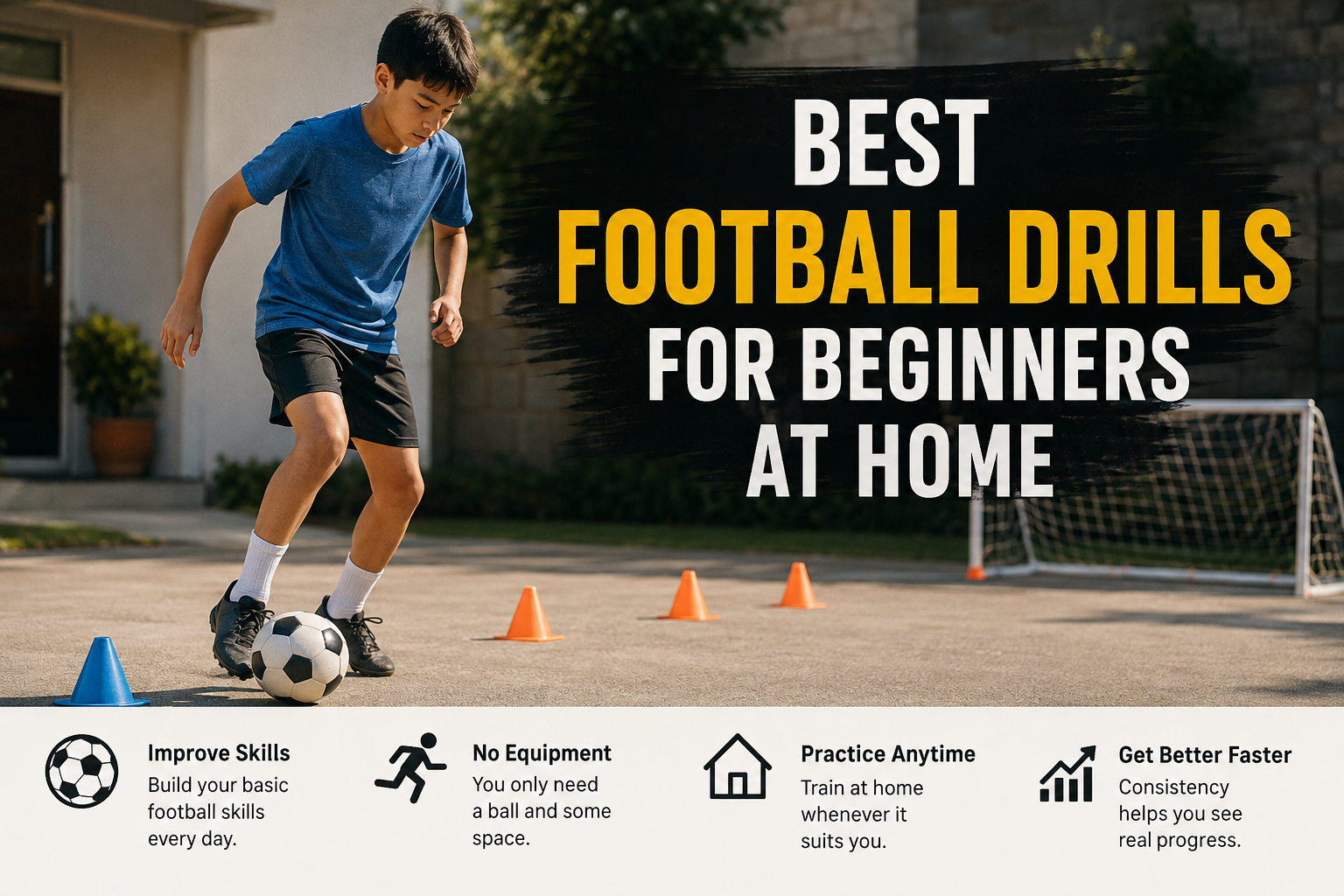
Learning football does not always require a professional ground, expensive equipment, or a personal coach. In my opinion, beginners can make a lot of progress by practicing simple football drills at home on a regular basis. The most important thing is consistency. Even 20 to 30 minutes of focused practice can help improve ball control, passing, dribbling, shooting, balance, and confidence.
If you are just starting football and want to improve your skills from home, there are several easy football drills that you can practice with very little space. You mainly need a football, comfortable shoes, and a safe area where you can move freely.
In this article, I will share some of the best football drills for beginners at home. These exercises are simple, practical, and suitable for players who want to build their basic football skills step by step.
Why Practice Football Drills at Home?
I believe home practice is useful because it gives beginners the freedom to practice without feeling pressured. When you are learning a new skill, making mistakes is completely normal. Practicing alone allows you to repeat the same movement until it becomes more comfortable.
Home football training can also help you develop better control over the ball. You do not need to spend hours practicing. Regular short sessions can be more useful than occasional long sessions.
Another advantage is convenience. You can practice before school, after work, or whenever you have free time. This makes it easier to develop a consistent football training routine.
1. Ball Taps
Ball taps are one of the easiest football drills for beginners. They help improve coordination, balance, and familiarity with the football.
Place the football in front of you. Touch the top of the ball with your right foot and then your left foot. Continue alternating your feet while keeping your body balanced.
Start slowly and concentrate on controlling your movements. As you become more comfortable, increase your speed.
I recommend starting with three sets of 30 seconds. Take a short rest between each set.
2. Inside Foot Touches
Inside foot touches are excellent for developing close ball control. This is one of the first skills I would recommend to anyone learning football at home.
Place the ball in front of you and gently move it from one side to the other using the inside of your feet. Keep the ball close to your body and try not to kick it too far away.
The goal is not to move quickly at first. Your main goal should be accurate touches.
Once you become comfortable, gradually increase your speed while maintaining control.
3. Toe Touches
Toe touches are another simple football drill that requires very little space.
Place the ball in front of you. Use your right foot to touch the top of the ball, then quickly switch to your left foot. Keep repeating the movement.
This drill can improve foot speed and coordination. It can also help beginners become more comfortable moving their feet around the ball.
Try doing toe touches for 20 to 30 seconds at a time. As your fitness improves, you can increase the duration.
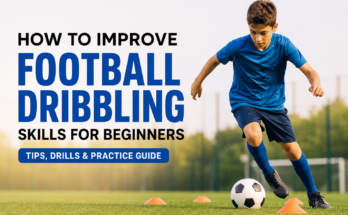
4. Dribbling Around Cones
You do not necessarily need professional training cones. You can use safe household objects such as plastic bottles or small markers if the area is suitable.
Place several markers in a straight line with enough space between them. Slowly dribble the football around each marker using both feet.
Try using the inside and outside of your feet. Keep your head up whenever possible instead of constantly looking at the ball.
This football dribbling drill is particularly useful because it teaches you how to change direction while keeping control.
5. Inside and Outside Foot Dribbling
This drill helps beginners develop better control with different parts of the foot.
Start by moving the ball forward using the inside of your foot. Then use the outside of the same foot to change direction. Continue alternating between the inside and outside.
Keep your touches small and controlled.
One mistake beginners often make is pushing the football too far ahead. I think it is better to take smaller touches because close control gives you more options when changing direction.
6. Wall Passing Drill
If you have a safe wall or suitable rebound surface, wall passing is one of the best football drills you can practice at home.
Stand a few steps away from the wall and pass the ball against it using the inside of your foot. When the ball comes back, control it and pass it again.
Start with your stronger foot. Once you feel comfortable, practice with your weaker foot.
This drill can improve passing accuracy, first touch, reaction time, and confidence.
Try completing 50 controlled passes with each foot. You do not have to do them all at once. Quality is more important than speed.
7. First Touch Practice
A good first touch is extremely important in football. It allows you to control the ball quickly and prepare for your next action.
You can practice first touch using a wall. Pass the ball toward the wall and allow it to return. Instead of immediately passing it back, take one controlled touch to the side.
For example, if the ball comes toward your right foot, guide it slightly to your right. Then make another pass.
Practice controlling the ball with both feet.
The more comfortable your first touch becomes, the easier passing and dribbling will feel.
8. Pull Back and Turn Drill
The pull back is a useful movement for changing direction.
Dribble forward slowly with the ball. Place the sole of your foot on top of the ball and gently pull it backward. Then turn your body and continue in the opposite direction.
Practice the movement slowly at first.
After you understand the technique, increase your speed.
This drill can help you become more confident when changing direction and protecting the football.
9. Weak Foot Training
One of the best things beginners can do is practice their weaker foot. Many new players rely almost entirely on their stronger foot, but developing both feet can make a huge difference.
Spend part of every training session using your weaker foot.
You can perform simple passes, ball touches, dribbling, and shooting movements with it.
At first, your weaker foot may feel uncomfortable. That is completely normal. With regular practice, your control should gradually improve.
I would rather spend ten focused minutes developing my weaker foot than always using the foot that already feels comfortable.
10. Simple Shooting Practice
If you have a safe outdoor space and a suitable goal, you can practice basic shooting. If you do not have a goal, focus on the technique without kicking the ball toward windows, vehicles, or other unsafe areas.
Place the ball in front of you and approach it under control. Keep your eyes on the ball, place your non kicking foot beside it, and strike through the center of the ball.
Beginners should focus on accuracy before power.
You can practice shooting with your stronger foot first and then gradually introduce your weaker foot.
11. Juggling the Football
Football juggling is a great way to improve touch and coordination.
Start by dropping the football onto your foot and gently kicking it upward. Try to keep it in the air for several touches.
Do not worry if the ball falls after one or two touches. Everyone starts somewhere.
You can begin with one touch, catch the ball, and repeat. Once you become more comfortable, try two touches, then three, and continue building from there.
Juggling can be frustrating in the beginning, but it can become one of the most enjoyable football exercises once your control improves.
12. Figure Eight Dribbling
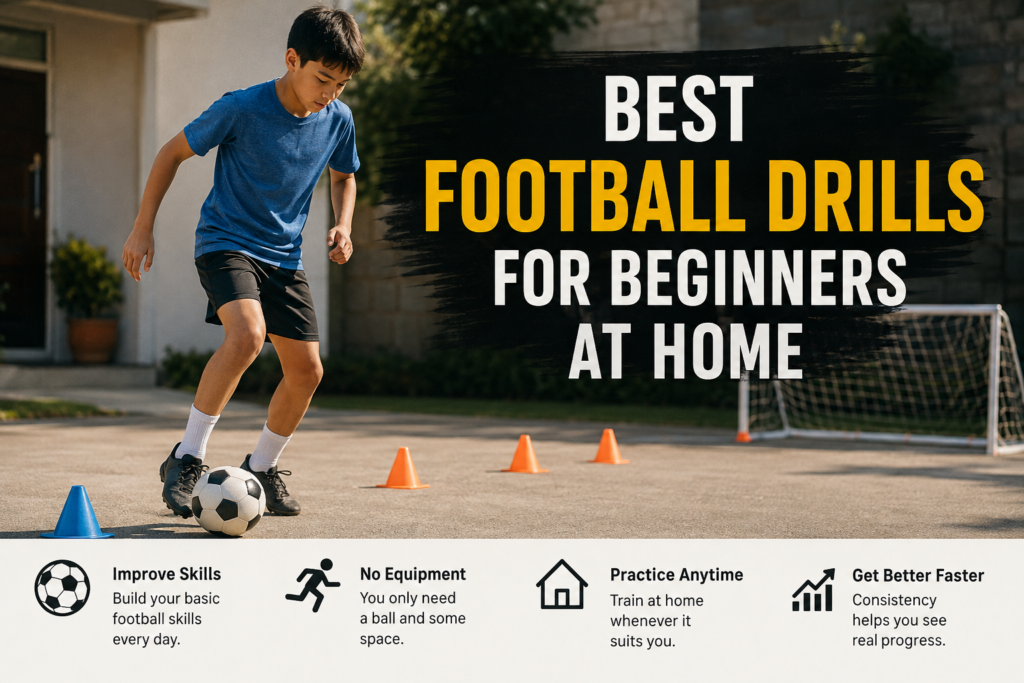
For this drill, place two safe markers a few steps apart. Dribble the ball around them in a figure eight pattern.
Use both feet and practice changing direction smoothly.
The goal is to keep the football close while moving around the markers.
This exercise can improve agility, ball control, and coordination. You can make the drill more challenging by reducing the distance between the markers or increasing your speed.
How Long Should Beginners Practice Football?
In my view, beginners do not need extremely long training sessions. A focused 20 to 30 minute session can be enough when you are starting.
A simple routine could include five minutes of warm up, five minutes of ball control, five minutes of dribbling, five minutes of passing, and five minutes of weak foot practice.
As your fitness and confidence improve, you can gradually increase your training time.
The key is consistency. Practicing for 25 minutes several times a week can be more useful than practicing for two hours once every few weeks.
Common Mistakes Beginners Should Avoid
One common mistake is trying to perform every drill at maximum speed. Speed is useful, but control should come first.
Another mistake is only practicing with the stronger foot. Football requires players to react quickly, so both feet should receive attention.
Beginners should also avoid training without warming up. A few minutes of light movement can prepare the body for exercise.
It is also important to practice in a safe area. Remove objects that could cause you to trip, and avoid kicking the football near glass, roads, or other dangerous areas.
Simple Home Football Training Routine
If you want a straightforward routine, you can start with ball taps for two minutes. Follow them with inside foot touches for three minutes.
Next, spend five minutes dribbling around markers. Practice wall passing for five minutes if you have a safe wall available.
After that, spend five minutes working on your weaker foot. Finish with a few minutes of juggling or controlled ball touches.
This routine does not require expensive equipment. What matters most is giving each exercise your full attention.
Final Thoughts
Learning football at home is possible for almost anyone with enough space, patience, and consistency. The best football drills for beginners are not necessarily complicated. Simple exercises such as ball taps, dribbling, passing, first touch practice, juggling, and weak foot training can help build a strong foundation.
From my point of view, beginners should focus on improving one skill at a time instead of trying to become perfect immediately. Football is a skill based sport, and improvement comes through repetition.
Start slowly, practice regularly, and keep challenging yourself as your skills improve. With consistent home football training, you can develop better ball control, confidence, coordination, and overall football ability without needing a professional training facility.
The most important thing is to enjoy the process. Pick up your football, find a safe space, and start practicing today.