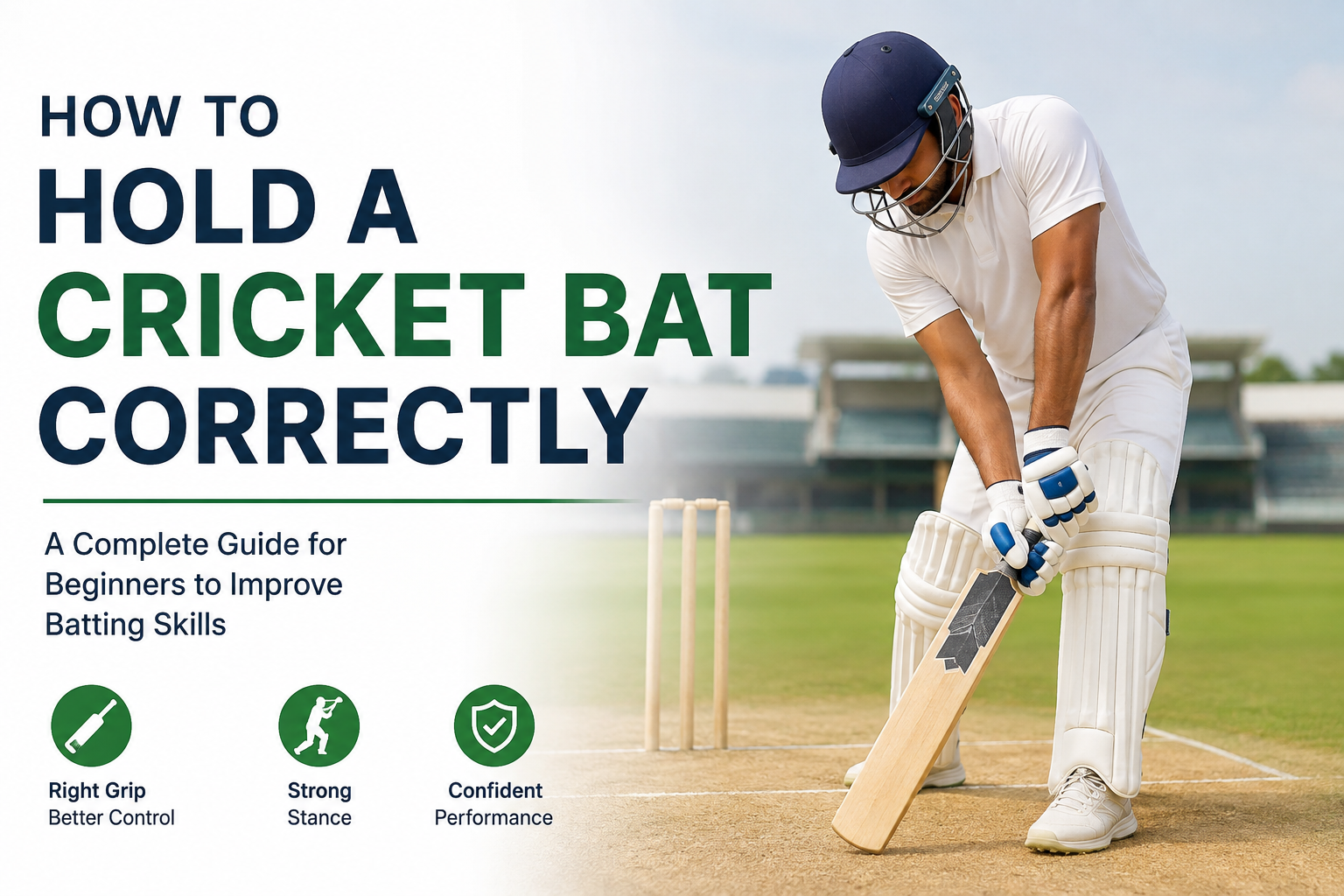
Learning how to hold a cricket bat correctly is one of the first things every beginner should focus on. A good batting technique starts with a comfortable and balanced grip. If the grip is wrong, it can affect your control, timing, shot selection, and even your confidence at the crease.
In my experience, many beginners focus too much on hitting the ball hard and forget that the way they hold the bat plays an important role in controlling every shot. A proper cricket bat grip allows the hands and wrists to work naturally while giving the batter enough control to defend, drive, cut, pull, and play attacking shots.
This guide explains how to hold a cricket bat correctly, where to place your hands, common grip mistakes, and some simple practice methods that can help improve your batting technique.
Why Is the Correct Cricket Bat Grip Important?
The correct cricket bat grip gives you better control over the bat. When your hands are positioned properly, you can move the bat smoothly and adjust your shots according to the delivery.
A good grip also helps with timing. Cricket is not only about strength. A well timed shot can travel quickly even when you are not using maximum power. When your grip is comfortable, you can allow the bat to move naturally through the ball.
Another important benefit is balance. Your hands should work together rather than fighting against each other. A tight or awkward grip can make your batting movement stiff and may make it harder to react to fast bowling.
For beginners, I believe the main goal should be control first and power later.
Which Hand Goes Where on a Cricket Bat?
For a right handed batter, the left hand is normally placed above the right hand on the handle. For a left handed batter, the right hand is placed above the left hand.
The upper hand is important because it provides much of the control during many basic batting movements. The lower hand helps with direction, power, and additional support.
Your hands should be close together rather than separated widely. Keeping them reasonably close allows both hands to work as one unit.
However, the exact position can feel slightly different depending on your batting style, comfort, and the type of shot you are playing.
How to Hold a Cricket Bat Correctly
Start by standing in a comfortable batting position. Place the bat in front of you and hold the handle naturally.
For a basic cricket bat grip, follow these steps.
First, place your upper hand around the handle. If you are right handed, this will normally be your left hand.
Next, place your lower hand below the upper hand. Do not leave a large gap between the two hands.
Your fingers should wrap around the handle comfortably. You do not need to squeeze the bat as hard as possible.
Keep the thumbs and fingers positioned naturally around the handle. The hands should feel relaxed enough that you can move your wrists freely.
Now lift the bat into your normal batting position. Check whether you can move the bat backward and forward without feeling tension in your wrists or forearms.
Finally, practice a few slow defensive movements. If the bat feels easy to control, your grip is probably close to what you need.
How Tight Should You Hold a Cricket Bat?
One of the biggest mistakes I see beginners make is holding the cricket bat too tightly.
A cricket bat grip should be firm enough to keep the bat secure but relaxed enough to allow movement. If you squeeze the handle extremely hard, your wrists and forearms can become tense.
This can affect timing and make your shots feel forced.
Think about holding the bat securely rather than crushing the handle with your hands. When the ball approaches, your grip can naturally become firmer as you make contact.
A relaxed grip is particularly useful for beginners because it encourages better bat speed and smoother movement.
The Role of the Top Hand
The top hand is extremely important in cricket batting.
For many basic shots, the top hand helps control the direction and movement of the bat. When playing a straight drive, for example, good top hand control can help keep the bat moving in the correct direction.
If your top hand becomes too dominant, however, your batting movement may become uncomfortable. The goal is to allow both hands to work together.
When practicing, pay attention to whether your upper hand feels stable without becoming overly tense.
The Role of the Bottom Hand
The bottom hand helps support the bat and can contribute to power and shot direction.
Many beginners rely too much on their bottom hand because it feels natural to use the stronger hand. This can result in shots that are controlled mainly by the lower hand instead of the whole body.
Using too much bottom hand can also make it difficult to play straight shots consistently.
I recommend practicing with the idea that the top hand provides control while the bottom hand supports the movement. As you become more experienced, you will naturally develop a grip that suits your individual batting style.
Finding the Correct Bat Grip Position
The position of your hands on the handle can influence how comfortable your batting feels.
Most beginners should start with both hands positioned close together around the middle area of the handle. From there, you can experiment slightly with hand position during practice.
The important thing is not to copy another player’s grip exactly. Professional players often have different techniques because their batting styles, physical characteristics, and preferences are different.
A beginner should focus on developing a grip that provides comfort, control, and consistency.
Common Cricket Bat Grip Mistakes
There are several common mistakes that beginners should try to avoid.
The first is gripping the bat too tightly. This creates unnecessary tension and can reduce natural bat movement.
The second is placing the hands too far apart. A large gap can make it harder for the hands to work together.
Another mistake is allowing the bottom hand to completely dominate the shot. This often causes beginners to swing the bat aggressively without proper control.
Some players also change their grip constantly while trying to copy different batting techniques. This can create confusion. It is better to develop a simple, comfortable grip and practice it regularly.
Finally, beginners sometimes focus only on their hands. Remember that batting involves your entire body. Your feet, head, shoulders, hips, arms, and wrists all contribute to good batting technique.
How to Practice Your Cricket Bat Grip
You do not always need a cricket ground to practice your grip.
One simple exercise is shadow batting. Hold your cricket bat correctly and practice moving from your batting stance into a defensive position and then back to your starting position.
Perform the movement slowly at first. Focus on keeping your hands comfortable and your bat under control.
You can also practice straight drives without a ball. Concentrate on moving the bat smoothly toward an imaginary target.
Another useful exercise is to hold the bat in your normal position for a few seconds, relax your hands, and repeat the process. This can help you become more aware of how much pressure you are putting on the handle.
Regular practice is more valuable than trying to change your grip every few days.
How Grip Affects Different Cricket Shots
Your grip can influence different cricket shots in different ways.
For defensive shots, a controlled and relaxed grip can help you keep the bat stable when meeting the ball.
For straight drives, good top hand control can help you keep the bat moving through a straight line.
For cuts and square shots, your wrists and hands need enough freedom to guide the bat across the ball.
For attacking shots, the bottom hand may become more involved, particularly when you are looking for additional power.
However, I would not recommend trying to create a completely different grip for every shot when you are still learning. First develop a reliable basic grip. Shot specific adjustments can come naturally with experience.
Cricket Bat Grip for Beginners
If you are a complete beginner, keep your approach simple.
Stand comfortably and hold the bat with your dominant batting hand below your upper hand. Keep both hands close together and avoid excessive pressure.
Practice your grip while standing in your batting stance. Then practice basic defensive movements and straight drives.
Do not worry about hitting the ball extremely hard at the beginning. Focus on making clean contact and keeping the bat under control.
Once your basic technique becomes comfortable, you can gradually work on more advanced shots.
Does the Cricket Bat Grip Affect Batting Power?
Yes, your grip can influence how effectively you use your batting power.
However, holding the bat tighter does not automatically make you hit the ball harder.
Power comes from a combination of timing, body movement, bat speed, technique, and strength. A relaxed grip can allow the bat to move more freely, which may help you generate better bat speed.
This is why I believe beginners should not think about power alone. Good control and timing can eventually produce more effective shots than simply swinging as hard as possible.
How to Know If Your Grip Is Correct
There is no single grip that is perfect for every player, but there are some useful signs.
Your grip should feel comfortable. You should be able to lift and lower the bat without unnecessary tension.
Your wrists should have reasonable freedom of movement. Your hands should work together instead of one hand constantly fighting the other.
You should also be able to play basic defensive shots and straight drives without feeling that the bat is difficult to control.
If your hands become tired very quickly or your forearms feel unnecessarily tense, check whether you are gripping the handle too tightly.
Final Thoughts
Learning how to hold a cricket bat correctly is a simple skill, but it can make a major difference to your batting development. A comfortable grip gives you a better foundation for learning proper batting technique and developing confidence at the crease.
In my opinion, beginners should focus on three things: keeping the hands comfortable, maintaining good control, and allowing both hands to work together.
Do not become obsessed with copying the exact grip of a professional player. Every batter is different. Start with the basic technique, practice regularly, and make small adjustments as your experience grows.
The best cricket bat grip is one that allows you to control the bat naturally, play your shots confidently, and maintain good balance throughout your batting movement.
With regular practice, the correct grip will eventually become automatic. Once that happens, you can put more attention into footwork, timing, shot selection, and other important parts of cricket batting.
Primary Keyword: How to Hold a Cricket Bat Correctly
Secondary Keywords: cricket bat grip, correct cricket bat grip, how to grip a cricket bat, cricket batting grip, cricket bat grip for beginners, proper cricket bat grip, batting technique for beginners