
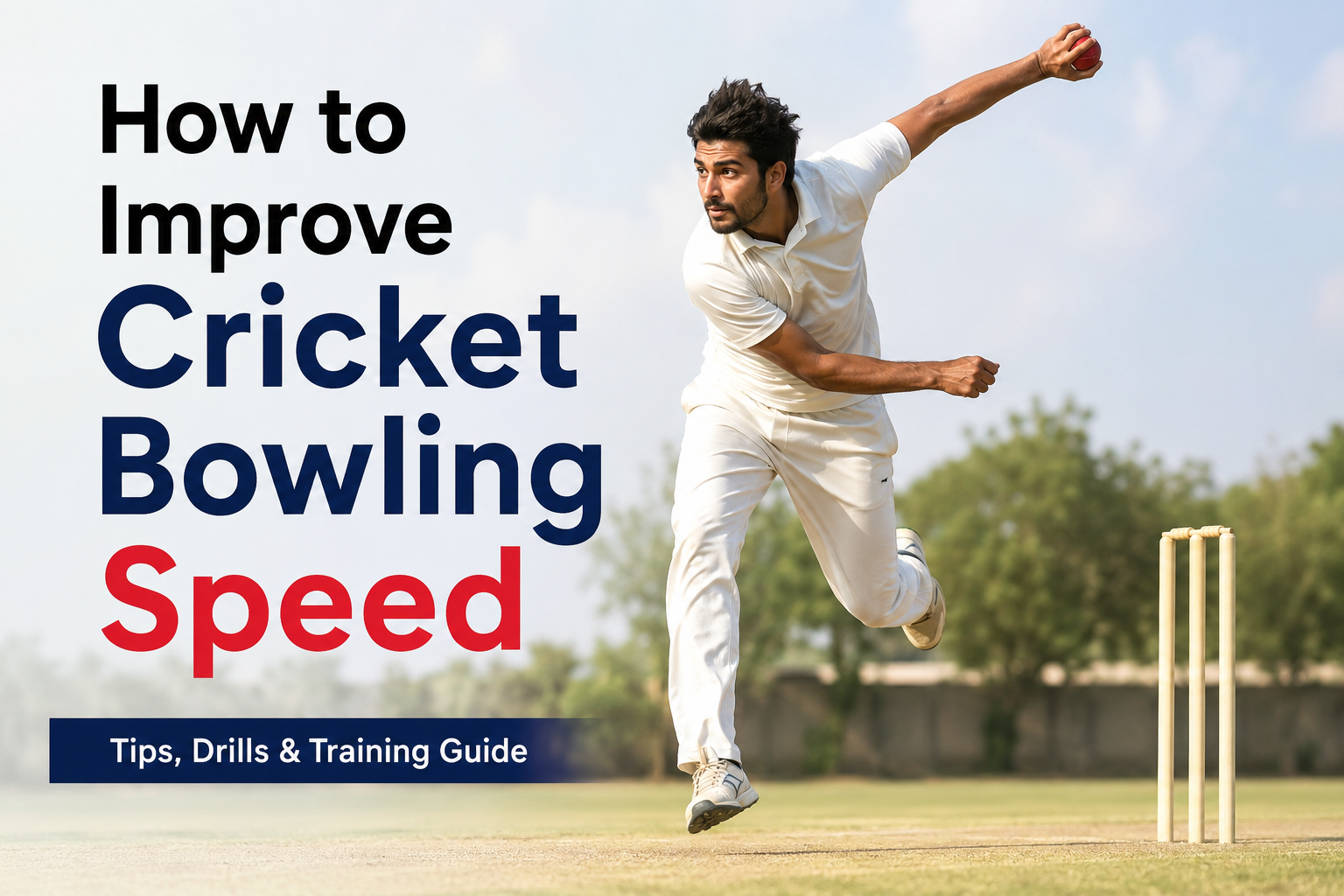
Cricket bowling speed is one of the most exciting parts of fast bowling. When a bowler delivers the ball with good pace, it becomes harder for the batter to react, especially when the ball is also accurate and moves in the air or off the pitch. In my view, increasing bowling speed is not only about trying to run faster or throwing the ball harder. It is a combination of proper technique, physical strength, flexibility, timing, fitness, and regular practice.
Many young cricketers want to know how to increase bowling speed quickly. The truth is that genuine improvement takes time. If you focus on the right areas and train consistently, you can gradually develop more pace without putting unnecessary stress on your body.
Understand Your Bowling Action
Before trying to bowl faster, I believe the first thing you should understand is your bowling action. A good bowling action allows your body to transfer energy efficiently from the run up to the ball.
Your run up should feel natural and controlled. You do not need to sprint at maximum speed before reaching the crease. The important thing is to build rhythm as you approach the delivery stride.
Your front arm, bowling arm, hips, shoulders, and legs should work together. If one part of your action is working against another, you may lose speed and consistency.
I would recommend recording yourself while bowling from the side and behind. Watching your action can help you notice unnecessary movements and technical problems. If possible, ask a qualified cricket coach to review your technique.
Improve Your Run Up
The run up is an important part of fast bowling. It creates momentum that can be transferred into the delivery.
A common mistake I see among beginners is changing their running rhythm immediately before the crease. This can make the delivery uncomfortable and reduce control.
Try to develop a consistent run up. Mark your starting point and practice reaching the crease with the same rhythm each time.
You should feel progressively more powerful as you move toward the crease, but you should still remain balanced. A controlled run up is usually more useful than simply trying to run as fast as possible.
Work on Your Bowling Technique
Technique has a major effect on cricket bowling speed. Your body should move in a coordinated sequence rather than relying only on your bowling shoulder.
The front arm can help create rotation and balance. Your hips and shoulders contribute to the movement, while your legs help generate force through the crease.
Your front leg also needs to provide a stable base during delivery. If you collapse at the front leg, some of the energy you created during the run up may be lost.
This is why I would focus on clean technique before adding extra effort. Once your action becomes efficient, increasing pace can become much easier.
Build Strong Legs
Fast bowling requires strong legs. Every delivery involves running, jumping, landing, and pushing through the crease.
Exercises such as squats, lunges, step ups, and controlled single leg exercises can help develop lower body strength. Strong legs can also help you maintain your bowling action when you become tired.
However, strength training should be appropriate for your age and experience. Young players should learn proper exercise technique and work with a qualified coach or trainer when possible.
You do not need to lift extremely heavy weights to become a faster bowler. Good movement quality and consistent training are more important.
Strengthen Your Core
A strong core helps your body remain stable during the bowling action. Your core includes the muscles around your abdomen, hips, and lower back.
I find exercises such as planks, side planks, dead bugs, and controlled rotational exercises useful for general cricket fitness.
The goal is not simply to build visible abdominal muscles. The goal is to create better control while running, jumping, rotating, and delivering the ball.
A stable core can help you transfer force more efficiently from your lower body through your upper body.
Improve Shoulder Strength
The bowling shoulder experiences repeated stress, so shoulder conditioning is important for fast bowlers.
Instead of only doing exercises that make the shoulder stronger, I would also focus on shoulder stability and mobility. Resistance band exercises, controlled external rotations, and other cricket specific movements can be useful when performed correctly.
Never ignore shoulder pain. Training through pain can turn a small problem into a serious injury.
If you experience persistent pain, swelling, weakness, or discomfort while bowling, stop and seek advice from a qualified medical professional.
Develop Explosive Power
Bowling speed is strongly connected with your ability to produce force quickly. This is where explosive training can become useful.
Depending on your age and training level, exercises such as medicine ball throws, jumps, and other controlled power movements may help develop explosiveness.
The important point is quality. You should perform these exercises with proper technique instead of doing large numbers of repetitions while becoming tired.
A good strength and conditioning coach can help you choose exercises that match your experience and physical development.
Practice Your Front Arm
Your front arm plays an important role in a fast bowling action. It helps with balance and contributes to the rotation of the body.
During practice, pay attention to how your front arm moves as you approach the delivery. A controlled front arm action can help you maintain better body positioning.
Do not try to force the movement without understanding the technique. Bowling is a coordinated action, and every part of the body needs to work together.
Improve Wrist Position
Your wrist position can affect both pace and control. A strong and stable wrist can help you release the ball effectively.
When practicing, concentrate on keeping your wrist controlled through release. You can also practice different bowling drills with a coach to understand how your wrist position affects seam movement and accuracy.
Remember that bowling speed is not the only goal. A slightly slower ball that is accurate and difficult to hit can be much more effective than a very fast delivery that goes down the leg side or becomes a full toss.
Use Short Bowling Drills
You do not always need to bowl long spells when working on speed. Short, focused bowling drills can help you concentrate on technique and intensity.
For example, you might bowl a small set of deliveries while focusing specifically on your run up. Then you can take a break and work on another part of your action.
Quality practice is usually better than simply bowling hundreds of deliveries without a clear purpose.
As your fitness improves, you can gradually increase your workload. Avoid suddenly increasing the number of deliveries you bowl in a training session.
Improve Your Sprinting Ability
Fast bowlers need good running ability. Sprint training can help develop acceleration and athletic power.
Short sprint sessions can be more relevant to cricket than simply running long distances every day. You can practice short bursts with sufficient recovery between efforts.
However, sprinting also places stress on the muscles and joints. Warm up properly before sprinting and increase your workload gradually.
Your goal should be to become a better athlete, not simply to complete the largest number of sprints.
Focus on Flexibility and Mobility
Flexibility is another important part of fast bowling. Your hips, ankles, shoulders, and upper body need enough mobility to move through the bowling action comfortably.
A simple mobility routine before training can prepare your body for movement. After training, gentle recovery work can help you maintain flexibility.
Do not force stretches aggressively. Controlled movement is more important than trying to become extremely flexible.
Improve Your Bowling Fitness
A fast bowler needs to maintain pace throughout a spell. Bowling one very fast delivery is different from repeatedly bowling fast deliveries with good accuracy.
This is why cricket specific fitness is important.
You can combine strength training, sprinting, mobility work, conditioning, and bowling practice throughout your weekly routine. Give your body enough recovery between demanding sessions.
Good fitness can help you maintain your bowling action when fatigue begins to appear.
Get Enough Rest
One mistake I would strongly recommend avoiding is believing that more training always means faster improvement.
Your body becomes stronger and adapts during recovery. If you continuously bowl at maximum intensity without enough rest, your performance can decline and your injury risk may increase.
Sleep is also important. Try to maintain a regular sleep routine, especially when you are training frequently.
Rest days are not wasted days. They are part of your training plan.
Eat for Performance
Nutrition also matters when trying to improve cricket bowling speed. Your body needs enough energy to train, recover, and build strength.
A balanced diet can include carbohydrates for energy, protein for muscle recovery, healthy fats, fruits, vegetables, and enough fluids.
Water should be an important part of your daily routine, especially during hot weather and cricket training.
You do not need complicated supplements to become a faster bowler. Focus first on a balanced diet and consistent training habits.
Avoid Trying to Increase Speed Too Quickly
If you are serious about becoming a fast bowler, patience is important.
Trying to add a large amount of speed in a short period can cause technical problems and physical stress. Your muscles, joints, and bowling action need time to adapt.
I believe it is better to improve gradually while maintaining accuracy than to chase speed at the expense of control.
Keep track of your progress. You can record your bowling speed when reliable equipment is available, but also monitor accuracy, consistency, fitness, and how comfortable your body feels.
Common Mistakes to Avoid
There are several mistakes that can prevent bowlers from improving.
One mistake is trying to bowl every delivery at maximum effort. Another is ignoring technique and focusing only on strength.
Some bowlers also copy the actions of professional players without considering their own body type, experience, and physical ability.
Another common mistake is ignoring recovery. If your body is constantly tired, your bowling technique can suffer.
Finally, do not compare your progress too closely with another player. Every bowler develops at a different rate.
Final Thoughts
Learning how to improve cricket bowling speed requires patience, smart training, and consistent practice. In my opinion, the best approach is to build a strong foundation first. Work on your run up, bowling action, leg strength, core stability, shoulder conditioning, explosive power, fitness, mobility, and recovery.
Most importantly, do not forget accuracy. A fast bowler who can consistently hit a good line and length is far more valuable than someone who only focuses on the speedometer.
If you train intelligently and give your body enough time to adapt, you can gradually develop more pace and become a more complete cricket bowler. Speed is not created by one magic exercise. It comes from many small improvements working together over time.
For me, the biggest lesson is simple: bowl with purpose, train consistently, recover properly, and focus on becoming a better athlete as well as a better bowler.