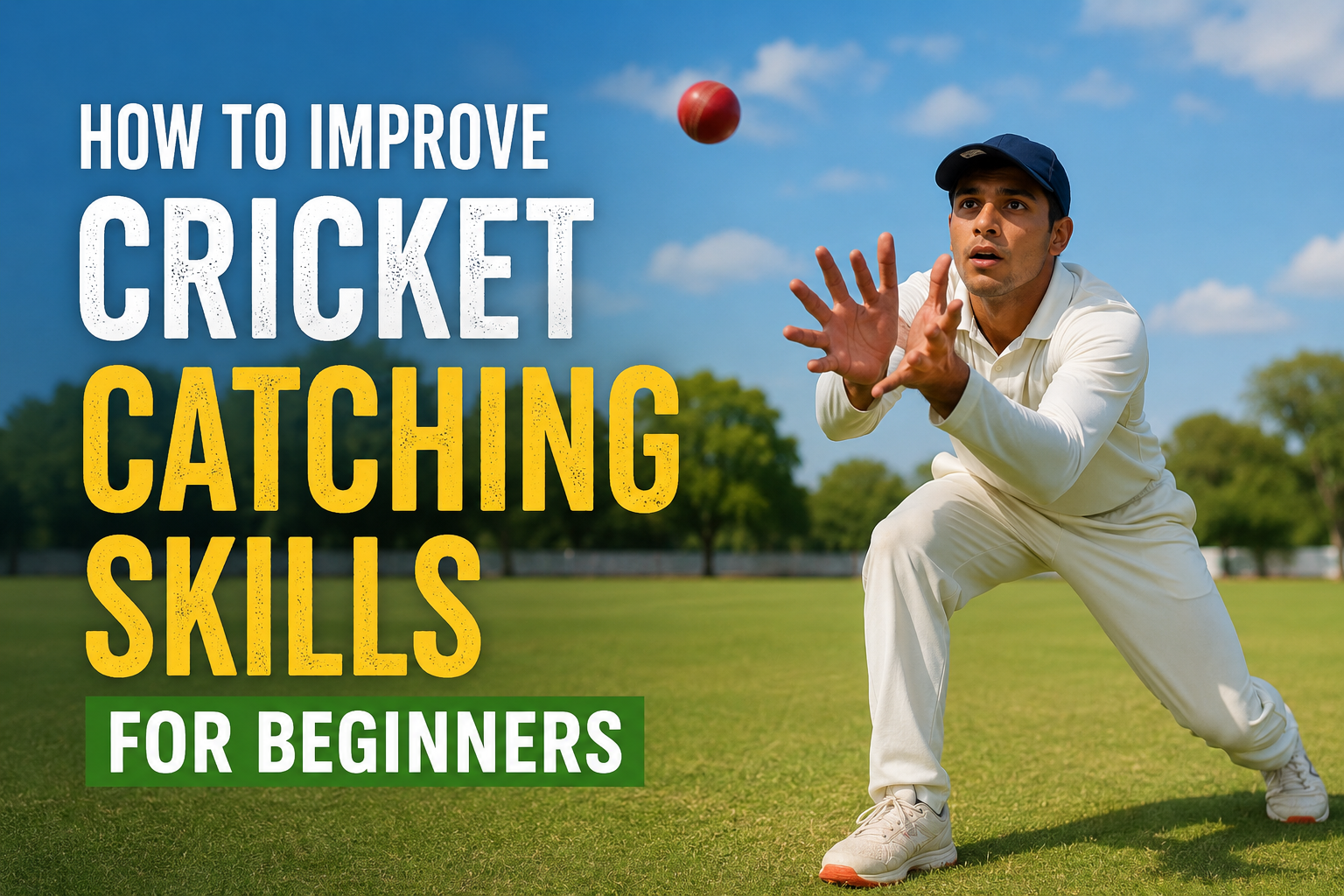
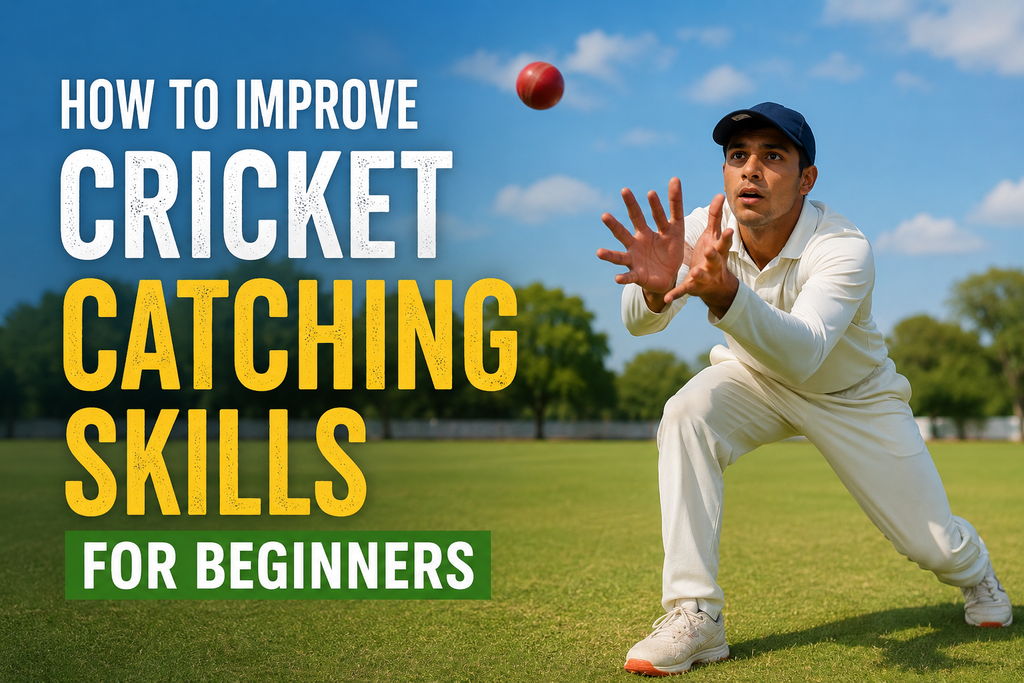
Catching is one of the most important skills in cricket, but it is also one of the skills that beginners often struggle with. A good catch can completely change the direction of a match. Whether you are playing in the slips, standing in the outfield, or simply practicing with friends, learning how to catch a cricket ball properly can make you a much more confident player.
In my opinion, catching is not only about having quick hands. It is about watching the ball carefully, getting your body into the right position, keeping your eyes focused, and practicing the same movements again and again. The good thing is that anyone can improve cricket catching skills with regular practice.
Why Cricket Catching Skills Are Important
A strong cricket team needs reliable fielders. Even if a player is an excellent batsman or bowler, dropping easy catches can put unnecessary pressure on the whole team.
When I think about good fielding, catching is one of the first skills that comes to mind. A simple catch can dismiss a dangerous batsman and give your team an important advantage.
For beginners, catching also helps develop hand eye coordination, balance, concentration, and reaction speed. These abilities become useful in almost every area of cricket.
Start With the Correct Catching Position
Before trying difficult catches, I recommend learning the basic catching position. Your feet should be around shoulder width apart, and your knees should be slightly bent. Keep your body relaxed instead of standing stiffly.
Your weight should be balanced on the front part of your feet so that you can move quickly in any direction. Keep your hands ready in front of your body and keep your eyes on the ball.
This basic position gives you a better chance of reacting when the ball suddenly changes direction.
Keep Your Eyes on the Ball
One of the biggest mistakes beginners make is looking away from the ball too early. When the ball is coming toward you, try to watch it from the moment it leaves the bowler or another player’s hand until it reaches your hands.
This sounds simple, but it takes practice.
When I practice catching, I try to focus on the ball instead of thinking about whether I will catch it. This helps reduce nervousness and allows my hands to react naturally.
Keeping your eyes on the ball is especially important when catching high balls. The ball can move in the air because of wind, spin, or other conditions, so watching it carefully helps you judge its path.
Learn to Use Soft Hands
A common beginner mistake is trying to stop the ball with stiff hands. If the ball is traveling quickly, hard hands can cause it to bounce out.
Instead, try to keep your hands relaxed. As the ball reaches your hands, allow them to move slightly backward with the ball. This helps reduce the impact.
Think of your hands as cushions rather than a wall. The softer your hands are, the easier it can be to control the ball.
This technique becomes particularly useful when practicing with a harder cricket ball.
Practice With Simple Catches First
You do not need to start with difficult catches. In fact, I believe beginners should begin with simple catches and gradually increase the difficulty.
Ask a partner to stand a few meters away and throw the ball gently toward your chest. Practice catching it with both hands.
Once you become comfortable, your partner can throw the ball slightly to your left and right. After that, you can practice higher catches and faster throws.
The goal is to build confidence while developing correct technique.
Practice High Catches
High catches are common in cricket, especially when batsmen hit the ball toward the outfield. They can look easy, but judging the ball in the air can be challenging for beginners.
When the ball goes high, move underneath it instead of reaching for it from a difficult position. Keep watching the ball and try to position your body so that the ball comes toward the front of you.
Keep your hands ready and avoid closing your eyes. Once the ball reaches your hands, absorb its impact by slightly moving your hands backward.
With regular practice, high catches become much easier.
Improve Your Hand Eye Coordination
Hand eye coordination plays a major role in cricket catching skills. The better your eyes and hands work together, the easier it becomes to judge the ball.
One simple exercise is to use a tennis ball. Ask someone to throw it gently from different angles and heights. Try catching it with both hands.
You can also bounce the ball against a wall and catch it after the rebound. Start slowly and increase the speed as your confidence improves.
These exercises are simple, but they can make a noticeable difference when performed regularly.
Practice One Hand Catches
One hand catching is not always necessary, but it is an excellent skill for fielders. Sometimes a ball is too far away for both hands to reach it.
Start by using a soft tennis ball. Have someone throw the ball slightly away from your body so you need to reach with one hand.
Do not begin with very fast throws. Focus on controlling the ball first.
As your catching ability improves, increase the distance and speed gradually.
Improve Your Reaction Speed
Reaction speed is another important part of catching. A fielder may have only a short amount of time to react to a powerful shot.
You can improve your reaction speed with simple drills. One useful exercise is the close range throw. Ask a partner to stand a short distance away and throw the ball unexpectedly toward different parts of your body.
Stay in a ready position and react naturally.
Another useful exercise is the wall rebound drill. Throw a tennis ball against a wall and try to catch it quickly after it changes direction.
These exercises can make your reactions faster while also improving coordination.
Learn to Move Your Feet
Good catching is not only about your hands. Your feet are equally important.
If the ball is slightly away from you, try to move your feet toward it instead of stretching your arms as far as possible. Getting your body behind the ball gives you better control.
When practicing, work on small movements to the left and right. Then practice moving forward and backward before catching.
Good footwork can turn a difficult catch into a simple one.
Practice Low Catches
Not every catch comes at chest height. Cricket players often need to take low catches close to the ground.
For a low catch, bend your knees and lower your body rather than simply bending your back. Keep your eyes on the ball and place your hands close to the ground.
Practice with a tennis ball first. Have your partner roll or throw the ball gently toward you.
As you become more comfortable, increase the speed.
Avoid Being Afraid of the Ball
Many beginners are nervous when catching a cricket ball, especially when it comes quickly toward their face or body. This fear can cause hesitation.
The best way to overcome this is controlled practice.
Start with slow throws and gradually increase the speed. Always use proper protective equipment when practicing harder or faster catches.
Confidence develops through repetition. The more successful catches you make, the more comfortable you will become.
Practice With Different Types of Throws
Real cricket matches are unpredictable, so practicing only one type of catch is not enough.
Try different situations during practice. Work on catches above your head, chest height, waist height, low catches, catches to both sides, and catches while moving.
You can also practice catches after running a short distance. This helps you prepare for situations where you need to chase the ball before taking the catch.
The goal is to make your catching technique adaptable.
Build a Regular Catching Routine
You do not need to spend hours practicing. A short and consistent routine can be more useful.
For example, you could spend ten minutes practicing easy catches, ten minutes on high catches, and another ten minutes working on reaction drills.
If you practice three or four times a week, you can gradually see improvements in your confidence and technique.
Consistency matters more than doing a huge number of catches once and then stopping for several weeks.
Learn From Your Mistakes
Dropping catches is part of learning cricket. Even experienced players make mistakes.
Instead of becoming frustrated, try to understand why the catch was dropped. Did you take your eyes off the ball? Were your hands too hard? Was your body in the wrong position? Did you move too late?
When you identify the reason, you can work on that specific weakness.
I believe this is one of the best ways to improve cricket catching skills because every mistake can teach you something useful.
Stay Relaxed During a Match
Practice and matches can feel very different. During a match, you may feel pressure because everyone is watching.
Try to stay calm and focus on the ball rather than thinking about the consequences of dropping it.
Take your normal fielding position and stay ready. When the ball comes toward you, concentrate on the process rather than the result.
Confidence comes from preparation. If you have practiced properly, trust your technique.
Final Thoughts
Learning how to improve cricket catching skills for beginners does not require expensive equipment or complicated training. The most important things are regular practice, good body position, soft hands, strong concentration, and confidence.
Start with simple catches and slowly increase the difficulty. Practice high catches, low catches, one hand catches, reaction drills, and catches while moving. Use a tennis ball when learning new techniques and progress to a cricket ball as your confidence improves.
From my point of view, the biggest secret to becoming a better catcher is consistency. You will probably drop catches when you first start practicing, and that is completely normal. Keep working on your technique and learn from every mistake.
With patience and regular practice, your hands will become more confident, your reactions will improve, and you will become a much more dependable fielder. Good catching is a skill that grows with practice, and every beginner can improve it.