Basketball dribbling is one of the first skills I believe every player should learn properly. A player can have good shooting, passing, and athletic ability, but if ball handling is weak, it becomes difficult to create space, attack the basket, or stay confident under pressure. In my experience, improving basketball dribbling skills is not about learning hundreds of fancy moves. It is about building control, coordination, confidence, and the ability to use simple moves at the right moment.
The good thing is that you do not need expensive equipment to improve. With a basketball, a small amount of space, and regular practice, you can become a much better ball handler. The key is to practice consistently and focus on quality instead of simply trying to dribble as fast as possible.
Start With the Correct Dribbling Position
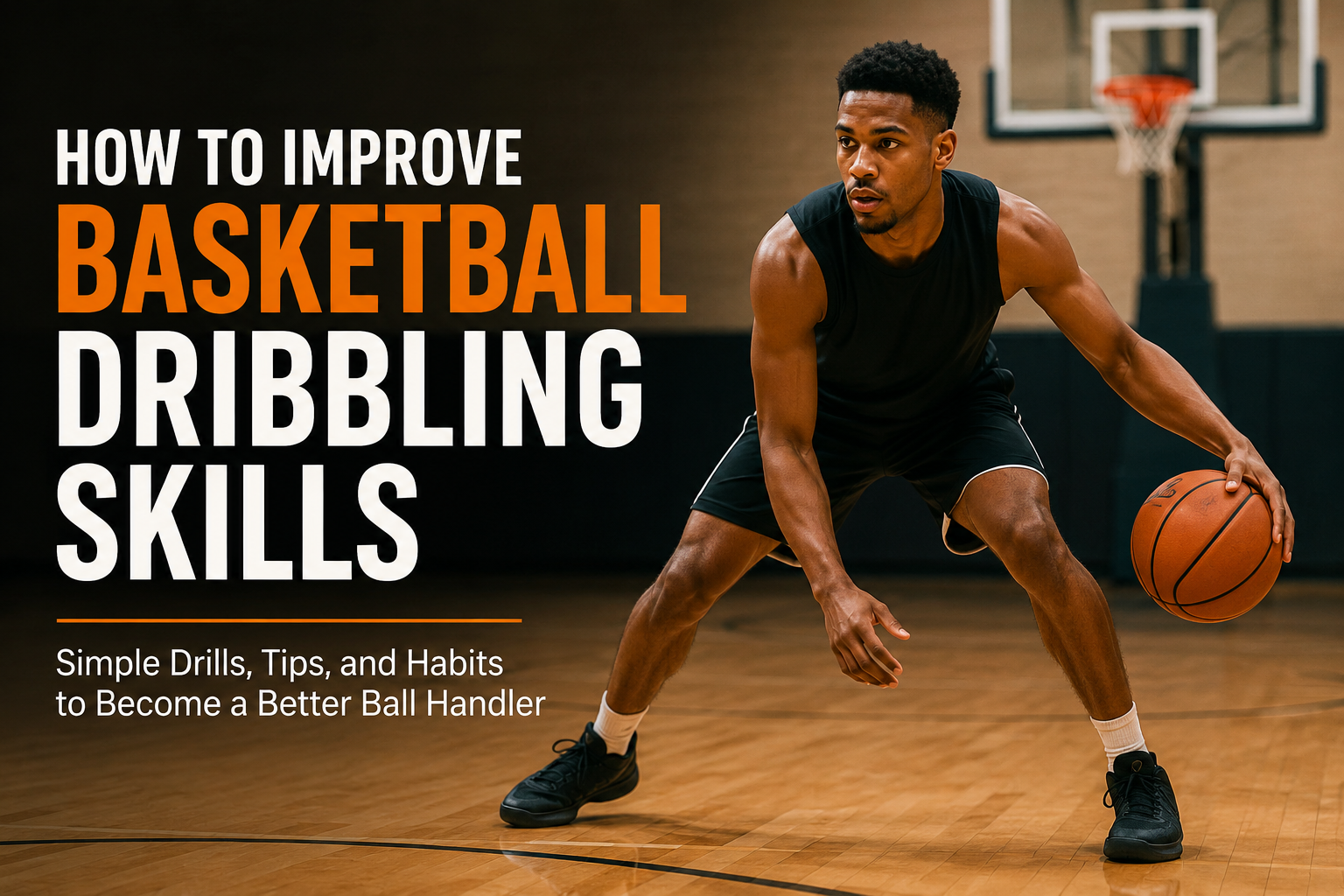
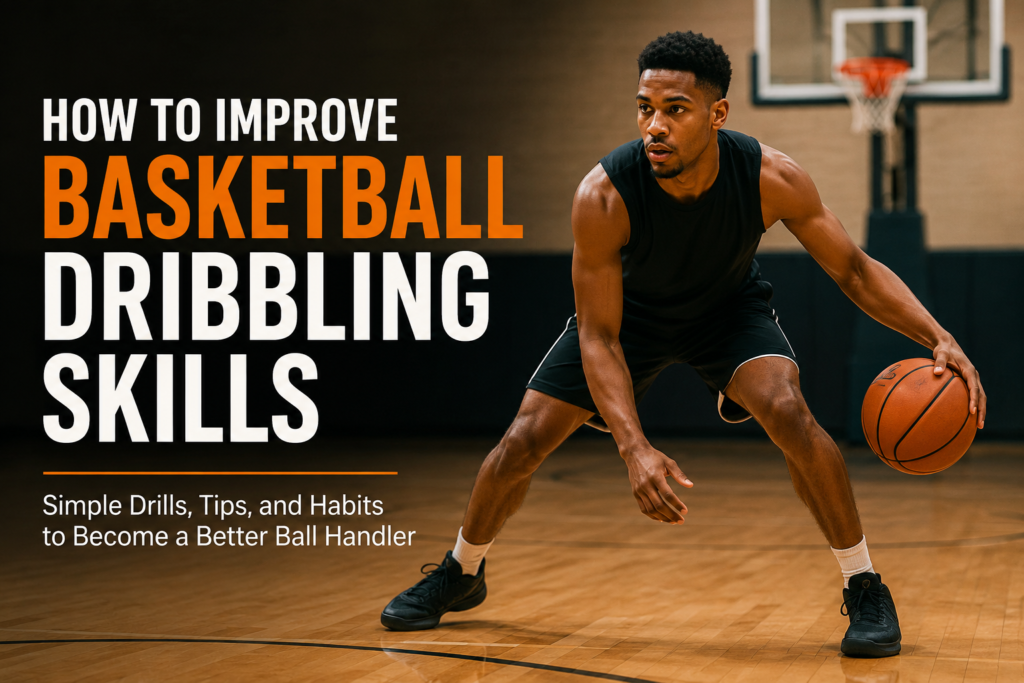
Before learning advanced basketball dribbling drills, I recommend learning the basic position. Your knees should be slightly bent, your back should be comfortable, and your feet should be around shoulder width apart. Keep your head up instead of constantly looking at the basketball.
One of the biggest mistakes beginners make is standing too straight. When you stay low, you have better balance and can change direction more quickly. Your body should feel relaxed rather than stiff.
Try to keep the basketball around your waist or slightly lower when practicing basic control. Use your fingertips to control the ball instead of relying heavily on your palm. This gives you better touch and allows you to change the direction of the basketball more naturally.
Practice With Both Hands
If you want to improve basketball dribbling skills, you need to become comfortable using both hands. Many beginners become dependent on their stronger hand. This may feel comfortable during practice, but defenders can easily take advantage of it during a game.
I suggest spending extra time with your weaker hand. Start with simple stationary dribbles and focus on controlling the basketball. You do not need to move quickly at first. Your goal should be to make your weaker hand feel more natural.
Practice low dribbles, regular dribbles, and higher controlled dribbles with both hands. Over time, you should be able to switch between your left and right hand without thinking too much about it.
Use Stationary Dribbling Drills
Stationary basketball dribbling drills are excellent for beginners because they allow you to concentrate on ball control without worrying about running or changing direction.
Start with basic right hand dribbling for about thirty seconds. Then switch to your left hand. After that, try alternating hands. Once you feel comfortable, practice low dribbles where you keep the ball close to the floor.
You can also practice front crossovers while standing in one place. Push the ball from one hand to the other and maintain control. Start slowly and increase your speed as your coordination improves.
Another useful drill is the figure eight. Move the ball around and between your legs in a controlled pattern. This exercise can improve hand coordination and help you become more comfortable with the basketball.
Learn the Crossover Dribble
The crossover is one of the most useful basketball dribbling moves. It allows you to change direction quickly and can help you get around a defender.
The important thing is not simply moving the basketball from one hand to another. Your body movement matters too. When performing a crossover, lower your body and keep your movement controlled. Push the basketball across your body while shifting your weight toward the new direction.
Beginners often make the crossover too high. A low crossover is generally easier to protect and can be performed more quickly. Start slowly, focus on control, and then gradually increase your speed.
Practice Between the Legs Dribbling
Between the legs dribbling can help improve coordination and give you another option when changing direction. It may look difficult at first, but regular practice can make it much easier.
Start from a stationary position. Keep your knees bent and move the basketball between your legs from one hand to the other. Focus on keeping the basketball close to your body.
Once you become comfortable, practice the move while walking. Later, you can combine it with a change of direction. The goal is to make the movement useful rather than simply performing it for style.
Add Behind the Back Dribbling
Behind the back dribbling is another useful skill for basketball players. It can help you protect the ball when a defender is reaching toward you or when you need to change direction.
Begin slowly and concentrate on where the basketball is going. Keep your body balanced and avoid throwing the basketball too far behind you.
You can practice this move while standing first. Once you have better control, add movement and eventually practice it while changing direction.
Keep Your Head Up
One of the most important basketball dribbling tips I can give beginners is to stop watching the basketball all the time. Looking down may help you control the ball initially, but you eventually need to develop the ability to dribble while looking ahead.
Your eyes should be available to see teammates, defenders, the basket, and open space. This is especially important during games.
A simple way to practice is to dribble while looking at a fixed point in front of you. You can also have someone give you simple signals while you dribble. Responding to those signals can help develop your awareness while handling the ball.
Improve Your Change of Speed
Good ball handlers do not always dribble at maximum speed. In fact, changing speed can be more effective than simply moving quickly.
Try walking slowly while dribbling and then suddenly accelerate. You can also practice slowing down before quickly changing direction.
This teaches your body to control different speeds. During a real game, this skill can help you create separation from a defender and make your movements less predictable.
Practice Changing Direction
Changing direction is an important part of basketball ball handling. You can practice moving forward with your right hand, performing a crossover, and continuing with your left hand.
Once that becomes comfortable, add between the legs and behind the back movements. You can create your own combinations and practice them repeatedly.
However, I recommend mastering each individual move before combining several moves. Trying to perform complicated combinations too early can lead to poor control and bad habits.
Use Cones or Simple Objects
If you have access to cones, use them for basketball dribbling drills. You can place several cones in a straight line and dribble around them while changing hands.
You do not necessarily need official training equipment. Small objects that are safe and clearly visible can also help create a simple practice course.
Start with wider spaces between the objects. As your control improves, reduce the distance and increase your pace.
The purpose of cone drills is not just speed. You should focus on keeping the basketball close while changing direction and maintaining balance.
Practice Under Pressure
Dribbling in an empty gym is very different from dribbling against a defender. Once your basic skills improve, you should practice situations that feel more like a real game.
Ask a teammate or friend to provide light defensive pressure. Practice protecting the basketball while moving toward the basket. Try changing direction when the defender blocks your path.
This type of practice can help you understand when to use a crossover, between the legs move, or change of speed.
Build Hand Strength and Coordination
Basketball dribbling also depends on hand coordination and control. Simple exercises such as fingertip taps, ball slaps, and quick hand switches can help you become more comfortable handling the basketball.
You can spend a few minutes on these exercises before your main workout. They are simple, but regular practice can improve your touch.
Remember that better dribbling does not come from squeezing the ball as hard as possible. Good control comes from coordinated movements and proper fingertip contact.
Create a Consistent Practice Routine
Consistency is more important than practicing for several hours once a week. I would rather spend twenty to thirty focused minutes on basketball dribbling skills several times a week than practice for a long session without a clear purpose.
A simple routine could include five minutes of stationary dribbling, five minutes of weak hand practice, five minutes of crossover and between the legs drills, and ten minutes of movement drills.
As you improve, increase the difficulty rather than simply increasing the amount of practice time.
Avoid Common Dribbling Mistakes
There are several common mistakes that can slow your progress. One is looking at the basketball constantly. Another is dribbling too high. Some beginners also try advanced moves before mastering basic control.
Another mistake is practicing only with the dominant hand. This creates an obvious weakness that defenders can exploit.
I also recommend avoiding unnecessary fancy moves during games. A simple crossover performed at the right time is usually more useful than a complicated combination that you cannot control.
Final Thoughts
Improving basketball dribbling skills takes patience, but the progress can be very noticeable when you practice consistently. In my opinion, beginners should focus on the fundamentals first. Learn to control the basketball with both hands, keep your head up, stay low, change speed, and change direction with confidence.
Once these basics become natural, you can start adding more advanced moves and game situations. The most important thing is to practice with purpose. Do not simply bounce the basketball without thinking about what you are trying to improve.
Good dribbling is about control, confidence, balance, and decision making. With regular basketball dribbling drills and a positive approach to practice, you can become a more comfortable and effective ball handler on the court. The goal is not to look impressive while practicing. The goal is to have enough control that your dribbling becomes a natural part of your overall basketball game.
Suggested SEO Keywords: how to improve basketball dribbling skills, basketball dribbling drills, basketball ball handling drills, basketball dribbling tips, improve ball handling, basketball drills for beginners, dribbling skills for basketball, basketball training drills