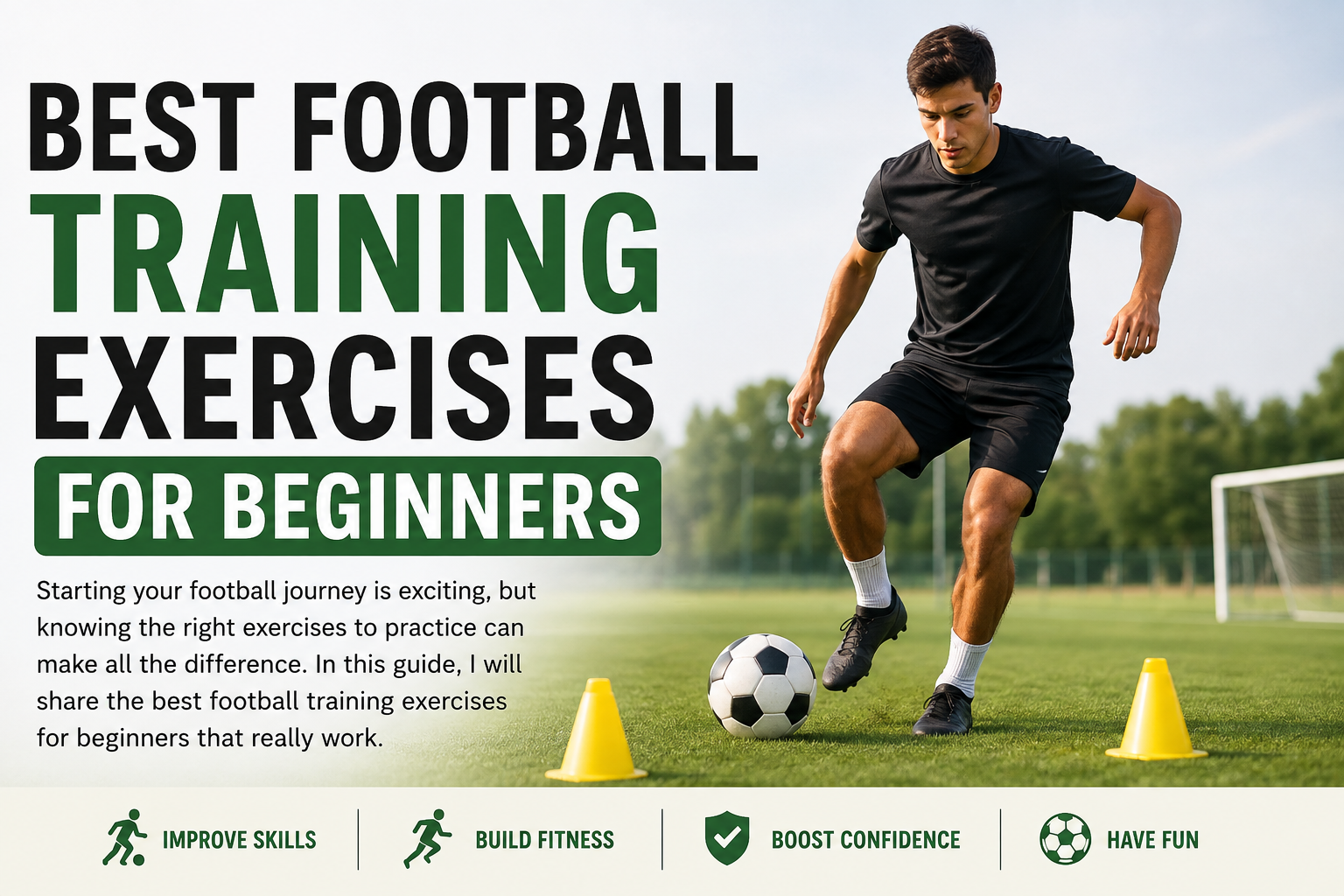
Starting football training can feel exciting, but it can also be confusing when you do not know which exercises to practice first. In my experience, beginners do not need complicated training routines or expensive equipment to improve. The most important thing is to build basic football skills through regular practice.
The best football training exercises for beginners should help you improve ball control, passing, dribbling, shooting, balance, speed, and fitness. These skills create a strong foundation that can help you become a more confident player.
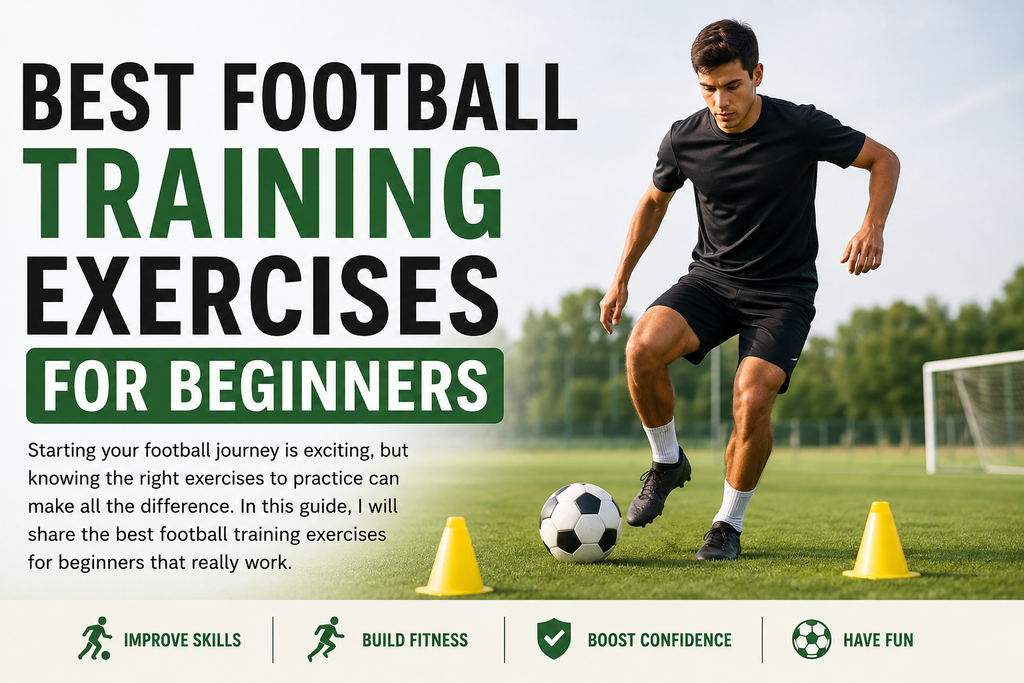
In this guide, I will share some of the best football training exercises for beginners that you can practice at home, in a park, or on a football field.
Why Football Training Exercises Are Important
Football is not only about kicking the ball toward the goal. A good player needs to control the ball, make quick decisions, move into space, pass accurately, and maintain fitness throughout a match.
When I think about beginner football training, I believe consistency is more important than trying to do everything at once. Practicing simple exercises regularly can help your body and mind become more comfortable with the game.
You can start with 20 to 30 minutes of training several times a week and gradually increase your training time as your fitness and skills improve.
1. Ball Touch Exercise
Ball touches are one of the simplest football exercises for beginners. They help you become comfortable with the football and improve your first touch.
Place the ball in front of you and gently touch it using the inside of your right foot. Then use your left foot. Continue alternating between both feet.
As you become more comfortable, try increasing the speed while keeping the ball close to your body.
I recommend focusing on control rather than speed at the beginning. Your goal should be to make every touch purposeful.
2. Dribbling Around Cones
Dribbling is one of the most important football skills for beginners. It teaches you how to move with the ball while changing direction.
You can use cones, small bottles, or other safe objects as markers. Place them several steps apart and dribble the ball through them.
Use both feet during the exercise. Try using the inside and outside of your foot to change direction.
Start slowly and concentrate on keeping the ball close. Once you develop better control, increase your speed.
This is one of my favorite beginner football training exercises because it can be practiced almost anywhere with very little equipment.
3. Inside and Outside Foot Dribbling
This exercise is excellent for improving close ball control.
Push the ball slightly forward with the outside of your foot, then bring it back across your body with the inside of the same foot. Continue moving forward while repeating the movement.
Practice with your right foot first and then your left foot.
The purpose is not to move as fast as possible. Instead, focus on developing a smooth touch and keeping the ball within easy reach.
4. Wall Passing Practice
Passing is a basic football skill that every beginner should practice.
Find a safe wall and stand several meters away from it. Pass the ball against the wall using the inside of your foot. When the ball comes back, control it and pass again.
Try using both feet.
You can also practice receiving the ball from different angles. Sometimes control the ball with your right foot and sometimes with your left.
Wall passing is useful because you can practice alone without needing another player.
5. First Touch Exercise
A good first touch can make a big difference during a football match.
For this exercise, pass the ball against a wall and prepare yourself for the return. Instead of immediately passing it back, take one controlled touch to move the ball slightly to the side.
Then make another pass.
Practice receiving the ball with different parts of your foot. Try the inside of the foot, outside of the foot, and sole.
The main goal is to make your first touch controlled and useful.
6. Short Passing Drill
Short passing helps beginners understand accuracy and ball weight.
If you have a training partner, stand a few meters apart. Pass the ball to each other using the inside of the foot.
Keep your supporting foot beside the ball and point it toward your partner. Keep your eyes on the ball when making contact.
After becoming comfortable with short passes, gradually increase the distance.
I believe beginners should spend plenty of time practicing simple passing because passing is involved in almost every football match.
7. Shooting Practice
Shooting is naturally one of the most enjoyable football training exercises for beginners.
Start close to the goal and focus on accuracy rather than power. Use the inside of your foot to place the ball toward different areas of the goal.
Once your accuracy improves, gradually move farther away.
You can practice shooting with both feet. Your stronger foot may feel more comfortable at first, but developing your weaker foot can make you a more useful player.
Always make sure the area is safe and that other people are not in the path of the ball.
8. Target Shooting
Target shooting can make normal shooting practice more interesting.
Choose safe targets inside the goal, such as specific corners or marked areas. Try to hit each target rather than simply kicking the ball as hard as possible.
Take several shots from different positions.
This exercise helps improve shooting accuracy and teaches you to think about placement.
In my opinion, accuracy should come before power when you are still learning.
9. Speed and Agility Runs
Football players need to change direction quickly. Speed and agility exercises can help beginners develop better movement.
Place several cones in a straight line. Run from one cone to another, then return. You can also create a simple zigzag route.
Keep your body balanced while changing direction.
Do not begin with maximum speed. Learn the movement first, then gradually increase your pace.
10. Bodyweight Squats
Football training is not only about working with the ball. Strong legs can help you run, jump, change direction, and maintain balance.
Bodyweight squats are a simple exercise that beginners can perform without equipment.
Stand with your feet around shoulder width apart. Lower your body while keeping your chest comfortable and your knees controlled. Then return to the starting position.
Focus on good technique rather than doing a large number of repetitions.
11. Lunges
Lunges are another useful exercise for developing lower body strength and balance.
Step forward with one leg and lower your body in a controlled movement. Push through your front foot to return to the starting position.
Repeat with the other leg.
Keep the movement controlled and stop if you experience pain.
Lunges can be included in a beginner football workout because they train muscles used during running and changes of direction.
12. Plank Exercise
A strong core can help football players maintain balance and control their body while moving.
The plank is a simple beginner exercise. Place your forearms on the ground and extend your legs behind you. Keep your body in a comfortable straight position and hold it for a short period.
Beginners can start with a manageable time and gradually increase it.
The goal is controlled positioning rather than holding the plank for as long as possible.
13. Light Jogging
Before intense football practice, I recommend starting with light movement.
A short jog can help prepare your body for training. You can jog around the field or in a safe open area for several minutes.
Keep the pace comfortable.
After jogging, you can perform dynamic movements such as gentle leg swings and controlled movements that prepare your body for football activity.
14. Practice With Your Weak Foot
One of the best things a beginner can do is practice with both feet.
Many players naturally rely heavily on their stronger foot. However, your weaker foot can become much more useful through regular practice.
Spend a few minutes passing, dribbling, and controlling the ball with your weaker foot.
It may feel uncomfortable at first, but that is normal. With consistent practice, your confidence should improve.
How Often Should Beginners Practice Football?
You do not need to train for several hours every day.
A simple routine of three to four training sessions each week can be a good starting point for many beginners. Each session can include a warm up, ball control, passing, dribbling, shooting, and some fitness work.
The exact amount of training should depend on your age, fitness level, experience, and recovery.
Rest is also important. If your body feels unusually tired or painful, give yourself time to recover.
Simple Beginner Football Training Routine
If I were creating a basic football workout for a beginner, I would keep it simple.
Start with several minutes of light movement to prepare your body. Then spend time on ball touches and dribbling. After that, practice wall passing or short passing. Finish with shooting and a few simple fitness exercises.
You can adjust the routine as your skills improve.
The important thing is to focus on quality practice instead of simply counting repetitions.
Common Mistakes Beginners Should Avoid
One common mistake is trying to train too hard too quickly. Football skills take time to develop.
Another mistake is only practicing with the stronger foot. Using both feet can make your overall game more balanced.
Some beginners also focus too much on complicated tricks. I think basic control, passing, dribbling, movement, and shooting should come first.
Finally, do not forget recovery. Good football training is not just about exercise. Rest, hydration, proper nutrition, and enough sleep also support your progress.
Final Thoughts
The best football training exercises for beginners are not necessarily complicated. Simple exercises practiced consistently can help you build the skills needed to enjoy football and become a better player.
Ball touches, dribbling, passing, first touch practice, shooting, agility exercises, squats, lunges, planks, and weak foot training can all have a place in a beginner football workout.
My advice is to start slowly, concentrate on technique, and enjoy the process. You do not need to become perfect in one week. Football improvement comes from regular practice and patience.
Choose a few exercises, practice them consistently, and gradually make your training more challenging. With time, you can develop better ball control, stronger fitness, greater confidence, and a much better understanding of the game.