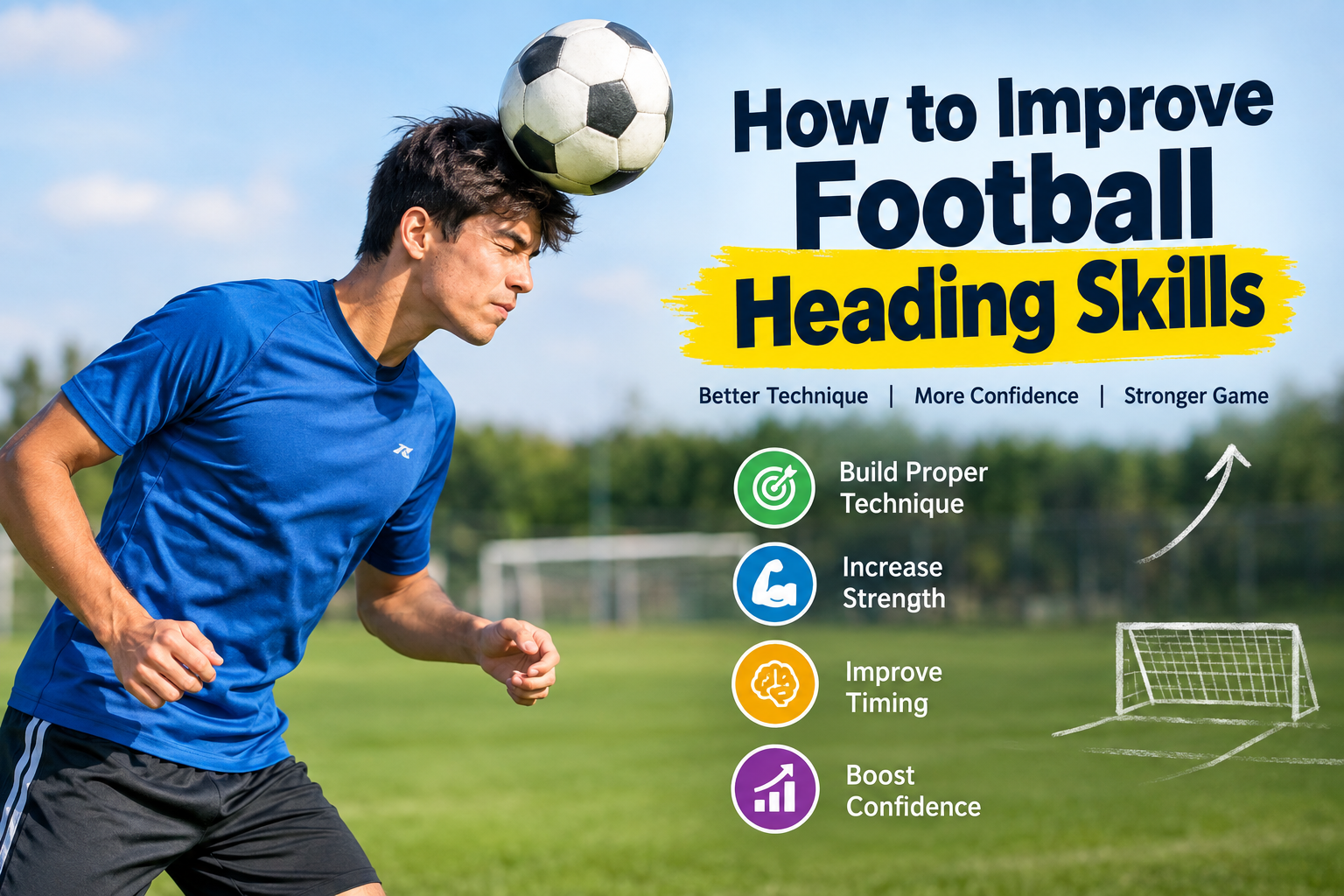
Football is a game where every small skill can make a difference. Many players spend a lot of time practicing passing, shooting, dribbling, and ball control, but heading skills are sometimes ignored. In my view, learning how to head the ball properly can make a player much more useful during matches, especially when defending, attacking, or competing for aerial balls.
Good football heading skills are not only about hitting the ball with your head. They involve timing, positioning, body control, concentration, and confidence. A player needs to understand where the ball is going, move into the right position, and make controlled contact with the forehead.
If you are wondering how to improve football heading skills, regular practice and the correct technique are the most important things. In this article, I will explain the methods I find useful for developing better heading ability and becoming more confident when competing for the ball in the air.
Why Football Heading Skills Are Important
Heading is an important part of modern football. Players may need to head the ball when defending crosses, receiving long passes, clearing dangerous balls, attacking corners, or creating scoring opportunities.
For defenders, strong heading skills can help clear the ball from dangerous areas. For attackers, accurate heading can create goals from crosses and set pieces. Midfielders can also benefit because heading can help them compete for aerial balls and maintain possession.
I believe heading should be treated as a basic football skill rather than something that only tall players need. Height can provide an advantage, but good timing and positioning can also make a major difference.
Learn the Correct Heading Technique
The first step toward improving football heading skills is learning the correct technique. A common mistake among beginners is trying to hit the ball with the top or back of the head. The forehead is generally the better contact area because it provides a firm and controlled surface.
When preparing to head the ball, keep your eyes focused on it. Try to judge its speed and direction before making contact. Keep your body balanced and use your neck and upper body to help direct the ball.
Instead of simply allowing the ball to hit your head, try to move toward the ball and make controlled contact. Your body position should match the direction in which you want the ball to travel.
Good technique takes time to develop, so I recommend starting slowly rather than immediately practicing powerful headers.
Improve Your Timing
Timing is one of the most important parts of heading a football. Even a player with excellent technique can struggle if the timing is poor.
When the ball comes through the air, you need to estimate when it will reach your position. Try not to jump too early because you may come down before the ball arrives. If you jump too late, you may not reach it at the correct height.
A simple way to improve timing is to practice with a teammate. Ask your teammate to make gentle throws toward you from different distances. Concentrate on watching the ball and moving into the correct position before making contact.
As your confidence improves, gradually increase the distance and variety of the throws.
Practice Heading With a Partner
Partner training is one of the easiest ways to practice football heading skills. You do not need expensive equipment. A football, an open space, and a training partner are enough to begin.
Start with short and gentle throws. Ask your partner to throw the ball toward your forehead while you practice directing it back. Focus on control rather than power.
After becoming comfortable, your partner can throw the ball slightly to the left, right, forward, or above you. This helps you learn how to adjust your body position.
I find this type of practice especially useful because it teaches you to react to different ball movements instead of practicing only predictable situations.
Practice Jumping Headers
Jumping is another important part of football heading. Players often need to jump when competing for crosses, goal kicks, corners, and long passes.
Start by practicing your jumping movement without the ball. Bend your knees slightly, use your arms for balance, and push upward from the ground. Once you feel comfortable, add gentle throws from your training partner.
The main goal is to meet the ball at the highest comfortable point. Do not focus only on jumping as high as possible. Good timing is usually more useful than simply trying to jump higher.
You should also practice landing under control. Make sure you have enough space around you and avoid unnecessary physical contact during training.
Improve Your Neck and Core Strength
Heading requires control from more than just the head. Your neck, shoulders, and core all contribute to body stability.
A stronger core can help you maintain balance when jumping and landing. General exercises such as planks, controlled bodyweight movements, and balance exercises can support your football training.
Neck exercises should always be approached carefully. There is no need to use excessive resistance. Controlled movement and good overall strength are more important than trying to make the neck extremely strong.
I recommend focusing on complete physical preparation rather than trying to isolate one body part.
Learn to Direct the Ball
Powerful heading is useful, but accuracy is often more important. A player who can direct the ball toward a teammate or away from danger can make a valuable contribution to the team.
During practice, choose a target before heading the ball. For example, you can place a cone several meters away and try to direct the ball toward it.
Defenders can practice heading toward safe areas of the pitch. Attackers can practice directing headers toward different parts of the goal.
This type of practice improves your control and helps you understand that heading is not simply about making contact with the ball.
Practice Defensive Headers
Defensive heading is an important skill for defenders and midfielders. When an opponent sends a cross into the penalty area, a defender may need to clear the ball quickly.
When practicing defensive headers, concentrate on distance and direction. Try to move the ball away from dangerous areas rather than simply heading it straight upward.
Communication is also important. Players should understand who is challenging for the ball. Clear communication can reduce confusion between teammates during aerial situations.
Practicing defensive headers from different angles can help you become more comfortable when dealing with crosses and long balls.
Practice Attacking Headers
Attacking headers are often associated with goals from crosses and corners. To improve this part of your game, you need to practice movement before making contact with the ball.
Start from different positions and ask a teammate to deliver gentle crosses. Practice moving toward the ball rather than standing still and waiting for it.
Try different directions when heading. You can practice sending the ball toward the corners of a goal or toward a teammate.
The key is to focus on placement and timing. Trying to generate maximum power on every header can make your technique less controlled.
Improve Your Footwork
Good heading starts before you leave the ground. Your feet need to move you into the correct position.
Practice small movements such as stepping forward, moving sideways, and adjusting your position before the ball arrives. This can improve your ability to get underneath or in front of the ball.
You can also use cones to create simple movement drills. Have a teammate throw the ball after you move around the cones. This combines footwork with heading and makes the practice more realistic.
Use Your Eyes Properly
Watching the ball is extremely important. Beginners sometimes look away just before making contact, which can reduce accuracy.
Try to keep your eyes on the ball throughout the movement. Watch its flight from the moment it leaves the passer until it reaches your heading position.
Good visual tracking can help you judge speed, height, and direction. Over time, this can make your reactions more natural during matches.
Practice With Different Types of Balls
If possible, practice heading with footballs delivered at different speeds and angles. This can help you become comfortable with different match situations.
A slow ball gives you more time to prepare, while a faster cross requires quicker decisions. Practicing both situations can improve your reaction and positioning.
However, training should always be controlled. There is no need to repeatedly use very powerful deliveries, especially when you are still learning the technique.
Avoid Common Heading Mistakes
Several mistakes can slow down your progress. One common mistake is closing your eyes before contact. Another is standing underneath the ball without adjusting your feet.
Some players also try to use too much power instead of focusing on accuracy. Others jump too early or fail to prepare their body before making contact.
Another mistake is practicing only one type of header. Football requires different heading situations, so your training should eventually include defensive headers, attacking headers, jumping headers, and headers from different angles.
Build a Simple Heading Training Routine
You do not need to spend hours practicing heading. A short and consistent routine can be useful.
Start with five minutes of basic technique practice. Then spend several minutes practicing short headers with a partner. After that, practice movement and jumping headers. Finish with controlled attacking or defensive situations.
Always begin with gentle deliveries and gradually increase the difficulty. If you feel uncomfortable or experience pain, stop the exercise and allow yourself to recover.
Stay Patient and Practice Regularly
Improving football heading skills takes time. You may not become comfortable with aerial balls after only a few training sessions.
In my experience, consistency is more important than trying to improve everything in one day. Even ten to fifteen minutes of focused practice can help when it is repeated regularly.
Try to record your progress. Notice whether your timing, accuracy, positioning, and confidence are improving. You can also ask a coach or experienced teammate to watch your technique and provide feedback.
Final Thoughts
Learning how to improve football heading skills can make a noticeable difference in your overall game. Good heading requires much more than simply hitting a football with your head. Timing, positioning, footwork, balance, vision, technique, and confidence all work together.
I believe beginners should start with simple controlled exercises and gradually move toward realistic match situations. Practice with a teammate, work on both defensive and attacking headers, improve your movement, and focus on accuracy before power.
Most importantly, practice consistently and use safe training methods. With regular football heading drills and proper technique, you can become more comfortable competing for aerial balls and contribute more effectively during matches.
Whether you are a beginner, school player, amateur footballer, or someone simply looking to improve your football skills, heading is a useful ability worth developing. The more confidently you understand the ball, your movement, and your timing, the more natural heading will become during a real football match.
Frequently Asked Questions
How can I improve my football heading skills at home?
You can practice basic movement, balance, footwork, and controlled heading with a suitable training partner in a safe open area. Always focus on technique and controlled practice.
What part of the head should contact the football?
The forehead is commonly used for controlled heading because it provides a firm contact area. Your exact contact point can vary depending on the direction and type of header.
How can I become better at jumping headers?
Practice your jumping technique, timing, footwork, and body control. Start with gentle throws and gradually increase the difficulty as your confidence improves.
Is heading important for football players?
Yes. Heading can be useful for defending crosses, clearing dangerous balls, competing for aerial passes, creating chances, and scoring goals.
Should I focus on power or accuracy?
For beginners, I recommend focusing on technique and accuracy first. Once your control improves, you can gradually work on producing stronger headers while maintaining good direction.