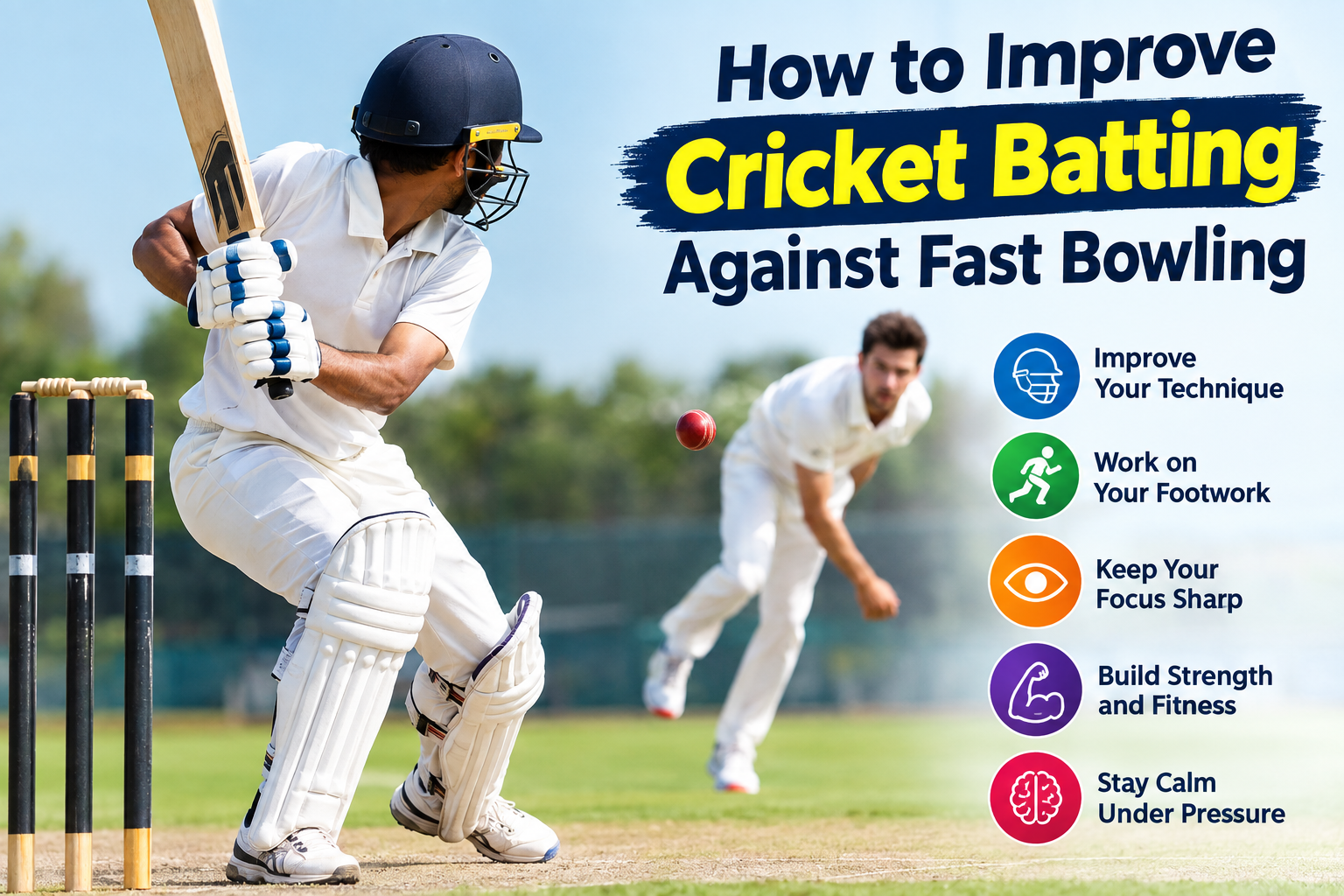
Facing fast bowling is one of the most challenging parts of cricket batting. A fast bowler can give you very little time to react, especially when the ball is moving quickly through the air or bouncing from the pitch. From my experience and understanding of cricket, I believe that becoming a better batter against fast bowling is not only about having strong shots. It is also about having good technique, quick reactions, proper footwork, concentration, and confidence.
Many beginners become nervous when they face a fast bowler. They may close their eyes, move their head away from the ball, or try to hit every delivery hard. These habits can make batting even more difficult. The better approach is to stay balanced, watch the ball carefully, and learn how to respond to different types of deliveries.
In this article, I will explain some practical ways to improve cricket batting against fast bowling and become more comfortable at the crease.
Watch the Ball Carefully
The first thing I focus on when facing a fast bowler is watching the ball from the bowler’s hand. Good ball watching gives a batter more information about the direction, length, and movement of the delivery.
A common mistake among beginners is watching the bowler’s entire body instead of focusing on the ball. Although the bowler’s action can provide some clues, the ball is what matters most.
Try to keep your eyes on the ball as it comes toward you. Avoid looking at the field or thinking about the previous delivery while the next ball is being bowled.
The better you watch the ball, the easier it becomes to make a decision.
Improve Your Batting Stance
A balanced batting stance is extremely important against fast bowling. Your feet should be positioned comfortably, and your body should be relaxed rather than stiff.
I prefer a stance that allows me to move in either direction without losing balance. Your head should remain reasonably still, and your eyes should be level.
Do not stand too rigidly. At the same time, avoid excessive movement before the ball is delivered.
A comfortable stance gives you a better starting position for both front foot and back foot shots.
Work on Your Footwork
Good footwork can make a major difference when facing fast bowling. A batter needs to move toward the ball when appropriate and move back when necessary.
Against a fuller delivery, moving forward can help you get closer to the ball and play it with better control. Against a shorter delivery, moving back can give you additional time and space.
The important thing is not to make large unnecessary movements. Small and controlled movements are often more effective.
I recommend practicing simple forward and backward movements during training. Ask a partner or coach to throw or bowl balls at different lengths while you concentrate on moving your feet correctly.
Keep Your Head Still
One of the most useful batting habits is keeping your head stable while playing a shot. When your head moves too much, your balance can disappear and your bat may not come down in the correct position.
When facing a fast bowler, try to keep your head over the ball as much as possible. This helps you judge the line and length more accurately.
A stable head also helps with defensive shots and controlled attacking strokes.
Whenever I practice batting, I pay attention to my head position because it has a direct effect on balance and shot control.
Learn to Play Defensive Shots
You do not need to attack every fast delivery. Learning to defend properly is one of the most important steps toward becoming a confident batter.
A good defensive shot allows you to protect your wicket while reducing the risk of getting out.
When the ball is on a good length and difficult to attack, playing a controlled defensive shot can be a smart decision. Keep your eyes on the ball and use a soft grip when appropriate.
The goal is not always to score runs. Sometimes the goal is simply to survive a difficult delivery and wait for a better scoring opportunity.
Practice Playing Short Balls Safely
Short pitched deliveries can be difficult for beginners because they can rise quickly after bouncing.
The most important thing is to remain calm. Do not panic when the ball bounces higher than expected.
Practice identifying short deliveries during net sessions. Work on your movement and learn which balls you can comfortably leave and which ones you can play safely.
If you are not confident playing a particular short delivery, there is nothing wrong with avoiding the shot when the rules and situation allow it.
Good batting is not about playing every ball. It is about making sensible decisions.
Improve Your Back Foot Play
Back foot batting is especially important against fast bowlers. When the ball is short enough to allow you to move back, getting into position quickly can give you more time.
Practice back foot defensive shots, controlled cuts, and other suitable strokes with a coach or training partner.
Start with slower feeds and gradually increase the pace as your confidence improves.
Do not immediately try to face the fastest bowling you can find. Developing technique first is much more useful than simply trying to survive extreme pace.
Develop a Strong Batting Grip
Your grip should allow you to control the bat without creating unnecessary tension.
If you grip the bat too tightly, your hands and arms can become stiff. This can make it harder to react naturally to a fast delivery.
A controlled grip helps you guide the ball and adjust your shot when necessary.
During practice, experiment with your grip under the guidance of a qualified coach and find a position that feels comfortable and gives you good control.
Practice Against Different Bowling Speeds
One of the best ways to improve cricket batting against fast bowling is to practice against different speeds.
If you always train against slow bowling, faster deliveries can feel much more difficult during a real match.
Start with a comfortable pace. Once your technique becomes consistent, gradually increase the speed.
You can also use different types of practice. A bowling machine, throwdowns, and regular net bowling can all help develop your reactions.
The purpose of this training is to make faster deliveries feel more familiar.
Improve Your Reaction Time
Fast bowling gives you limited time to react. This makes reaction training valuable for batters.
Simple exercises such as catching a tennis ball, reacting to random throws, or practicing quick hand movements can help improve coordination.
Another useful exercise is having a training partner throw balls from different angles while you react to them.
The key is consistency. Short practice sessions performed regularly can be more useful than occasional intense sessions.
Learn to Leave the Ball
Leaving the ball is an important batting skill that beginners sometimes ignore.
Not every delivery needs to be played. If a ball is outside your comfortable scoring area and does not need to be attacked, leaving it can be a smart option.
Good batters understand which deliveries deserve a shot and which ones should be ignored.
Learning to leave the ball can also frustrate bowlers because they have to keep searching for opportunities.
Build Confidence Through Net Practice
Confidence against fast bowling comes from preparation.
If you rarely face fast bowling during practice, you may feel nervous when you encounter it during a match.
Try to include fast bowling sessions in your regular training. Start at a manageable pace and gradually increase the challenge.
Focus on one skill at a time. For example, one session can focus on defensive batting while another can focus on back foot play.
This approach allows you to improve without becoming overwhelmed.
Do Not Try to Hit Every Ball Hard
One mistake I often see among developing batters is trying to hit fast bowling with maximum power.
Power is useful, but timing and control are usually more important.
A well timed shot can travel quickly even without a huge swing. Trying to hit every ball hard can cause poor balance and mistimed shots.
Instead, concentrate on meeting the ball correctly and using the pace of the delivery when appropriate.
Improve Your Fitness
Physical fitness also contributes to better batting.
A batter needs good balance, coordination, flexibility, and general fitness to move quickly around the crease.
Regular cricket practice combined with suitable fitness exercises can improve your ability to maintain concentration and technique during longer innings.
Simple activities such as running, mobility exercises, coordination drills, and cricket specific training can support overall performance.
Stay Calm Under Pressure
Mental preparation is just as important as physical technique.
When facing a fast bowler, it is normal to feel pressure. However, allowing fear to control your decisions can make batting more difficult.
Before each delivery, take a moment to reset your mind. Think about your basic plan and concentrate on the next ball.
Do not worry too much about what happened on the previous delivery. Cricket is played one ball at a time.
A calm mindset can help you make better decisions.
Study Fast Bowlers
Watching experienced batters can also teach you a lot about playing fast bowling.
When watching cricket, pay attention to how professional batters position themselves, how they move their feet, and which deliveries they choose to attack.
You can also observe how they respond to different lengths.
The purpose is not to copy another batter exactly. Every player has a different body type, technique, and style. Instead, use professional cricket as a source of ideas that you can adapt to your own game.
Create a Regular Batting Practice Routine
Improvement requires consistency. I recommend creating a simple batting practice routine instead of practicing randomly.
For example, you can spend part of a session working on your stance and movement, followed by defensive shots, back foot play, and controlled scoring shots.
Finish with some realistic match style practice where the bowler changes length and pace.
Regular practice helps turn technical movements into natural habits.
Common Mistakes to Avoid
There are several mistakes that can make fast bowling more difficult.
Standing too rigidly can reduce movement.
Closing your eyes can prevent you from judging the ball.
Trying to hit every delivery can increase the chance of mistakes.
Poor footwork can leave you reaching for the ball.
A very tight grip can reduce control.
Moving your head excessively can affect balance.
Getting angry after a difficult delivery can also affect concentration.
Recognizing these mistakes is an important part of improving your batting.
Final Thoughts
Improving cricket batting against fast bowling takes time, practice, and patience. There is no single technique that works for every batter. In my view, the most important foundation is to watch the ball carefully, maintain good balance, develop reliable footwork, and learn when to attack and when to defend.
Start by practicing against a comfortable pace and gradually increase the difficulty. Work on your defensive technique, back foot movement, reaction time, and ability to leave difficult deliveries.
Most importantly, do not expect immediate results. Facing fast bowling becomes easier as you gain experience and confidence.
With regular practice and the right approach, you can become a more controlled and confident batter against fast bowling. The goal should not simply be to survive fast bowlers. The goal should be to understand their deliveries, make better decisions, and play your natural game with confidence.