Choosing the right cricket bat size is one of the most important decisions a player can make. In my experience, many players focus mainly on the brand, design, or price of a cricket bat and forget about the size. However, the correct cricket bat size can make a big difference in comfort, control, balance, and confidence while playing.
A bat that is too large can feel difficult to control, especially for younger players. A bat that is too small may not provide enough reach or feel comfortable during shots. This is why I always recommend checking your height, age, playing style, and physical strength before buying a cricket bat.
In this guide, I will explain how to choose the right cricket bat size, what different bat sizes mean, how to check bat weight, and what you should look for before making your final choice.
Why Cricket Bat Size Matters
The size of a cricket bat affects how easily you can move it during your batting stroke. When the bat matches your body size, you can usually control it more naturally.
For me, control is more important than simply choosing the biggest bat available. A larger bat may look impressive, but if you cannot move it comfortably, it can make batting more difficult.
The right cricket bat size can help you maintain better balance while playing shots. It can also make it easier to play defensive strokes, drives, cuts, and other cricket shots.
Young players especially need to choose carefully because their height and strength can change as they grow. A bat that feels suitable today may not be the right choice after some time.
Cricket Bat Sizes Explained
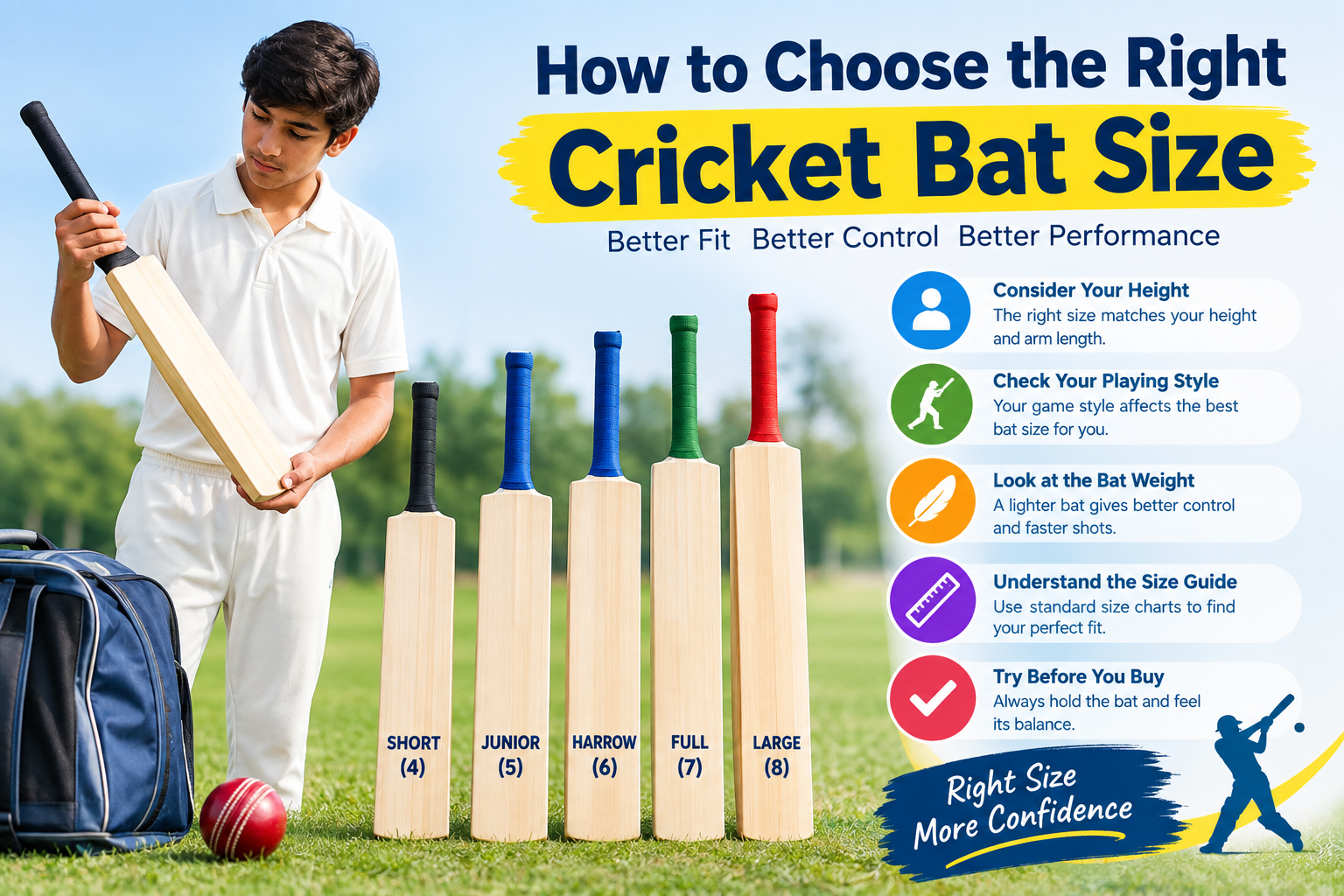
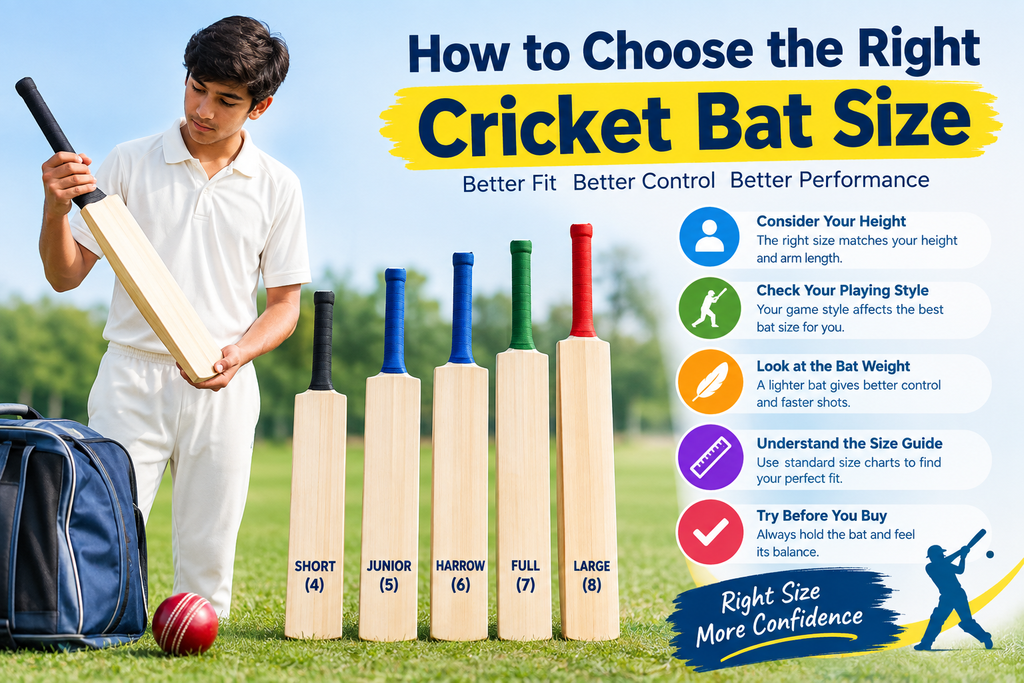
Cricket bats are available in several sizes. The most common sizes for younger players include size 1, size 2, size 3, size 4, size 5, size 6, and Harrow. Full size bats are generally used by older junior players and adults.
The correct size is normally selected according to the player’s height rather than age alone. Age can provide a general idea, but height gives a better indication of whether the bat will be comfortable.
Here is a general guide that can help you understand the common sizes.
Size 1
Size 1 bats are designed for very young beginners. They are shorter and lighter, which makes them easier for small children to handle.
Size 2
Size 2 bats are slightly larger than size 1 and are suitable for young players who have developed some basic batting skills.
Size 3
Size 3 bats are made for children who are growing and need a little more reach while still requiring a lightweight bat.
Size 4
Size 4 bats provide additional length and are suitable for taller junior players. They can be useful for children who have already gained some experience with cricket.
Size 5
Size 5 bats are larger again and are commonly used by developing junior players. At this stage, players usually need a balance between size, weight, and control.
Size 6
Size 6 bats are designed for taller junior players. They offer more length while remaining easier to handle than an adult bat.
Harrow
The Harrow size sits between junior and full size. It is often suitable for taller teenagers who are not yet comfortable using a full size adult bat.
Full Size
A full size cricket bat is generally used by adult players and taller teenagers who can comfortably handle the length and weight.
Choose a Cricket Bat According to Your Height
When I choose a cricket bat, I consider height as one of the first things. A player’s height gives a useful indication of the bat length required.
If the bat is too long, you may find it difficult to control the bottom of the bat. Your stance and footwork may also feel uncomfortable. If the bat is too short, you may have difficulty reaching certain deliveries naturally.
This is why players should not simply choose a bat because another player is using the same size.
Two players of the same age can have completely different heights and physical strength. One may need a larger bat while the other may be more comfortable with a smaller size.
Consider Your Age and Physical Development
Age is another useful factor, particularly when buying a bat for a child. However, I would not use age as the only measurement.
Children grow at different rates, so a size chart based only on age may not always provide the perfect answer. Height, arm length, strength, and playing ability should also be considered.
For younger players, choosing a manageable bat is usually more important than buying a bat that they can supposedly grow into.
A bat that is slightly smaller but easy to control can help a beginner develop better batting habits.
Check the Cricket Bat Weight
Bat size and bat weight are two different things. A bat can have the correct length but still feel too heavy for the player.
This is something I always recommend checking before buying. Pick up the bat and hold it in your normal batting position. Try moving it as if you are playing a few different shots.
If the bat feels difficult to lift or move quickly, it may be too heavy.
A lighter bat can provide easier control, while a heavier bat may offer more mass behind the shot. However, the heaviest bat is not automatically the best bat.
The ideal weight depends on your strength, technique, experience, and comfort.
Check the Bat Balance
Balance is just as important as weight. Two cricket bats can have similar weights but feel completely different because their weight distribution is different.
Some bats feel lighter in the hands because of their balance. Others may feel heavier toward the blade.
When I try a cricket bat, I pay attention to how naturally it moves through the batting stroke.
If you can lift the bat easily and bring it down smoothly, the balance may suit you. If the bat feels awkward or difficult to control, another model may be more suitable.
Try the Bat Before Buying
One of the simplest ways to choose the right cricket bat size is to try it before buying.
Stand in your normal batting stance and place the bat near your feet. Hold the handle naturally and check whether the length feels comfortable.
You can also practice a few simple movements. Try a defensive stroke, a straight drive movement, and a back foot shot.
You do not need to hit a ball to understand whether the bat feels comfortable. Even basic movements can tell you a lot about the bat’s balance and control.
If you are buying a bat for a young player, let the player hold it personally rather than choosing only by looking at the size label.
Do Not Choose a Bat Only Because It Looks Good
Cricket bats come in many attractive designs. Some have impressive stickers, colorful grips, and professional looking finishes.
I understand why players are attracted to these designs, but appearance should not be the main reason for choosing a bat.
Performance and comfort should come first.
A simple looking bat that feels comfortable can be much more useful than an expensive bat that is difficult to control.
I always suggest checking size, weight, balance, handle comfort, and overall quality before thinking about appearance.
Think About Your Playing Style
Your playing style can also influence your bat choice.
A player who enjoys aggressive batting may prefer a bat that feels comfortable during powerful strokes. A player who focuses on timing and placement may prefer a bat that offers excellent control.
However, beginners should not worry too much about finding a bat specifically designed for one type of shot. Developing good technique and learning proper control should be the main focus.
As your skills improve, you will understand which bat characteristics suit your style.
Handle Comfort Is Important
The handle is the part of the bat that connects you directly to the equipment, so it should feel comfortable in your hands.
A handle that feels too thick or too thin can make it harder to control the bat.
When choosing a cricket bat, hold the handle with both hands as you normally would while batting. Make a few practice movements and check whether your grip feels natural.
A comfortable grip can help you maintain better control during different shots.
Common Mistakes When Choosing a Cricket Bat
One common mistake is choosing a bat that is too heavy. Players sometimes believe that a heavier bat automatically produces stronger shots. In reality, if you cannot control the bat properly, the extra weight may make batting more difficult.
Another mistake is choosing a bat based only on age. Height and physical development are also important.
Some players also choose the same size as their friends. This can be a mistake because every player has different physical characteristics.
Another common mistake is buying a bat without trying it. Even if the size appears correct on paper, the actual balance and weight may not feel comfortable.
How Parents Can Choose a Bat for Young Players
Parents should pay particular attention when choosing cricket bats for children.
The bat should be easy enough for the child to control. A young player should be able to lift it, move it, and practice basic shots without struggling.
I would not recommend buying a very large bat simply because the child may grow into it. A bat that is manageable now can help the player learn proper technique and enjoy the game.
It is also useful to involve the child in the selection process. Let them hold the bat and make some basic batting movements before buying.
Cricket Bat Size Chart
A general cricket bat size chart can help you narrow down your options, but it should not replace physically checking the bat.
For very young players, smaller sizes such as size 1, size 2, and size 3 may be suitable. As players become taller, they can move through size 4, size 5, and size 6.
Harrow is commonly used as a transition size before moving to a full size bat.
The exact choice can vary depending on the manufacturer, player’s height, physical development, and personal comfort.
My Final Tips for Choosing the Right Cricket Bat Size
From my point of view, the best cricket bat is not necessarily the biggest, heaviest, or most expensive one. The best choice is the bat that you can control comfortably and confidently.
Before buying, I recommend checking your height first. Then look at the recommended size for your height and age. After that, consider the bat weight and balance.
Always hold the bat if possible. Practice a few basic batting movements and see how naturally it feels.
For young players, control should be given particular importance. A manageable bat can make learning easier and help develop good batting technique.
You should also remember that cricket bat sizes can vary slightly between manufacturers. Therefore, a size chart should be treated as a helpful starting point rather than an absolute rule.
Conclusion
Choosing the right cricket bat size can make your batting experience more comfortable and enjoyable. The correct size can help you develop better control, improve confidence, and practice your shots more naturally.
When selecting a bat, consider your height, age, strength, playing style, weight preference, and the overall balance of the bat. Do not choose a bat simply because it looks good or because another player uses the same model.
For me, comfort and control are the most important factors. If you can hold the bat naturally, move it easily, and practice your batting strokes without struggling, you are much closer to finding the right cricket bat.
Take your time, compare different sizes, and try the bat before making your final decision. With the right cricket bat size in your hands, you can focus more on improving your technique and enjoying the game.