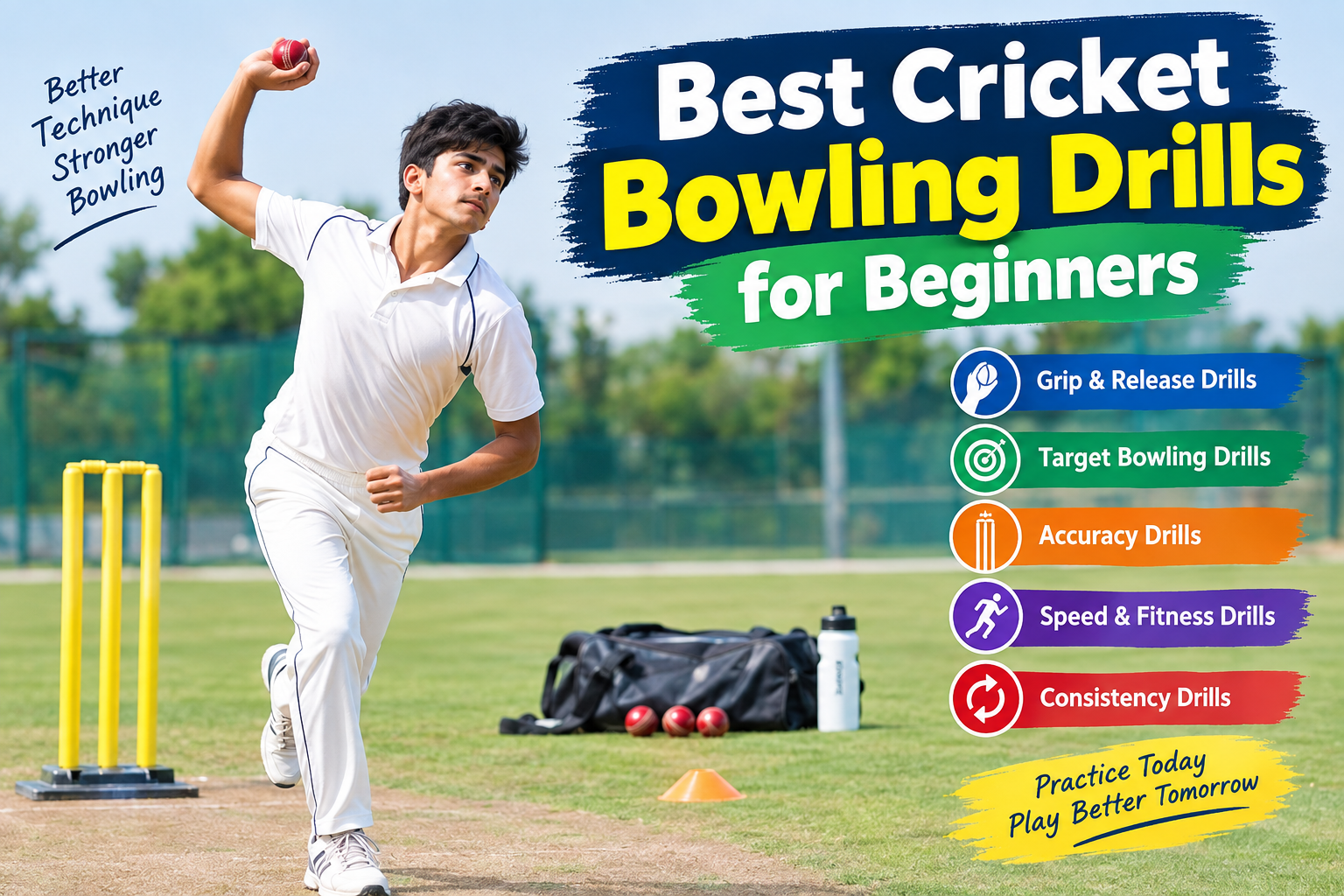
Cricket bowling is a skill that improves with regular practice, good technique, and patience. When I first started learning about bowling, I realized that simply throwing the ball toward the batsman was not enough. A good bowler needs control, balance, accuracy, rhythm, and confidence. These skills become much easier to develop when beginners follow simple cricket bowling drills regularly.
In my experience, beginners should focus on building the correct foundation instead of trying to bowl extremely fast from the beginning. Speed can improve naturally as your technique becomes stronger. The main goal of beginner bowling practice should be to control the ball and repeat a good bowling action consistently.
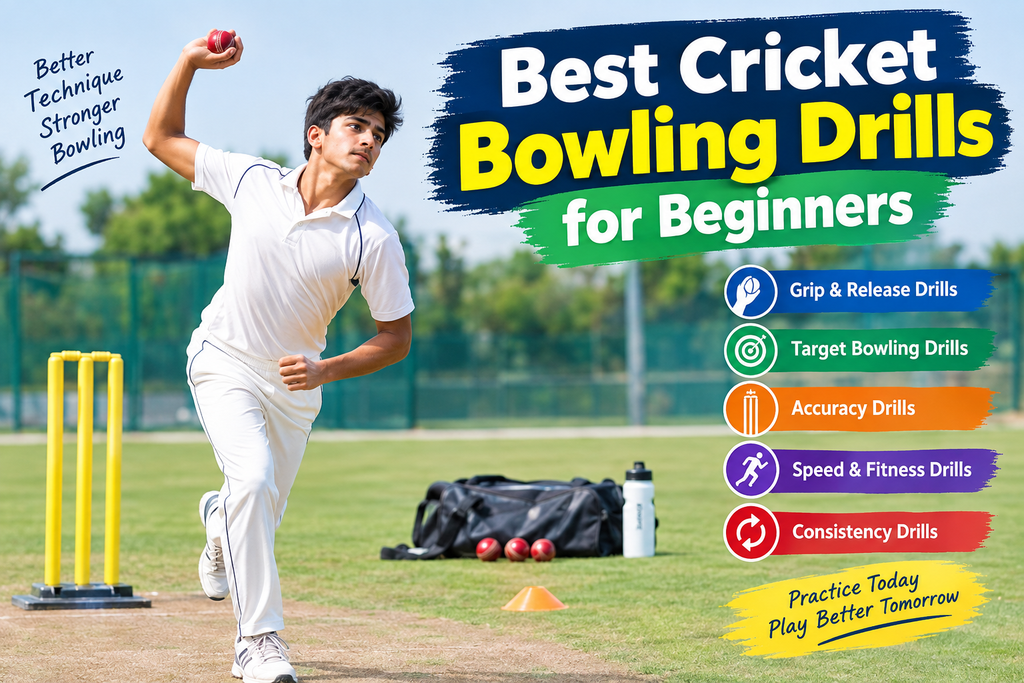
In this article, I will share some of the best cricket bowling drills for beginners. These drills can help improve bowling accuracy, grip, release, balance, consistency, and overall confidence.
Why Bowling Drills Are Important
Bowling drills give you a structured way to practice specific skills. Instead of bowling randomly for a long time, you can focus on one part of your technique during each exercise.
For example, one drill can help with your bowling grip while another can improve your accuracy. Some drills can also help you understand your run up and release point.
I believe beginners should practice bowling drills regularly because repetition helps develop better habits. When the same movement is practiced correctly many times, it becomes easier to perform naturally during a real cricket match.
1. Bowling Grip Drill
The bowling grip is one of the first things a beginner should learn correctly. For a basic seam bowling grip, place the index and middle fingers on either side of the cricket ball seam. The thumb should provide support underneath the ball.
Hold the ball comfortably without squeezing it too tightly. A relaxed grip can make it easier to control the release.
For this drill, stand still and practice holding the ball correctly. Move your bowling hand through a slow bowling action without actually delivering the ball.
I recommend spending a few minutes practicing the grip before every bowling session. It may look simple, but a comfortable grip can make a significant difference to your control.
2. Target Bowling Drill
Target bowling is one of the best cricket bowling drills for beginners because it directly improves accuracy.
Place a cone, marker, or small target on a good length area of the pitch. Your goal is to land the ball close to the target.
Start by bowling slowly and focus on hitting the target rather than generating maximum speed. After becoming more consistent, gradually increase your bowling pace.
I find this drill especially useful because it teaches you to think about where you want the ball to land before you bowl it.
Try completing several deliveries and count how many times you hit the target. Keep a simple record so you can compare your progress during future practice sessions.
3. One Step Bowling Drill
The one step bowling drill is useful for beginners who are still learning their bowling action.
Instead of using a complete run up, take one controlled step before delivering the ball. Focus on your front foot position, body balance, arm movement, and release.
This drill removes some of the complexity of a full bowling action. It allows you to concentrate on the actual delivery.
Once you become comfortable, you can gradually add more steps to your approach.
4. Front Foot Bowling Drill
Front foot positioning is very important for bowling control. During delivery, your front foot should provide a stable base while your body moves through the action.
For this drill, practice your bowling movement at a slow pace. Concentrate on landing your front foot in a comfortable position and maintaining balance.
Do not worry about speed during this exercise. Your main goal should be a controlled and repeatable movement.
In my opinion, beginners often make the mistake of focusing too much on the ball and not enough on their body position. Practicing front foot movement can help create a stronger foundation.
5. Run Up Rhythm Drill
A consistent run up can make bowling much easier. You do not need an extremely long or fast run up to become a good bowler.
Start by marking your starting point. Walk through your run up several times before trying it at normal speed.
Your goal is to reach the crease with the same rhythm each time. Avoid suddenly increasing your speed during the final steps.
I suggest practicing the run up without a ball first. Once your movement feels comfortable, add the bowling action.
6. Accuracy Cone Drill
Place several cones on different areas of the pitch. You can create targets for a good length, fuller delivery, and shorter delivery.
Try to hit each target with a controlled delivery.
This cricket bowling accuracy drill can teach beginners how small changes in length affect the ball’s position. It also makes practice more interesting because you are constantly changing your target.
Start with larger targets and make them smaller as your accuracy improves.
7. Seam Position Drill
Seam position is important for bowlers who want to develop controlled movement through the air and off the pitch.
Hold the ball with the seam positioned correctly and focus on releasing it with the seam staying as straight as possible.
You do not need to bowl at full speed for this drill. Start with gentle deliveries and concentrate on the position of the ball at release.
Record yourself occasionally if possible. Watching your bowling action can help you notice whether the ball is leaving your hand with a consistent seam position.
8. Bowling at the Stumps Drill
Another simple but effective drill is bowling directly at the stumps.
Place the stumps at the normal distance and try to hit them repeatedly. Focus on your line and length rather than speed.
This drill can improve accuracy while also giving you a clear target.
I recommend changing the target slightly during practice. For example, you can aim at the top of the off stump area during one set and then focus on the middle stump area during another set.
9. Bowling With a Partner
Practicing with a partner can make bowling sessions more realistic.
Ask your partner to stand as a batsman and observe your deliveries. They can tell you whether your bowling is too full, too short, too wide, or too straight.
Your partner can also give you simple feedback about your run up and consistency.
However, always make sure the practice environment is safe and that everyone maintains an appropriate distance.
10. Six Ball Consistency Drill
The six ball consistency drill is one of my favorite exercises for beginners.
Set a target and bowl six deliveries. Your goal is to keep all six balls within the same general area.
Do not focus on bowling the fastest delivery possible. Instead, try to make all six deliveries similar.
After each set, evaluate your performance. Ask yourself whether your run up, release, balance, and target were consistent.
You can repeat several sets and record your results.
11. Bowling Against a Single Stump
If you want to make your accuracy practice more challenging, use a single stump as your target.
Stand at the normal bowling distance and try to hit the stump consistently.
This drill requires concentration because the target is much smaller than a set of three stumps.
I recommend starting with a larger target and moving to a single stump once your basic accuracy has improved.
12. Slow Bowling Technique Drill
Beginners should not always practice at maximum speed. Slow bowling practice can help you understand your movement more clearly.
Perform your entire bowling action slowly. Pay attention to your run up, arm position, front foot, body balance, and follow through.
The purpose of this drill is not to produce a powerful delivery. It is to understand the correct sequence of movements.
Once the action feels comfortable, gradually return to your normal bowling speed.
13. Follow Through Drill
A proper follow through can help maintain balance after releasing the ball.
After delivering the ball, continue your movement naturally instead of stopping suddenly.
For this drill, focus on maintaining balance after every delivery. Your body should continue moving toward the batsman in a controlled way.
Practicing the follow through can also help you develop a smoother overall bowling action.
How Often Should Beginners Practice Bowling?
Consistency is more important than practicing for extremely long periods.
A beginner can start with two or three bowling practice sessions each week. Each session can include a warm up, technique practice, target drills, and a short bowling session.
Always listen to your body and take enough rest between demanding sessions. If you feel pain, stop the activity and seek appropriate guidance.
Common Bowling Mistakes Beginners Should Avoid
One common mistake is trying to bowl too fast too early. Beginners often believe that speed is the most important part of bowling, but control and technique are equally important.
Another mistake is changing the bowling action constantly. It is better to build a comfortable technique and improve it gradually.
Some beginners also ignore their run up. A rushed or inconsistent run up can affect balance and accuracy.
Another common problem is practicing without a target. Bowling many deliveries without focusing on a specific goal may not provide the same benefits as structured practice.
Tips to Improve Cricket Bowling Faster
From my point of view, the best way to improve cricket bowling is to focus on one skill at a time.
Start with your grip and basic action. Then work on your run up, release, accuracy, and consistency.
Keep your practice sessions organized. For example, you could spend a few minutes warming up, followed by grip and technique practice, then target bowling and finally match style bowling.
Do not become frustrated if your accuracy is not perfect immediately. Bowling is a skill that develops through repetition.
It is also useful to record some practice sessions. Video can help you see movements that you may not notice while bowling.
Final Thoughts
The best cricket bowling drills for beginners are simple exercises that develop technique, accuracy, balance, and consistency. You do not need expensive equipment or a professional cricket ground to begin improving. A cricket ball, a safe practice area, some markers, and regular practice can be enough to build a strong foundation.
In my opinion, beginners should focus on quality rather than simply counting the number of balls they bowl. Every delivery should have a purpose. Work on your grip, run up, release, target, and follow through.
With regular practice and patience, your bowling can become more accurate and consistent. Once your basic technique becomes comfortable, you can gradually work on advanced skills such as swing, spin, variations, and match strategies.
The most important thing is to enjoy the process. Cricket bowling takes time to master, but every practice session gives you an opportunity to learn something new and become a more confident bowler.