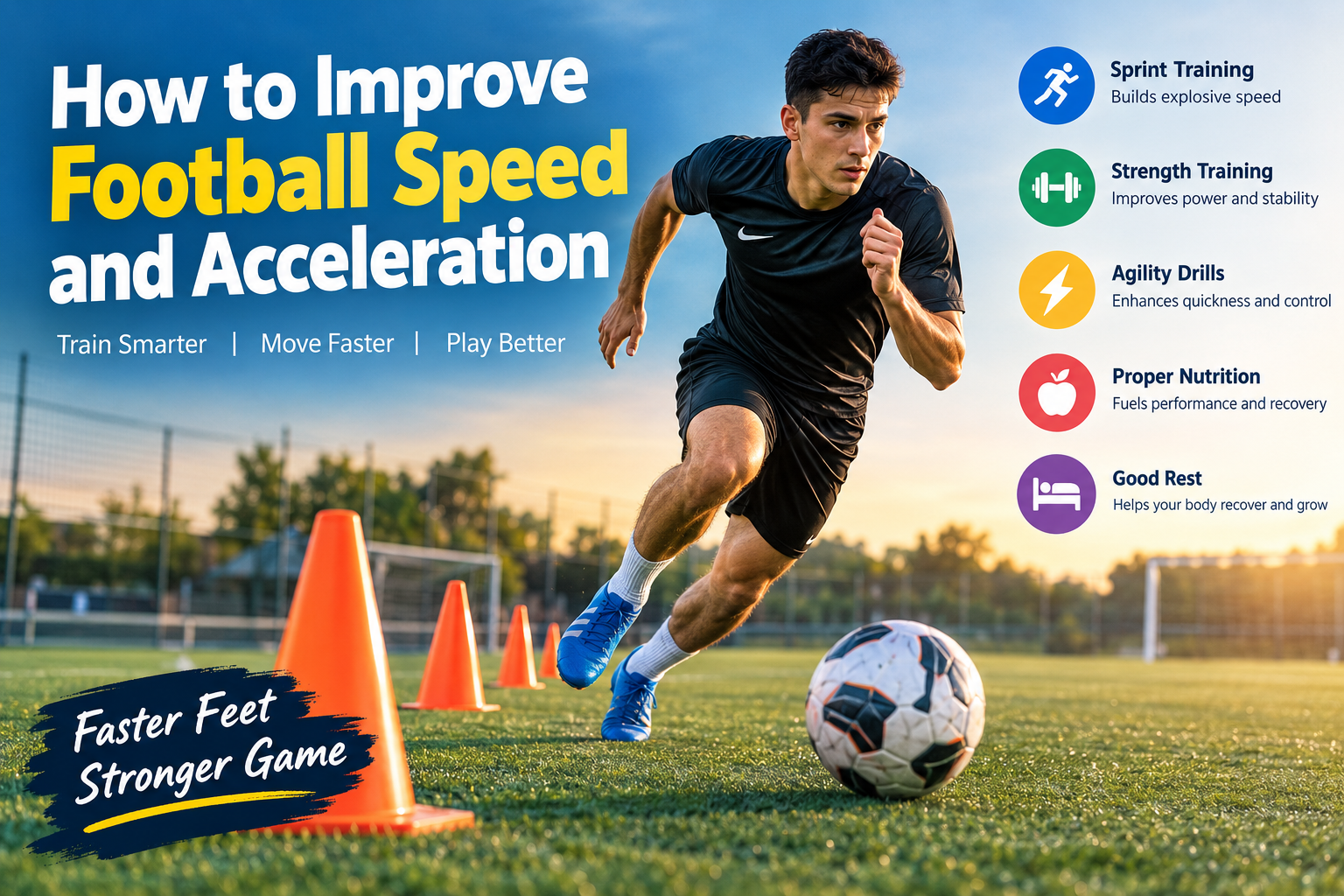
Football is a game where speed can make a big difference. A player who can accelerate quickly, change direction, and reach the ball before an opponent often gets more opportunities during a match. From my experience and understanding of football training, improving speed is not only about running as fast as possible. It requires proper technique, strength, agility, coordination, recovery, and consistent practice.
Many players spend a lot of time playing matches but do not specifically train their speed and acceleration. This can make it difficult to improve sprinting ability. If you want to become faster on the football field, you need to train the muscles and movement patterns that are used during short and explosive actions.
In this article, I will explain some practical ways to improve football speed and acceleration. These methods can be useful for beginners as well as players who already have some football training experience.
What Is Football Speed and Acceleration?
Football speed is the ability to move quickly across the field. Acceleration is slightly different because it refers to how quickly you can reach a higher speed from a standing or slow position.
For example, a football player may only have a few meters to reach a loose ball. In this situation, acceleration is often more important than maximum running speed. A player needs to react quickly, push against the ground strongly, and reach the ball before the defender.
Football also involves repeated short sprints rather than continuous running at maximum speed. This is why football speed training should focus on explosive movements and quick changes of direction.
Improve Your Sprinting Technique
One of the first things I would focus on when trying to improve football speed is running technique. Good sprinting technique helps you use your energy more efficiently.
When accelerating, try to keep your body slightly forward while driving your legs strongly against the ground. Your arms should move naturally in coordination with your legs. Avoid unnecessary movement because it can waste energy.
Your first few steps are especially important. Focus on powerful pushes rather than trying to immediately stand completely upright. As your speed increases, your body can gradually become more upright.
Practicing proper sprinting technique regularly can help you become more comfortable with fast movement.
Add Short Sprint Training
Short sprint training is one of the most useful exercises for football players. Instead of running long distances, focus on short bursts that are similar to movements during a match.
You can start with sprints of around 10 to 20 meters. Rest properly between repetitions so that you can perform each sprint with good effort.
For example, you can perform five short sprints with enough recovery between each one. As your fitness improves, you can gradually increase the number of repetitions.
I believe quality is more important than simply doing a large number of sprints. If you become extremely tired and your running technique becomes poor, it may be better to stop and recover.
Practice Acceleration From Different Positions
Football players rarely start every sprint from a perfect standing position. During a match, you may need to accelerate after walking, jogging, turning, or reacting to another player.
For this reason, I recommend practicing acceleration from different starting positions.
You can start from a standing position, a slow jog, a side position, or after turning around. Sprint for a short distance and then recover.
This type of training helps your body become comfortable with changing from slow movement to explosive movement.
Build Lower Body Strength
Strength training can also help improve football acceleration. Strong legs allow you to produce more force when pushing against the ground.
Useful exercises include squats, lunges, step ups, calf raises, and glute exercises. These movements can help develop the muscles used during running and jumping.
You do not necessarily need extremely heavy weights. Beginners can start with bodyweight exercises and focus on proper technique.
As your strength improves, resistance can be increased gradually with appropriate supervision.
Train Your Core
Many people focus only on their legs when trying to become faster. However, the core is also important for football speed.
Your core includes the muscles around your stomach, lower back, hips, and pelvis. A strong core can help you maintain control while sprinting, stopping, and changing direction.
Simple exercises such as planks, side planks, dead bugs, and controlled mountain climbers can be included in a football fitness routine.
I find that core training is especially useful for players who want better control during fast movements.
Improve Your Agility
Football speed is not only about running straight. Players constantly change direction while attacking and defending.
Agility training can help you become quicker when moving from one direction to another. Cone drills are a simple way to practice this.
Set up several cones and practice moving around them using short, controlled movements. You can perform forward runs, side movements, quick turns, and short acceleration bursts.
The goal is not simply to move your feet quickly. You should also maintain balance and control while changing direction.
Use Reaction Training
Football requires fast reactions. Sometimes the most important part of speed is how quickly you respond to what is happening around you.
You can practice reaction drills with a training partner. Ask your partner to point in different directions or give verbal commands. When you receive the signal, accelerate in the required direction.
Another option is to use different colored cones and react to a specific color.
These exercises can improve reaction speed while making training more similar to real football situations.
Work on Explosive Power
Explosive power helps football players accelerate quickly. Jumping exercises can be useful for developing this ability.
Exercises such as squat jumps, broad jumps, and controlled box jumps can be included in a training program when performed safely.
Start with simple movements and focus on landing correctly. Your knees should remain controlled and your body should stay balanced.
Explosive exercises can be demanding, so they should not be performed excessively. Give your muscles enough recovery time between intense sessions.
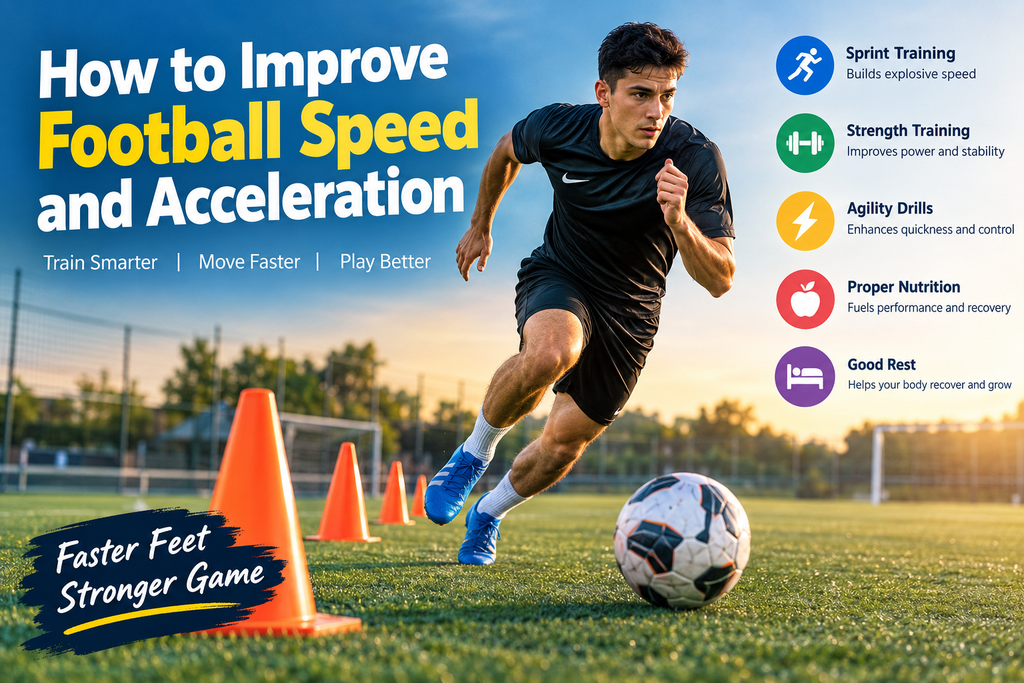
Do Not Ignore Mobility
Good mobility allows you to move comfortably through different positions. Tight muscles can make movement feel restricted and may affect your running technique.
Before training, use a proper warm up that includes light jogging and dynamic movements. Leg swings, walking lunges, high knees, and gentle movement drills can prepare your body for faster activity.
After training, you can use gentle stretching as part of your recovery routine.
Improve Your Football Fitness
Speed is useful, but football players also need the ability to repeat high intensity movements throughout a match.
A player may sprint several times and then need to recover quickly before sprinting again. This is why overall football fitness is important.
You can combine short sprint sessions with football drills and moderate conditioning work. Avoid doing intense training every day because your body needs time to recover.
A balanced training schedule can help you develop speed while maintaining overall fitness.
Pay Attention to Your Running Form
Small technical mistakes can affect your speed. When sprinting, try to keep your movements controlled and coordinated.
Your arms should move naturally. Your steps should be quick and powerful. Avoid excessive upper body movement because it can waste energy.
Keep your eyes focused ahead while remaining aware of your surroundings. Good posture and coordination can make sprinting feel more efficient.
Recording your sprinting technique on a phone can also be helpful. You can watch the video and identify areas where your technique needs improvement.
Eat Properly for Speed Training
Training alone is not enough. Your body needs sufficient nutrition to support intense exercise and recovery.
A balanced diet should include protein, carbohydrates, healthy fats, fruits, vegetables, and enough fluids.
Carbohydrates can provide energy for demanding training sessions, while protein supports muscle recovery. Drinking enough water is also important, especially when training in hot weather.
I believe players should focus on regular balanced meals rather than relying on unnecessary supplements.
Get Enough Rest
Rest is one of the most overlooked parts of speed training. Sprinting and explosive exercises place significant demands on the muscles and nervous system.
If you train intensely every day without recovery, your performance may decrease and your body may become more tired.
Try to maintain a consistent sleep schedule and give your body rest between demanding sessions. Rest days can include light walking, mobility work, or easy technical football practice.
Good recovery allows you to return to training with better energy and concentration.
Follow a Consistent Training Routine
One of the biggest mistakes I see in fitness training is expecting quick results. Football speed usually improves gradually.
You should focus on consistency rather than trying to become faster in a few days. A simple weekly routine could include sprint training, strength exercises, agility drills, football practice, and recovery days.
Keep track of your progress by recording sprint times or noting how your movements feel during training.
Even small improvements can become significant when you continue training for several weeks and months.
Common Mistakes to Avoid
There are several mistakes that can slow your progress. One common mistake is doing too many sprints without enough recovery. Another is ignoring technique and simply trying to run as hard as possible.
Some players also skip strength training and focus only on running. Others train intensely but do not get enough sleep or nutrition.
Another mistake is copying advanced training programs without considering your current fitness level.
I recommend starting with exercises that match your ability and increasing the difficulty gradually.
Final Thoughts
Improving football speed and acceleration requires more than simply running faster. From my point of view, the best approach is to combine sprint training, strength exercises, agility drills, reaction practice, proper running technique, nutrition, and recovery.
Short sprints can help develop acceleration, while strength exercises can help you produce more force. Agility drills can improve your ability to change direction, and reaction exercises can help you respond faster during real football situations.
Most importantly, stay consistent and give your body enough time to adapt. Speed development takes patience, but regular training can help you become quicker, more explosive, and more confident on the football field.
If your goal is to improve football speed and acceleration, start with simple exercises, focus on good technique, and gradually increase the challenge. With smart training and proper recovery, you can build the speed needed to make a stronger impact during the game.