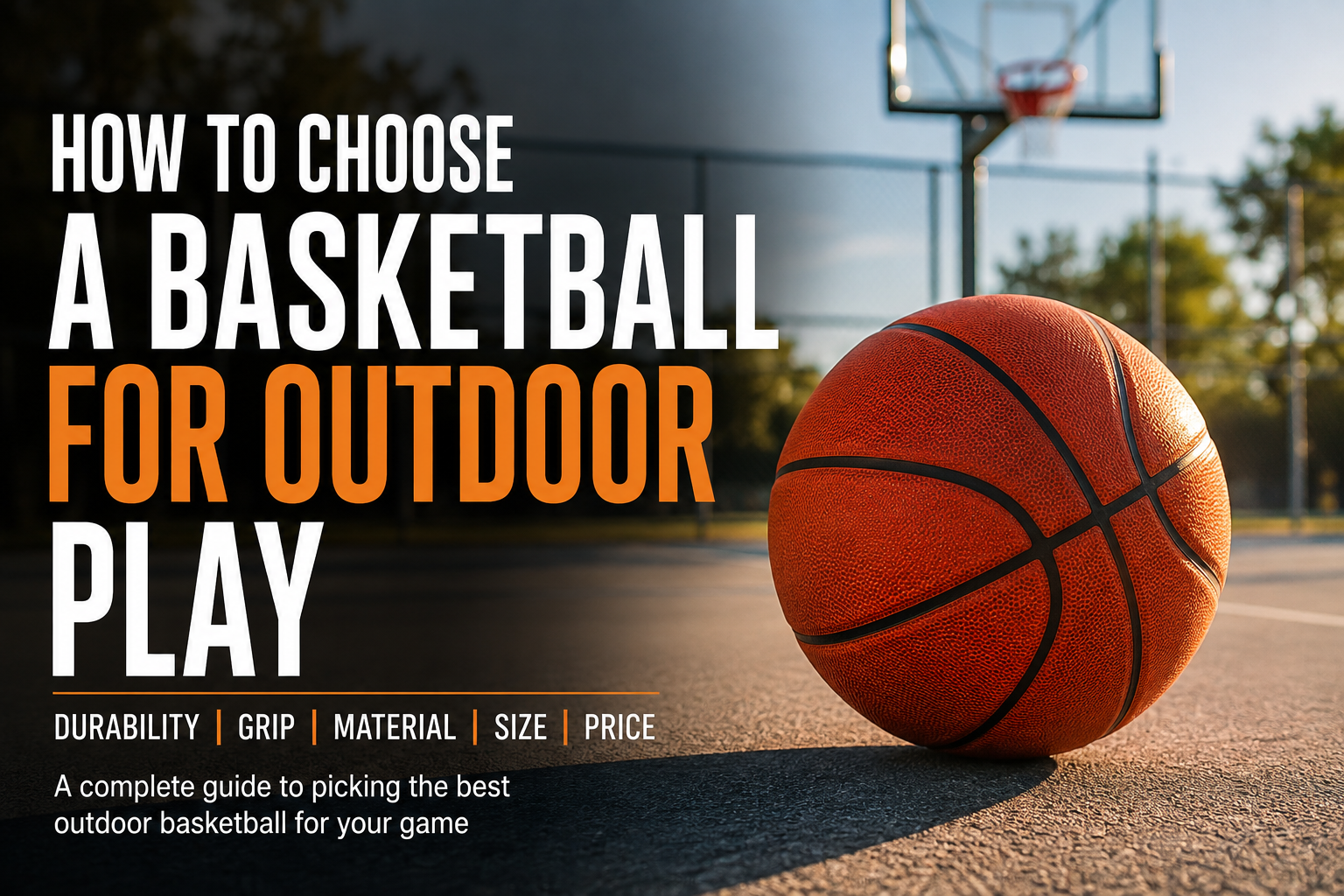
Choosing the right basketball for outdoor play may seem simple at first. A basketball is a basketball, right? In my experience, that is not really the case. When you play regularly on outdoor courts, the type of basketball you use can make a noticeable difference. Outdoor surfaces are usually rougher than indoor basketball courts, and a ball that works well indoors may wear out quickly outside.
If you are looking for the best basketball for outdoor play, I believe you should consider a few important things before buying one. The material, size, grip, durability, bounce, playing surface, and price can all affect your experience. A good outdoor basketball should feel comfortable in your hands, provide reliable control, and handle regular contact with rough surfaces.
In this guide, I will share what I look for when choosing an outdoor basketball and explain the main features beginners should understand.
Choose a Basketball Made for Outdoor Courts
The first thing I recommend checking is whether the basketball is specifically designed for outdoor use. Outdoor courts are often made from concrete or asphalt. These surfaces can be much harder on a basketball than polished indoor courts.
An outdoor basketball usually has a durable cover that is designed to handle rough surfaces. If you use an indoor basketball outside regularly, the outer material may become damaged much faster.
For me, choosing an outdoor basketball is one of the easiest ways to avoid wasting money. A ball designed for outdoor play can handle regular dribbling, passing, shooting, and bouncing on outdoor courts better than a ball made mainly for indoor surfaces.
Consider the Basketball Material
The material of a basketball has a major effect on how it feels and how long it lasts.
Many outdoor basketballs use rubber or composite materials. Rubber basketballs are popular because they are generally durable and can handle rough outdoor surfaces. They are also often a practical choice for beginners who want an affordable basketball for casual games.
Composite leather basketballs can provide a softer and more comfortable feel. Some composite basketballs are designed for both indoor and outdoor use. However, if you mainly play on rough concrete or asphalt, I would still pay close attention to durability.
When I choose a basketball for outdoor play, I prefer a material that balances grip and durability. There is little benefit in having an extremely soft basketball if its surface wears down quickly on the court.
Pick the Correct Basketball Size
Basketball size is another important factor, especially for beginners.
A standard adult basketball is usually size 7. It is commonly used for men’s basketball and is a good option for adult players who want to practice seriously.
Size 6 basketballs are smaller and are commonly used in women’s basketball and by younger players. A smaller basketball can sometimes feel easier to control for beginners who have smaller hands.
There are also smaller basketballs designed for children. These can help young players learn basic skills without struggling to handle a full sized basketball.
In my opinion, choosing the correct basketball size is more important than simply buying the largest ball available. You should be able to comfortably grip the ball, control it while dribbling, and release it naturally when shooting.
Look for a Good Grip
Grip is one of the most important features when choosing a basketball for outdoor play.
A basketball with good grip gives you better control during dribbling, passing, and shooting. Outdoor conditions can also make grip more important because dust, dirt, and moisture can affect how the ball feels.
When I hold a basketball, I like to check whether the surface feels secure in my hands. The channels should also be easy to feel because they can help with ball control.
A good grip is particularly useful for beginners. When you are learning basketball fundamentals, you want to focus on your technique rather than constantly worrying about the ball slipping from your hands.
Check the Durability
If you play basketball outside regularly, durability should be near the top of your list.
Outdoor courts can be rough. Every time the ball hits the ground, the cover experiences friction. Over time, a low quality basketball can develop surface damage, lose its texture, or become uncomfortable to use.
Before buying an outdoor basketball, I recommend looking for one with a reputation for durability. You do not necessarily need the most expensive model. Instead, look for a basketball that is specifically made to handle outdoor conditions.
For casual players, a reasonably priced durable basketball can often be a better investment than a premium ball that is mainly designed for indoor courts.
Think About the Bounce
A basketball should have a consistent bounce. This might sound obvious, but it is something worth considering when buying a new ball.
A properly inflated basketball should bounce predictably from the court. If the ball feels too soft, your dribbling can become difficult. If it is overinflated, the ball may feel harder and less comfortable.
I always recommend following the manufacturer’s inflation guidance rather than guessing. You can also use a suitable basketball pump and check the ball regularly because air pressure can change over time.
Consistent bounce helps you develop better basketball skills because your movements become more predictable.
Consider Where You Will Play
Not every outdoor court is the same.
Some players practice on smooth outdoor courts, while others play on rough concrete or asphalt. The surface of your usual court should influence your decision.
If you mostly play on a rough asphalt court, durability should be your main priority. If you play on a smoother outdoor surface, you may have more flexibility when choosing the basketball material.
Think about your environment before buying. A basketball that works perfectly for one player may not be the best choice for another player because their courts and playing conditions are different.
Check the Basketball Weight
The weight of a basketball can also affect your playing experience.
A standard basketball should have the appropriate weight for its size and intended use. A ball that feels too light or too heavy can make shooting and passing feel unusual.
For beginners, I recommend using a basketball that matches the standard size and weight for their age group and playing level. This helps you develop proper technique and become comfortable with the ball.
If you are buying a basketball for a child, do not automatically choose an adult size. A properly sized ball can make learning basketball much easier and more enjoyable.
Think About Your Budget
Price is another factor I consider when choosing basketball equipment.
You can find basketballs at many different price points. Some are inexpensive and designed for casual use, while others cost more because of their materials, construction, or versatility.
If you are a beginner, I do not think you need to spend a huge amount of money on your first outdoor basketball. A reliable mid range basketball can provide everything you need for practice and casual games.
At the same time, buying the cheapest option is not always the best way to save money. If the basketball wears out quickly, you may end up spending more by replacing it several times.
I prefer to look for a balance between quality, durability, comfort, and price.
Indoor and Outdoor Basketballs Are Different
One mistake beginners sometimes make is assuming that every basketball can be used anywhere.
Indoor basketballs are often designed with materials that provide a softer and more refined feel. Outdoor basketballs need to handle rougher surfaces and more demanding conditions.
Some basketballs are designed for both indoor and outdoor use. These can be useful if you regularly play in different environments.
However, if you play exclusively outside, I would choose a basketball specifically designed for outdoor play. It can give you better durability and may provide better value over time.
Keep Your Outdoor Basketball Clean
Once you buy a good outdoor basketball, taking care of it can help extend its useful life.
Outdoor courts can leave dust and dirt on the surface of the ball. I recommend wiping your basketball with a clean, slightly damp cloth when necessary. Avoid using harsh cleaning products unless the manufacturer specifically recommends them.
It is also a good idea to store the basketball in a dry place. Leaving it outside in direct sunlight or extreme weather for long periods may affect the material.
A little basic maintenance can help keep the grip and appearance of your basketball in better condition.
Do Not Ignore Comfort
Technical features are important, but comfort matters too.
When you pick up a basketball, you should feel comfortable holding it. The surface should not feel excessively slippery or unusually hard for your playing style.
For me, this is one of the reasons I prefer trying a basketball before buying it when possible. Two basketballs with similar specifications can still feel different in your hands.
If you are buying online, pay attention to the product description, size information, material, and reviews. These details can help you understand what to expect before making a purchase.
My Simple Approach to Choosing an Outdoor Basketball
If I were helping a beginner choose a basketball for outdoor play, I would keep the process simple.
First, I would choose the correct size based on the player’s age and playing requirements. Then I would look for a basketball specifically designed for outdoor courts. After that, I would check the cover material, grip, durability, and price.
I would also think about the court surface. Someone playing on rough asphalt needs a different level of durability than someone practicing on a smooth outdoor court.
Finally, I would choose a basketball that feels comfortable and has a consistent bounce.
Final Thoughts
Choosing the best basketball for outdoor play does not have to be complicated. The key is understanding what makes an outdoor basketball different from a basketball designed mainly for indoor use.
In my opinion, durability, grip, correct size, material, and reliable bounce are the most important things to consider. Your playing surface and budget should also influence your final decision.
If you are a beginner, focus on finding a basketball that feels comfortable, is durable enough for your court, and helps you enjoy the game. You do not need the most expensive basketball to improve your skills. What matters most is practicing regularly and becoming comfortable with the ball.
A good outdoor basketball can become an important part of your basketball routine. Choose it carefully, take care of it, and use it consistently. With the right basketball in your hands, outdoor practice can become more comfortable, enjoyable, and productive.