Choosing your first pair of football boots can feel more difficult than I expected. When I first started looking at football boots, I noticed that there were so many different designs, materials, stud patterns, and price ranges. Some boots looked great, while others seemed designed for professional players. As a beginner, it is easy to focus only on appearance and forget about comfort, fit, and the type of pitch you actually play on.
In my opinion, the best football boots for beginners are not necessarily the most expensive or the most advanced ones. A good pair should feel comfortable, provide enough support, suit your playing surface, and allow you to move naturally. In this guide, I will explain how to choose football boots for beginners and the important things I would consider before buying a pair.
Understand Your Playing Surface
The first thing I would check before buying football boots is the surface where I normally play. This is one of the most important parts of choosing the right football boots because different surfaces require different types of studs.
If you mainly play on natural grass, firm ground football boots are usually a practical choice. These boots normally have molded studs designed to provide traction on natural grass pitches that are relatively firm.
For artificial grass, you should look for football boots specifically designed for artificial surfaces. Artificial grass can have different characteristics depending on the pitch, so it is important to check which footwear the facility recommends.
If you play indoor football or futsal, regular outdoor football boots may not be suitable. Indoor football shoes generally have flat rubber soles that provide grip on indoor courts without damaging the playing surface.
From my point of view, buying boots for the wrong surface is one of the easiest mistakes beginners can make. Before thinking about colors or brands, I would always think about where I will actually play.
Focus on the Right Fit
The fit of football boots is extremely important. Even an expensive pair will not be useful if it feels uncomfortable on your feet.
When trying football boots, I recommend wearing the same type of football socks you normally use while playing. Your feet should feel secure inside the boots without being squeezed painfully.
There should be enough room for your toes to move naturally, but your foot should not slide around inside the boot. Excessive movement can make running and changing direction uncomfortable.
I also believe that beginners should avoid buying boots simply because they are advertised as having an extremely tight fit. Some modern football boots are designed to feel very close to the foot, but that does not mean everyone will find them comfortable.
Your foot shape matters. If you have wider feet, look for a model that provides enough space around the forefoot. If you have narrow feet, a more secure fitting boot may feel better.
Comfort should always be one of your biggest priorities when choosing football boots.
Choose the Correct Stud Type
Football boot studs help provide traction when you run, turn, stop, and accelerate. The correct stud pattern depends heavily on the surface.
Firm ground boots are commonly used on natural grass pitches that are firm and relatively dry. Their molded studs are designed to provide a balance between grip and movement.
Artificial ground boots are made for certain artificial pitches and usually have a different sole design. If you regularly play on artificial grass, I would not automatically assume that ordinary firm ground boots are the best option.
Soft ground boots are designed for softer and wetter natural pitches. These boots can have fewer studs that are often longer and designed to provide additional grip.
Indoor football shoes are different again. They normally use a flat rubber outsole instead of traditional studs.
As a beginner, you do not need to understand every technical detail of stud technology. You simply need to match the boot to the surface where you play most often.
Consider the Material
Football boots can be made from different materials, and each material can provide a different feel.
Synthetic materials are popular because they are often lightweight, easy to maintain, and available at many price points. They can also provide a consistent feel when striking the ball.
Leather football boots are known for their soft feel and comfort. Some players like leather because it can provide a natural sensation when controlling the ball. However, leather may require more care than some synthetic materials.
Modern football boots can also use advanced synthetic materials designed to reduce weight and improve ball contact. These features can be useful, but I would not consider them essential for someone buying their first pair.
For beginners, I think comfort and durability are more important than having the latest material technology.
Do Not Choose Boots Only Because They Look Good
I completely understand why beginners may want boots that look fast, colorful, and professional. Football brands produce some very attractive designs, and it can be tempting to choose a pair based entirely on appearance.
However, appearance should not be the main factor.
A boot can look fantastic in photographs but feel uncomfortable after twenty minutes of playing. It is much better to choose boots that feel right on your feet.
I would make a simple rule for myself. If two pairs look equally good but one is clearly more comfortable, I would choose the comfortable pair.
Your football boots are equipment, not just fashion. They should help you enjoy the game rather than distract you while playing.
Think About Your Position and Playing Style
Your position can also influence the type of football boots you prefer, although beginners should not overthink this.
A midfielder may want boots that feel comfortable during constant movement and ball control. A winger may prefer something lightweight that feels responsive when accelerating. A defender might place more emphasis on stability and comfort.
For a beginner, however, there is no need to buy a specialized boot simply because you play a certain position.
A comfortable and reliable pair can work well while you develop your skills. As your playing style becomes clearer, you can decide whether you need something more specialized.
I personally think beginners should first learn what they like rather than spending too much money trying to copy professional players.
Set a Realistic Budget
Football boots are available at many different prices. Some premium models can be expensive, but you do not need the most expensive football boots to enjoy the game or improve your skills.
Before shopping, I would decide how much I am comfortable spending. Then I would compare several options within that budget.
A mid range pair from a reputable football brand can provide plenty of comfort and performance for a beginner. Older versions of premium boots can also be worth considering because they may be available at lower prices.
I would rather buy a comfortable pair at a reasonable price than spend a large amount of money on features I do not understand or need.
Remember that you may also need football socks, shin guards, and other equipment, so your entire football budget should be considered.
Try the Boots Before Buying
If possible, I recommend trying football boots in person before buying them.
Walk around in them. Move your feet. Bend your toes. Check whether your heel stays secure. Pay attention to any pressure points.
If the boots already feel painful in the store, I would not expect them to magically become comfortable during a full football match.
If you have to purchase online, carefully check the manufacturer’s size guide and read the store’s return policy. Different brands and models can fit differently, so relying only on your usual shoe size may not always be enough.
Measure your feet if necessary and compare the measurements with the size chart.
Avoid Buying Boots That Are Too Big
Some beginners believe buying slightly larger football boots will provide extra comfort. In reality, boots that are too large can allow your feet to move inside them.
That can affect your balance and make quick movements less comfortable. It may also create rubbing and discomfort.
Your football boots should hold your feet securely while still giving your toes enough space.
At the same time, do not choose a size that feels painfully tight simply because you think football boots are supposed to fit extremely closely.
The best fit is secure, comfortable, and natural.
Consider Durability
Beginners often practice frequently, especially when they become excited about improving their skills. Because of this, durability is worth considering.
Look at the stitching, sole construction, upper material, and overall build quality. You do not necessarily need the most durable boots available, but extremely cheap boots may not always provide the lifespan you expect.
Taking care of your football boots can also help them last longer. Clean them after playing, allow them to dry naturally, and avoid leaving them wet inside a sports bag.
Proper care can make a noticeable difference over time.
Think About Your Comfort First
One thing I have learned about sports equipment is that comfort can influence how much you enjoy using it. Football is supposed to be fun, especially when you are starting.
If your feet hurt, you are constantly adjusting your boots, or you feel unstable, it becomes harder to focus on learning the game.
That is why I would always put comfort, fit, and suitability ahead of appearance.
You do not need to impress anyone with your first pair of football boots. You need boots that allow you to move confidently and enjoy playing.
Common Mistakes Beginners Should Avoid
There are several mistakes that I think beginners should avoid when choosing football boots.
The first is buying boots without considering the playing surface. The second is choosing the wrong size. Another common mistake is spending too much money on advanced features that are not necessary.
I would also avoid buying a pair simply because a professional footballer wears the same model. Professional players may have completely different preferences, foot shapes, playing conditions, and equipment arrangements.
Finally, do not ignore discomfort. If something feels wrong when you try the boots, take that feeling seriously.
Final Thoughts
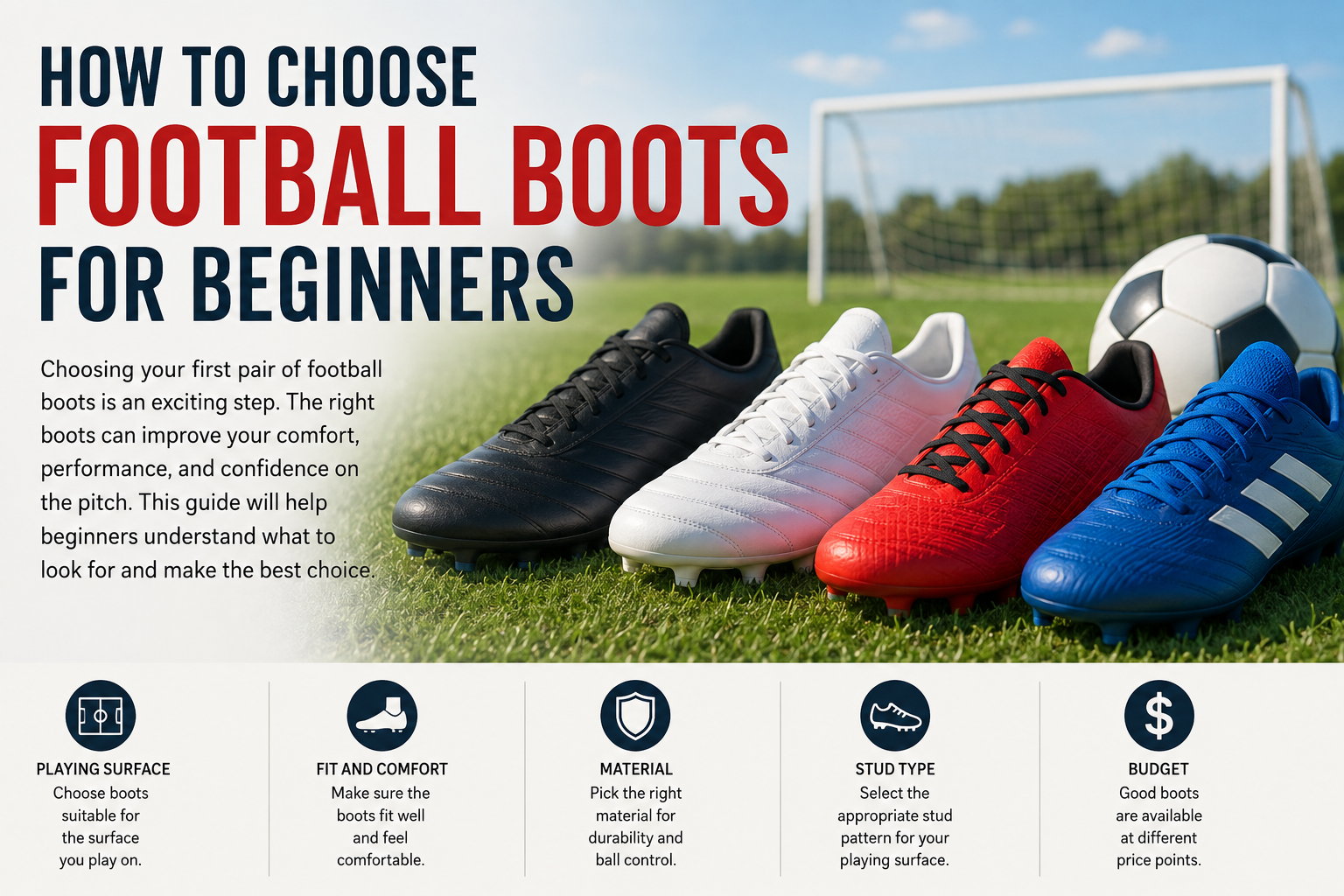
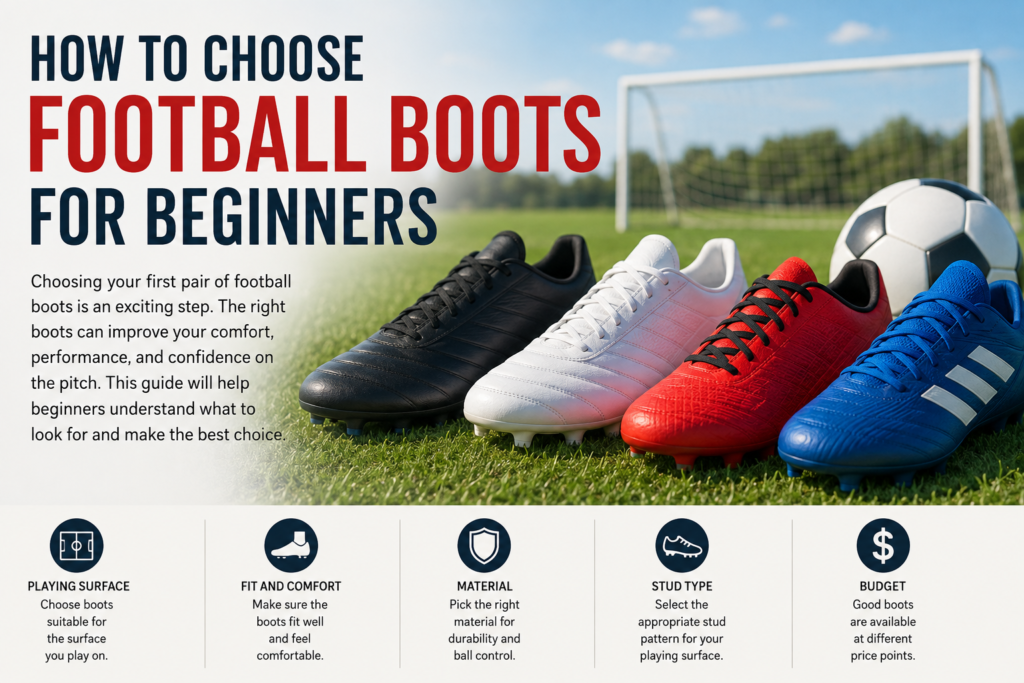
Learning how to choose football boots for beginners does not have to be complicated. I believe the most important things to consider are the playing surface, fit, comfort, stud type, material, durability, playing style, and budget.
You do not need the most expensive football boots or the newest model to start playing well. A simple, comfortable, properly fitted pair can be an excellent choice while you develop your skills.
My advice is to take your time, try different options when possible, and think about your actual needs instead of following trends. The right football boots should feel secure, comfortable, and suitable for the pitch you play on.
Once you find a pair that fits well and gives you confidence, you can focus less on your equipment and more on what really matters, enjoying football and improving your game.