
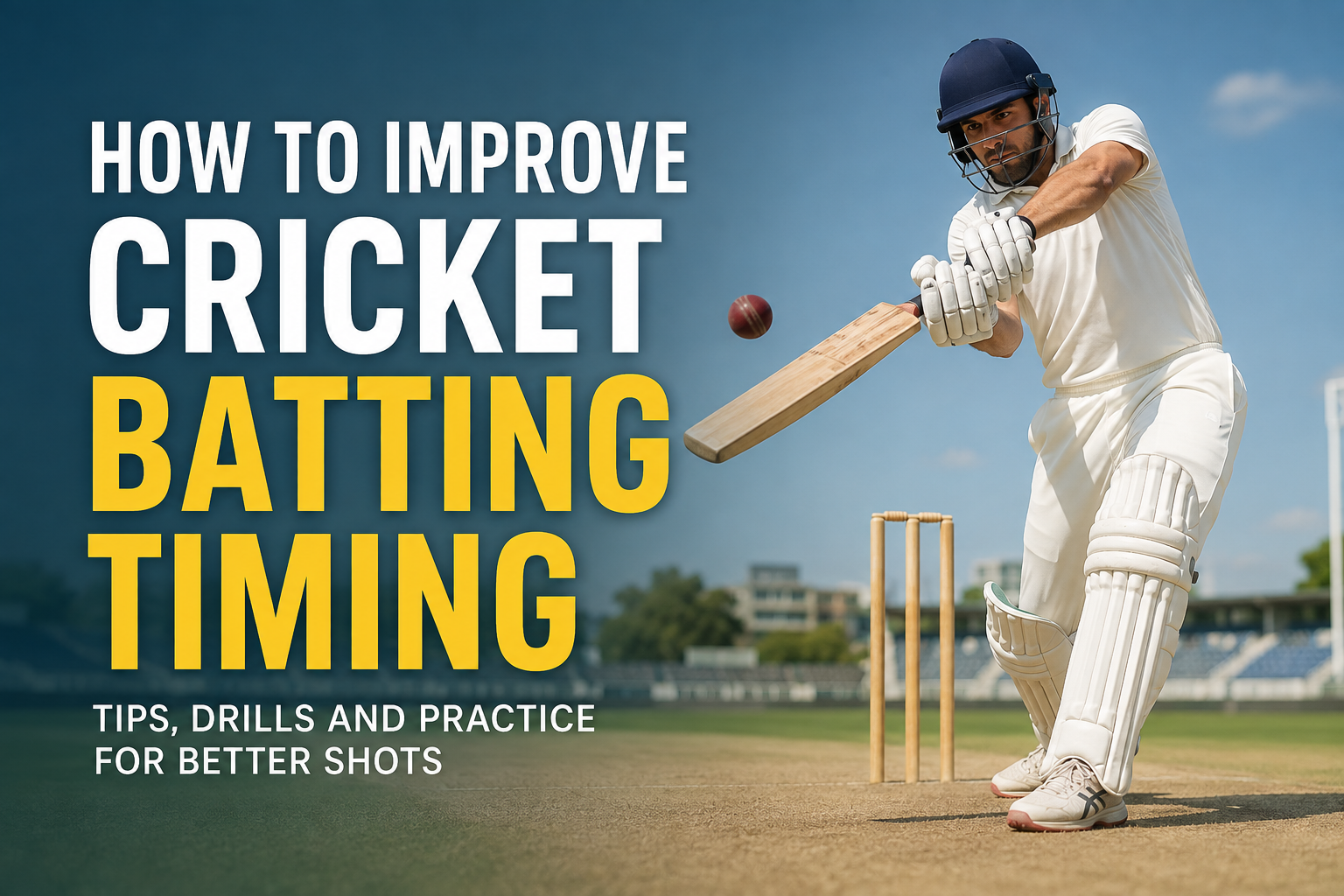
Good batting timing is one of the most important skills in cricket. A player does not always need to hit the ball with maximum power to score runs. When the bat meets the ball at the right moment, even a simple shot can travel quickly toward the boundary. From my experience of watching and practicing cricket, I believe batting timing comes from a combination of good technique, concentration, balance, and regular practice.
Many beginners focus mainly on hitting the ball hard. However, power without timing can lead to mistimed shots, catches, and unnecessary dismissals. If you want to improve cricket batting timing, you need to understand how your body, eyes, hands, feet, and bat work together.
In this guide, I will explain practical ways to improve batting timing and develop better control at the crease.
What Is Batting Timing in Cricket?
Batting timing means making contact with the cricket ball at the right moment during a shot. The goal is to meet the ball with the middle or sweet spot of the bat while maintaining balance and control.
Good timing allows a batsman to use the speed of the delivery instead of depending only on physical strength. This is why technically sound batsmen can play beautiful shots without appearing to use excessive power.
Timing becomes especially important against fast bowlers. If you can judge the speed and length of the delivery correctly, you can use the pace of the ball to your advantage.
Keep Your Head Still
One of the first things I recommend for improving cricket batting timing is keeping your head still.
Your head controls your balance and helps your eyes track the ball. If your head moves too much during the delivery, it becomes harder to judge the ball accurately.
When the bowler releases the ball, try to keep your eyes focused on it. Your head should remain relatively stable as you prepare to play the shot.
A common mistake among beginners is moving the head toward the ball too early. This can affect balance and cause the bat to come through at the wrong angle.
Practice standing in your batting position and watching the ball carefully without making unnecessary head movements.
Watch the Ball Until Contact
The advice to watch the ball is simple, but it is extremely important.
Many players look toward the direction where they want to hit the ball before making contact. This can cause poor timing because the eyes are no longer fully focused on the delivery.
I try to make the ball my main focus from the moment it leaves the bowler’s hand until it reaches the bat. This helps me judge the line, length, speed, and movement of the delivery.
You do not need to stare at the ball unnaturally. The important thing is to maintain strong visual concentration throughout the delivery.
Improve Your Batting Stance
Your batting stance has a direct effect on timing. A comfortable stance allows you to move quickly and bring the bat into the correct position.
Stand with your feet approximately shoulder width apart. Keep your knees slightly relaxed and distribute your weight comfortably between both feet.
Your shoulders should remain relaxed, and your hands should hold the bat naturally. Avoid gripping the bat too tightly because excessive tension can restrict your movement.
A relaxed grip allows the bat to move smoothly through the ball. I find that players often improve their timing simply by becoming more comfortable and balanced at the crease.
Use a Relaxed Bat Grip
A tight grip can make batting feel stiff. When the hands are too tense, the bat may not move naturally through the shot.
Hold the bat firmly enough to control it, but avoid squeezing the handle with unnecessary force. Your bottom hand should not dominate every shot.
A relaxed grip helps you play controlled drives, cuts, pulls, and defensive strokes.
This does not mean your grip should be weak. It means you should have enough control without creating unnecessary tension in your hands and forearms.
Focus on Footwork
Footwork is one of the biggest factors affecting cricket batting timing.
If your feet are in the wrong position, even a technically good swing can produce poor contact. Good footwork allows you to get your body into a comfortable position before playing the shot.
Against a full delivery, move forward confidently when appropriate. Against a shorter delivery, create enough space to play the correct shot.
Do not move your feet simply because you think you have to. Your movement should respond to the length and line of the ball.
I recommend practicing forward and backward movements regularly because they help develop confidence against different types of deliveries.
Practice Playing Straight
Straight batting drills are excellent for improving timing.
Ask a partner to throw or bowl gentle deliveries toward you. Focus on playing straight drives and defensive shots rather than trying to hit every ball hard.
Your main goal should be clean contact.
Try to meet the ball under your eyes with a controlled bat swing. Listen to the sound of the bat meeting the ball. A clean middle contact often produces a different sound from an edge or mishit.
This type of practice teaches you to value timing and placement instead of raw power.
Use Throwdown Practice
Throwdowns are another useful way to improve cricket batting timing.
A coach, teammate, or training partner can throw balls toward you from a short distance. Because the ball travels at a manageable speed, you can concentrate on your technique.
Start with simple deliveries and gradually increase the speed and variation.
During throwdowns, focus on watching the ball, moving your feet, keeping your head steady, and making contact with the middle of the bat.
The advantage of throwdowns is that you can repeat the same movement many times without the pressure of facing a full bowling spell.
Practice With a Tennis Ball
A tennis ball can be an excellent training tool, especially for beginners.
You can ask a partner to throw a tennis ball from different distances and angles. Try to judge the bounce and play controlled shots.
Another useful exercise is hitting a tennis ball against a wall. Stand at a comfortable distance and hit the ball gently toward the wall. When it returns, prepare for the next shot.
This simple exercise can improve hand eye coordination and reaction speed.
It also allows you to practice regularly without needing a full cricket ground.
Learn to Judge Length Early
Good timing starts before the ball reaches you.
As soon as the bowler releases the ball, try to identify whether it is full, good length, short, or wide.
The earlier you recognize the length, the more time you have to move your feet and prepare your shot.
At first, this may feel difficult. With practice, your brain begins to recognize the delivery more quickly.
Watch experienced batsmen and notice how early they move into position. They are not simply reacting after the ball bounces. They are reading the delivery and preparing their movement in advance.
Do Not Swing Too Hard
One of the most common mistakes I see in beginner batting is trying to hit every ball as hard as possible.
A powerful swing is useful in certain situations, but it is not necessary for every delivery.
If you swing too hard, your body can lose balance and your bat can travel through the wrong path. This often results in mistimed shots.
Instead, start with a smooth swing. Focus on clean contact and proper balance.
Once your timing improves, you can gradually add more power when the situation requires it.
Improve Hand Eye Coordination
Hand eye coordination plays a major role in batting timing.
Simple exercises can help. You can catch a tennis ball with one hand, bounce a ball against a wall, or practice catching from different angles.
You can also use reaction drills where a partner throws a tennis ball unexpectedly from a short distance.
The purpose is not simply to improve your hands. These exercises train your eyes and brain to process movement quickly and coordinate your response.
Better coordination can make it easier to meet the cricket ball accurately.
Practice Different Cricket Shots
Once your basic timing improves, practice different shots.
Work on front foot drives, back foot punches, cuts, pulls, flicks, and defensive strokes. Each shot requires a slightly different body position and contact point.
Do not try to master everything in one session.
Choose two or three shots and practice them repeatedly. Focus on technique and timing rather than the number of runs you can score during practice.
For example, you might spend one session focusing mainly on straight drives and defensive shots. During another session, you can work on back foot shots.
Develop a Consistent Practice Routine
Improving cricket batting timing requires repetition.
You do not need to practice for several hours every day. A focused thirty minute session can be useful if you practice with a clear purpose.
A simple routine could include warm up exercises, shadow batting, throwdowns, front foot shots, back foot shots, and reaction drills.
Keep track of the areas where you struggle. If you regularly mistime short deliveries, give them more attention during your next practice.
Consistency is more important than occasional long training sessions.
Stay Balanced After Every Shot
Your position after playing a shot can tell you a lot about your timing.
If you finish a shot off balance, your movement or contact may need improvement.
After playing the ball, try to remain stable. Your head should stay over your body, and your weight should transfer naturally according to the shot.
Good balance gives you better control and also allows you to respond quickly to the next delivery.
Build Confidence Through Match Practice
Net practice is useful, but match situations are different.
In a match, you have pressure, fielders, a scoreboard, and an opponent trying to dismiss you. These factors can affect concentration and timing.
Try to take your practice skills into actual games.
Do not become frustrated if your timing disappears temporarily during a match. Stay patient and return your attention to the basics.
Watch the ball, stay balanced, judge the length, and play according to the delivery.
Common Mistakes That Reduce Batting Timing
There are several mistakes that can make timing worse.
One common mistake is watching the field instead of the ball. Another is gripping the bat too tightly. Some players also move their head excessively or commit their front foot too early.
Trying to hit every delivery with maximum power is another problem.
Poor footwork can also lead to bad contact. If your feet are not positioned correctly, your hands have to compensate, which makes timing much harder.
The solution is usually not to swing harder. Instead, return to the basics and focus on balance, vision, movement, and controlled bat speed.
Final Thoughts
Learning how to improve cricket batting timing takes patience, but it is one of the most rewarding parts of cricket practice. In my view, timing is developed through a combination of good technique, strong concentration, proper footwork, and repeated practice.
Start with the basics. Keep your head still, watch the ball carefully, maintain a relaxed grip, and move your feet according to the length of the delivery. Practice simple shots before trying complicated ones.
Do not measure your progress only by how many boundaries you hit. Pay attention to the quality of your contact and how balanced you feel after each shot.
With regular practice, your eyes will become better at judging the ball, your feet will respond more naturally, and your bat will begin to meet the ball at the right moment.
The biggest lesson I have learned about batting timing is that good timing does not come from forcing the shot. It comes from being ready, watching the ball, moving correctly, and allowing the bat to do its job naturally.
If you stay patient and practice these skills consistently, you can gradually develop better cricket batting timing and become a more confident and controlled batsman.