Basketball is often described as a game of scoring, but in my opinion, good passing is one of the most important skills a player can develop. A team with players who know how to pass the ball can create better scoring opportunities, move the defense, and play with much more confidence. I have always believed that basketball passing skills are not only about throwing the ball to a teammate. Good passing is about timing, accuracy, awareness, communication, and understanding what is happening on the court.
If you want to improve your basketball passing skills, you do not need complicated equipment. With regular practice and the right techniques, you can become a more reliable passer and a better team player. In this article, I will share some simple and effective ways to improve basketball passing skills, whether you are a beginner or already have some experience.
Why Basketball Passing Skills Are Important
Passing allows players to work together instead of trying to create every scoring opportunity alone. When the ball moves quickly, defenders have to work harder and often leave open spaces.
In my view, a good passer is someone who can make the right decision quickly. Sometimes the best pass is a simple pass to a teammate nearby. At other times, a player may need to make a bounce pass, overhead pass, or long court pass.
Strong basketball passing skills also help improve team chemistry. When players trust each other, they are more willing to move without the ball and make themselves available for passes.
Learn the Basic Types of Basketball Passes
The first step toward improving your basketball passing skills is learning the basic types of passes. Each pass has a different purpose.
Chest Pass
The chest pass is one of the most common basketball passes. It is useful when you have a clear passing lane and your teammate is relatively close.
Hold the basketball near your chest, step toward your teammate, and push the ball forward with both hands. Your fingers should point toward your teammate after the ball leaves your hands.
I recommend practicing this pass regularly because it helps develop accuracy and passing speed.
Bounce Pass
The bounce pass is useful when a defender is standing between you and your teammate. Instead of passing the ball directly, you send it toward the floor so it bounces into your teammate’s hands.
A good bounce pass should usually reach the floor somewhere between you and your teammate. Practice controlling the angle and strength of the pass because a weak bounce can be easily intercepted.
Overhead Pass
The overhead pass is useful when you need to pass over a defender. Bring the basketball above your head and use both hands to send it toward your teammate.
This pass can be especially helpful when a defender is applying pressure close to your body.
One Hand Pass
As you become more comfortable, practice passing with one hand. One hand passes can be useful when you need to quickly move the ball while protecting it from a defender.
However, I would recommend mastering two hand passing first. Once you have good control, you can gradually add more advanced techniques.
Practice Passing Against a Wall
One of my favorite basketball passing drills for beginners is wall passing. It is simple, affordable, and can be done almost anywhere with enough safe space.
Stand a few feet away from a solid wall and practice chest passes. Aim at the same spot every time. Try to receive the ball with control and immediately pass it again.
After becoming comfortable, practice bounce passes and overhead passes.
The main goal is not just to throw the ball as hard as possible. Focus on accuracy, hand position, footwork, and receiving the ball correctly.
You can also challenge yourself by increasing the distance from the wall. This helps develop stronger and more controlled passes.
Work on Passing Accuracy
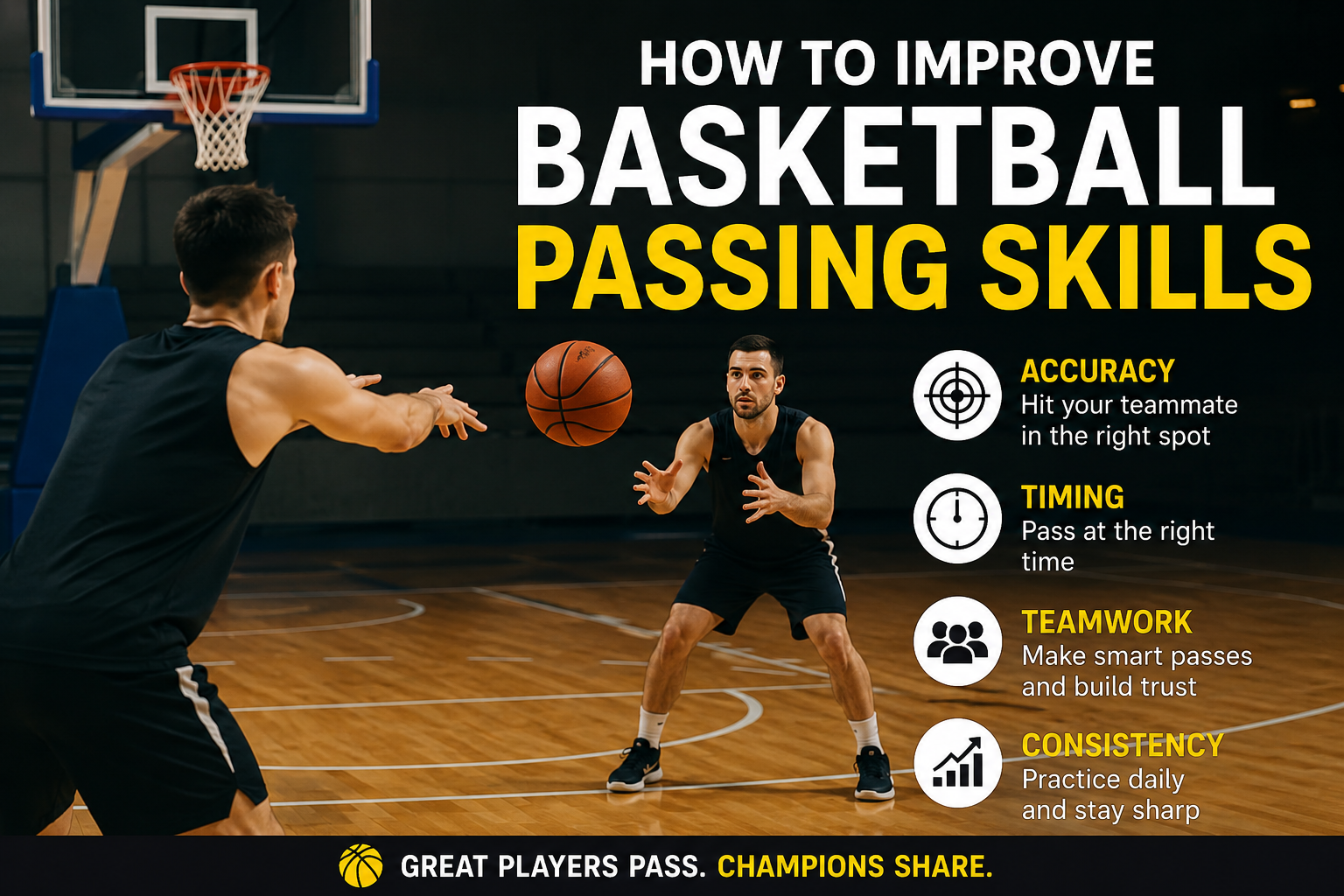
Accuracy is one of the most important parts of basketball passing skills. A powerful pass is not useful if it goes behind your teammate or into the defender’s hands.
When practicing, aim for your teammate’s chest area when using a chest pass. For a bounce pass, focus on the correct point on the floor.
I believe accuracy should always come before power. Once your passes become accurate, you can gradually increase speed and strength.
Try setting a target on a wall and count how many successful passes you can make without missing. This gives your practice a simple goal and helps you track improvement.
Improve Your Footwork
Passing is not only about your hands. Your feet play an important role too.
Before making a pass, get into a balanced position. Keep your knees slightly bent and stay ready to move. Step toward your target when possible because this can help you generate better control.
Good footwork also helps you protect the basketball. If a defender is close, you may need to pivot before making a pass.
I have found that players who practice footwork along with passing become more comfortable under defensive pressure.
Practice Passing With Both Hands
Many beginners become comfortable passing with their dominant hand and avoid using their weaker hand. This can create problems during games.
Try to practice passing with both hands. Work on basic passes using your left and right hand and gradually increase the difficulty.
Being comfortable with both hands gives you more options when a defender is trying to block your passing lane.
You do not need to become perfect immediately. Even a few minutes of weak hand passing during every practice session can make a noticeable difference over time.
Improve Your Court Awareness
A great passer does not only look at the player holding their hands up for the ball. They also pay attention to defenders, teammates, open spaces, and the movement of the game.
Before receiving the ball, try to look around the court. Know where your teammates are and notice where defenders are positioned.
When you receive the basketball, avoid automatically staring at the ball. Keep your head up and look for opportunities.
This is one of the biggest differences between basic passing and advanced basketball passing skills. Good court awareness allows you to see an opportunity before it disappears.
Practice Passing Under Pressure
Passing during an empty gym session is much easier than passing during a competitive game. This is why I recommend adding pressure to your basketball passing drills.
Ask a teammate to defend you while you practice making passes. Start with light pressure and slowly increase the difficulty.
You can also practice passing after dribbling, changing direction, or moving toward the basket. These situations are closer to what happens during an actual game.
The goal is to remain calm and make good decisions even when a defender is trying to stop you.
Use Small Group Passing Drills
If you have two or three teammates available, try small group passing drills.
One simple drill involves three players moving around the court while passing the ball. Players should focus on moving after every pass instead of standing still.
Another useful drill is passing while cutting toward the basket. The passer must recognize when the teammate is open and deliver the ball at the right time.
These drills improve communication, movement, timing, and decision making.
Improve Your Passing Timing
Timing is an important part of basketball passing skills. Even an accurate pass can become a bad pass if it is delivered too early or too late.
For example, if your teammate is cutting toward the basket, you should try to pass the ball into their path instead of throwing it directly behind them.
Watch your teammate’s movement and learn to predict where they are going.
In my opinion, good timing comes from playing with teammates regularly. The more you practice together, the easier it becomes to understand each other’s movements.
Communicate With Your Teammates
Communication can make passing much easier. Use your voice and hand signals to let teammates know when you are open.
At the same time, listen to your teammates. If someone calls your name or asks for the ball, quickly check whether the pass is safe.
Good communication reduces confusion and helps the whole team make faster decisions.
Avoid Common Passing Mistakes
There are several common passing mistakes that beginners should try to avoid.
One mistake is passing without looking. Always check the passing lane before releasing the ball.
Another mistake is using too much force. A pass should be strong enough to reach the receiver quickly but controlled enough for them to catch it comfortably.
Some players also make the mistake of passing from the same position every time. Try to move your feet, pivot, and create better passing angles.
Finally, avoid forcing difficult passes when a simple option is available. Smart basketball is often about making the easiest effective decision.
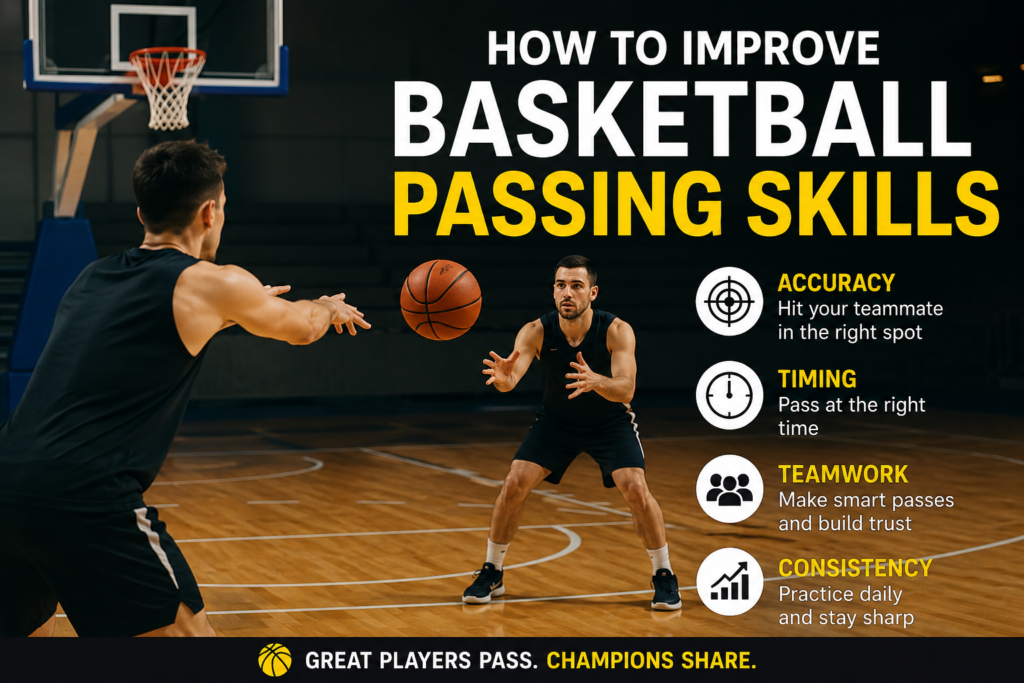
Create a Simple Passing Practice Routine
You do not need to spend hours practicing every day. A consistent routine can be more useful.
For example, you can spend ten minutes on wall passing, ten minutes on bounce passes, and another ten minutes practicing passing with a teammate.
As you improve, add movement and defensive pressure.
Try to practice a little every day instead of doing one very long session once a week. Consistency is one of the best ways to improve basketball passing skills.
Final Thoughts
Improving basketball passing skills takes time, patience, and regular practice. In my experience, the biggest improvements come when players focus on the basics instead of trying to learn advanced tricks too quickly.
Work on chest passes, bounce passes, overhead passes, accuracy, footwork, timing, and court awareness. Practice with a wall when you are alone and work with teammates when you have the opportunity.
Most importantly, remember that passing is about helping the team. A great pass can create an easy basket, break a defense, or give a teammate the confidence to make the next play.
If you practice consistently and learn to make smart decisions, your passing will become faster, more accurate, and more reliable. Strong basketball passing skills can make you a much more valuable player, even when you are not the person scoring the most points.