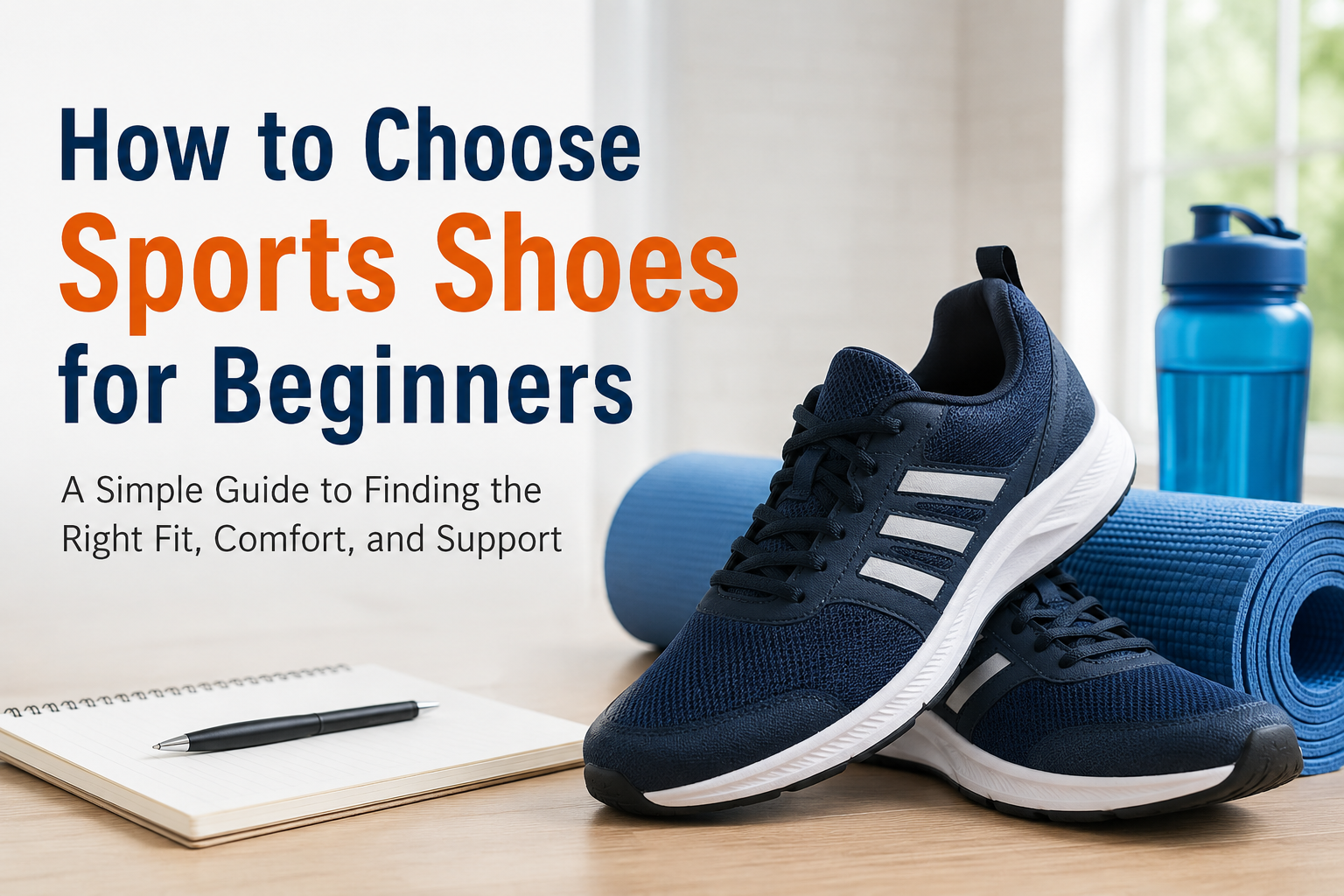
Choosing the right sports shoes can make a big difference when you are starting a new fitness routine. I have always believed that beginners should focus more on comfort, fit, and the type of activity they plan to do rather than simply choosing the most expensive pair. A good pair of sports shoes should feel comfortable from the first time you wear them and should give your feet enough support during movement.
If you are confused by the many styles, brands, and features available, do not worry. In this guide, I will explain how to choose sports shoes for beginners in a simple and practical way.
Know What Activity You Will Do
The first thing I consider when choosing sports shoes is the activity for which I need them. Different sports put different demands on your feet.
Running shoes are designed mainly for forward movement and regular impact. Walking shoes are generally made for comfortable everyday movement. Training shoes are useful for gym workouts, strength exercises, and activities that involve movement in different directions. Football, basketball, and tennis shoes are designed specifically for their respective sports.
This is why I would not recommend buying one pair simply because it looks good. Think about where and how you will use the shoes first.
If you mainly walk, choose comfortable walking or running shoes. If you plan to run regularly, look for running shoes. If your workouts include squats, jumping, and side movements, a suitable training shoe may be a better option.
Focus on the Right Fit
For me, fit is one of the most important factors when buying sports shoes. Even a high quality shoe can become uncomfortable if the size or shape is wrong for your feet.
Your toes should have enough space to move naturally. They should not feel squeezed against the front of the shoe. At the same time, your heel should stay reasonably secure while you walk or exercise.
I recommend trying both shoes because your feet may not be exactly the same size. Walk around the store for a few minutes and pay attention to pressure points.
Do not assume that a shoe will become comfortable later if it feels painful immediately. A little adjustment is normal, but significant discomfort is usually a sign that the shoe is not right for you.
Leave Enough Toe Room
Toe space is especially important for beginners because your feet can swell slightly during longer periods of walking or exercise.
When you stand in the shoes, there should generally be some space between your longest toe and the front of the shoe. Your toes should also be able to move without being compressed.
I prefer checking the fit while standing rather than sitting because your feet can change shape when you put your body weight on them.
If you plan to wear sports socks while exercising, try the shoes with those socks. This gives you a better idea of how the shoes will actually feel during your workouts.
Check the Cushioning
Cushioning is another feature beginners often notice when choosing sports shoes. Cushioning helps provide comfort when your feet repeatedly contact the ground.
However, more cushioning does not automatically mean a better shoe. The ideal amount depends on your activity, personal comfort, and the type of surface where you exercise.
For regular walking or running, comfortable cushioning can make movement feel smoother. For gym training, you may prefer a shoe that feels stable rather than extremely soft.
My advice is simple. Walk and move in the shoes before buying them. If the sole feels comfortable and you feel balanced, that is a good sign.
Look for Good Support
Sports shoes should provide appropriate support without feeling overly restrictive. The shoe should hold your foot comfortably and help you feel stable during movement.
Pay attention to the heel area, middle section, and overall structure of the shoe. Your heel should not slide excessively when you walk.
If you are buying shoes for a particular sport, look for features designed for that activity. For example, sports that involve frequent side to side movement may require a different type of support than regular running.
If you have persistent foot pain or a specific foot condition, it is better to seek professional advice instead of relying only on general shoe recommendations.
Consider the Shoe Material
The material of sports shoes can affect comfort, weight, and breathability.
Many modern sports shoes use lightweight materials that allow air to move through the upper part of the shoe. This can help your feet feel more comfortable during longer workouts.
I personally prefer shoes that do not feel unnecessarily heavy. When you are exercising regularly, lightweight footwear can make the overall experience more comfortable.
You should also consider the environment where you will use the shoes. If you exercise in a warm climate, breathable materials can be particularly useful.
Check the Sole and Grip
The bottom of a sports shoe should provide appropriate grip for the surface where you exercise.
If you mainly exercise indoors, look for a sole that works well on indoor flooring. If you run outdoors, consider shoes with an outsole suitable for roads or paths.
Good grip can help you feel more confident while moving. However, the right outsole depends on the activity and surface.
Before buying sports shoes, think about where you spend most of your training time. This small decision can make your shoes much more useful.
Do Not Choose Shoes Only by Appearance
I understand why beginners are attracted to stylish sports shoes. A good looking pair can make you feel excited about starting a new fitness routine.
However, appearance should not be your main reason for buying them.
A shoe can look fantastic but still be uncomfortable, too narrow, too loose, or unsuitable for your activity.
I always recommend putting comfort and function first. If you can find a pair that looks good as well, that is even better.
Consider Your Budget
You do not necessarily need the most expensive sports shoes as a beginner.
There are many reasonably priced options that can provide good comfort and performance. Instead of focusing only on the price, compare the fit, materials, comfort, durability, and purpose of the shoe.
At the same time, I would avoid choosing the cheapest pair simply to save money. If the shoes are uncomfortable or wear out quickly, you may end up spending more later.
Set a realistic budget and look for the best value within that range.
Try Shoes at the Right Time
One useful tip that many beginners overlook is when they try on sports shoes.
Feet can become slightly larger during the day because of normal swelling. For this reason, trying shoes later in the day can sometimes give you a more realistic fit than trying them early in the morning.
Wear the socks you normally use for exercise and take your time. Walk around, bend your feet, and check whether there is uncomfortable pressure anywhere.
Do not rush the decision just because you like the design.
Think About Your Training Surface
Your training surface also matters when choosing sports shoes.
Running on pavement, walking on a treadmill, exercising on a gym floor, and playing on a sports court can all require different footwear characteristics.
If you are mainly using a treadmill, comfortable running shoes can be suitable. For general gym training, training shoes may provide better stability for different exercises.
If you participate in a specific sport, choosing footwear designed for that sport is usually a sensible approach.
Check the Shoe Before Every Workout
Buying the right sports shoes is only the beginning. I also recommend checking them regularly.
Look at the outsole to see whether the tread is becoming worn. Check whether the upper material is damaged and whether the cushioning still feels comfortable.
If your shoes become noticeably uncomfortable or their structure has changed, it may be time to replace them.
There is no single replacement date that works for everyone because shoe life depends on factors such as activity level, body weight, surface, shoe quality, and frequency of use.
Common Mistakes Beginners Should Avoid
One common mistake is buying the wrong size because a particular size is usually worn. Shoe sizes can vary between brands and models, so comfort should be the final test.
Another mistake is choosing shoes based only on price or appearance. A stylish and expensive shoe is not automatically the right shoe for you.
Some beginners also buy sports shoes without considering their activity. Running shoes, training shoes, and sport specific shoes have different purposes.
Another mistake is ignoring discomfort. If your feet hurt every time you exercise, the shoes may not be suitable.
Final Thoughts
Learning how to choose sports shoes for beginners does not have to be complicated. Start by identifying your main activity, then focus on fit, comfort, support, cushioning, material, grip, and overall stability.
In my opinion, the best sports shoes are the ones that make you feel comfortable and confident while you move. You do not need to follow every trend or buy the most expensive model. You simply need footwear that matches your activity and fits your feet properly.
Take your time when shopping, try both shoes, walk around in them, and pay attention to how your feet feel. The right pair can make your workouts more enjoyable and help you stay consistent with your fitness goals.
Most importantly, remember that good sports shoes are an investment in your everyday comfort. When your feet feel comfortable, it becomes easier to focus on your workout instead of thinking about your footwear.
Primary Keyword: How to Choose Sports Shoes for Beginners
SEO Keywords: sports shoes for beginners, best sports shoes for beginners, how to choose sports shoes, beginner sports footwear, comfortable sports shoes, sports shoe buying guide, running shoes for beginners, training shoes for beginners