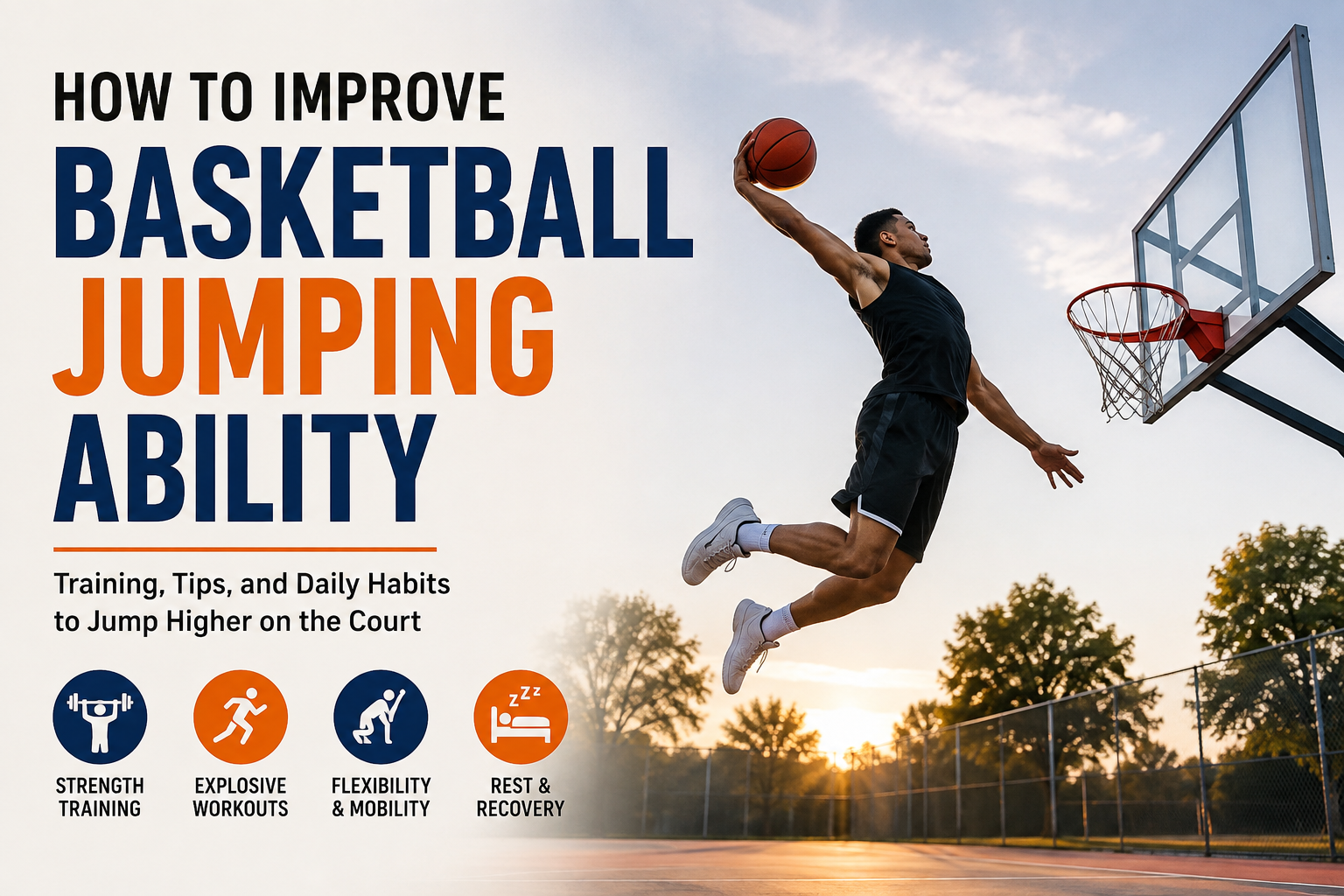
Jumping is one of the most useful physical skills in basketball. A good vertical jump can help you grab rebounds, block shots, finish near the basket, and even improve your ability to shoot over defenders. I have always believed that jumping ability is not only about natural talent. With the right training, proper technique, patience, and consistent practice, most basketball players can improve how high and how explosively they jump.
If you want to know how to improve basketball jumping ability, you should focus on several areas instead of doing hundreds of jumps every day. Your leg strength, explosive power, balance, mobility, jumping technique, and recovery all play an important role. In this guide, I will explain the methods I would use to build a stronger and more explosive basketball jump.
Why Jumping Ability Matters in Basketball
Basketball is a game of quick movements. Players constantly accelerate, stop, change direction, and jump. A stronger vertical jump can give you an advantage in many situations.
When you improve your jumping ability, you can become more effective around the basket. You may reach rebounds before other players, contest shots more effectively, and finish layups with greater confidence.
Jumping ability can also improve your overall athleticism. The exercises used to increase your vertical jump can strengthen your legs and improve your ability to produce power quickly.
Build Stronger Legs First
In my opinion, strength training should be the foundation of a good basketball jumping program. Your legs produce most of the force needed to push your body away from the ground.
Exercises such as squats, lunges, step ups, and glute bridges can help develop the muscles involved in jumping. You do not need to lift extremely heavy weights to make progress, especially if you are a beginner. Start with good form and gradually increase the difficulty.
Bodyweight squats are a simple place to start. Perform them slowly and maintain control throughout each repetition. As your strength improves, you can introduce resistance under proper supervision.
Lunges are another useful exercise because they work each leg individually. This can help improve strength and balance while also supporting movements that are common in basketball.
Add Explosive Training
Strength alone is not enough. Basketball players need to produce force quickly. This is where explosive training becomes important.
Jump squats, box jumps, and broad jumps can help you practice producing force rapidly. These exercises are commonly used to develop explosive lower body power.
When performing explosive exercises, focus on quality rather than quantity. I would rather perform a small number of powerful repetitions with good technique than continue jumping after becoming tired.
For example, you can start with three sets of five controlled jump squats. Give yourself enough rest between sets so that every repetition remains powerful.
Practice Your Jumping Technique
Sometimes players believe they need more strength when their real problem is jumping technique. The way you use your arms, hips, knees, and ankles can make a noticeable difference.
Before jumping, bend your knees and hips naturally. Swing your arms upward as you push through your feet. Try to coordinate the movement so your entire body works together.
Your landing technique is equally important. Land softly with your knees slightly bent instead of landing stiffly. Good landing mechanics can help you control your body and reduce unnecessary stress on your joints.
If you are learning how to improve basketball jumping ability, do not ignore technique. A more efficient movement can help you get better results from the strength you already have.
Improve Your Core Strength
Your legs are important for jumping, but your core also matters. A strong core helps you control your body while taking off and landing.
Simple exercises such as planks, dead bugs, bird dogs, and controlled mountain climbers can help develop core stability.
I like to include core exercises because basketball requires you to control your body in the air. When you jump for a rebound or attempt a layup, your body needs to remain stable while you move your arms and legs.
A stronger core can also support better balance during basketball movements.
Work on Single Leg Power
Basketball does not always involve jumping from two feet. Players often jump from one foot when driving toward the basket or finishing a fast break.
For this reason, single leg exercises can be useful. Step ups, split squats, single leg calf raises, and controlled single leg jumps can help improve individual leg strength and coordination.
Start slowly with single leg exercises. Balance and control are more important than jumping as high as possible.
Over time, you can increase the difficulty as your body becomes more comfortable with the movement.
Strengthen Your Calves and Ankles
Your ankles and calves also contribute to jumping. The final part of your takeoff involves pushing through your feet, so these areas should not be neglected.
Calf raises are an easy exercise that can be performed almost anywhere. Stand with your feet stable, raise your heels, pause briefly, and lower yourself under control.
You can perform both double leg and single leg calf raises. Stronger calves can support jumping, running, and general movement around the basketball court.
Ankle mobility is also worth considering. If your ankles feel stiff, gentle mobility exercises can help you move more comfortably.
Use Plyometric Exercises Carefully
Plyometric training is popular among athletes who want to improve explosive power. It involves fast movements such as jumping, hopping, and bounding.
Some useful beginner exercises include pogo jumps, squat jumps, lateral hops, and low box jumps.
However, more is not always better. Jumping places stress on your muscles and joints, so your body needs time to recover. If you perform too many plyometric exercises without rest, your performance can decrease and your risk of overuse problems can increase.
Start with a small amount of plyometric training and gradually build up your workload.
Improve Flexibility and Mobility
Flexibility is another part of athletic performance that I would not ignore. Tight muscles can make certain movements feel uncomfortable and may limit your ability to move efficiently.
Spend a few minutes working on your hips, ankles, hamstrings, and calves. Dynamic movements are especially useful before basketball training because they prepare your body for activity.
Before a workout, you can use movements such as leg swings, walking lunges, ankle circles, and light jogging.
After training, gentle stretching can help you relax and maintain comfortable movement.
Do Not Forget About Recovery
One of the biggest mistakes I see in athletic training is believing that more training always means faster progress. Your body needs recovery to adapt to exercise.
If you train your legs hard every day, they may not have enough time to recover. Instead of jumping higher, you may feel tired and perform worse.
Give your body rest between demanding jumping sessions. Sleep is also extremely important. A consistent sleep schedule can support physical recovery and athletic performance.
Nutrition matters too. Eating balanced meals with enough protein, carbohydrates, healthy fats, fruits, vegetables, and fluids can support your training.
Practice Basketball Specific Jumps
Gym exercises can help, but you should also practice jumping in basketball situations.
Try practicing rebounds, jump stops, defensive contests, and layups. Focus on jumping quickly and controlling your landing.
You can also practice your approach jump. Take a few controlled steps toward the basket, plant your feet correctly, swing your arms, and jump vertically.
This type of practice helps connect your physical training with actual basketball movement.
Follow a Consistent Training Routine
Consistency is more important than trying a new exercise every week. I would recommend creating a simple routine that you can follow for several weeks.
For example, you might have two strength training sessions and two basketball skill sessions each week. Add a small amount of explosive jumping work while allowing enough recovery between hard sessions.
Track your progress instead of relying only on how you feel. You can measure your standing reach and maximum jump occasionally under similar conditions.
Do not expect a huge improvement after a few workouts. Jumping ability usually develops gradually through repeated training.
Common Mistakes to Avoid
One common mistake is doing too many jumps. High volume can make your legs tired without giving you better results.
Another mistake is ignoring strength training. If you only practice jumping without building the physical foundation underneath it, progress may eventually slow down.
Poor landing technique is another issue. Always learn to land under control.
Some players also compare themselves with other athletes too much. Natural differences exist between players, including body structure, training history, and athletic background. Focus on improving your own performance.
Finally, avoid rushing into advanced plyometric exercises. Build a foundation first and increase difficulty gradually.
A Simple Beginner Approach
If I were helping a beginner improve basketball jumping ability, I would keep the starting routine simple.
Begin with a proper warm up consisting of light jogging and dynamic movements. Then perform exercises such as bodyweight squats, lunges, calf raises, and glute bridges.
After building basic strength, add controlled jump squats and low intensity hops. Keep the number of repetitions manageable and concentrate on explosive but controlled movements.
Finish with light mobility work and allow your body enough time to recover.
As your fitness improves, you can gradually make the exercises more challenging.
Final Thoughts
Learning how to improve basketball jumping ability takes patience. There is no single exercise that will suddenly make you jump much higher. The best results usually come from combining strength training, explosive exercises, proper jumping technique, mobility, basketball practice, nutrition, and recovery.
In my view, the most important thing is consistency. Train intelligently, focus on good technique, and give your body enough time to adapt. Whether your goal is to grab more rebounds, improve your layups, contest shots, or simply become a more athletic basketball player, improving your jumping ability can make a meaningful difference on the court.
Start with the basics, track your progress, and keep working toward small improvements. With regular practice and a sensible training approach, you can develop stronger legs, better explosiveness, and greater confidence in your basketball jump.