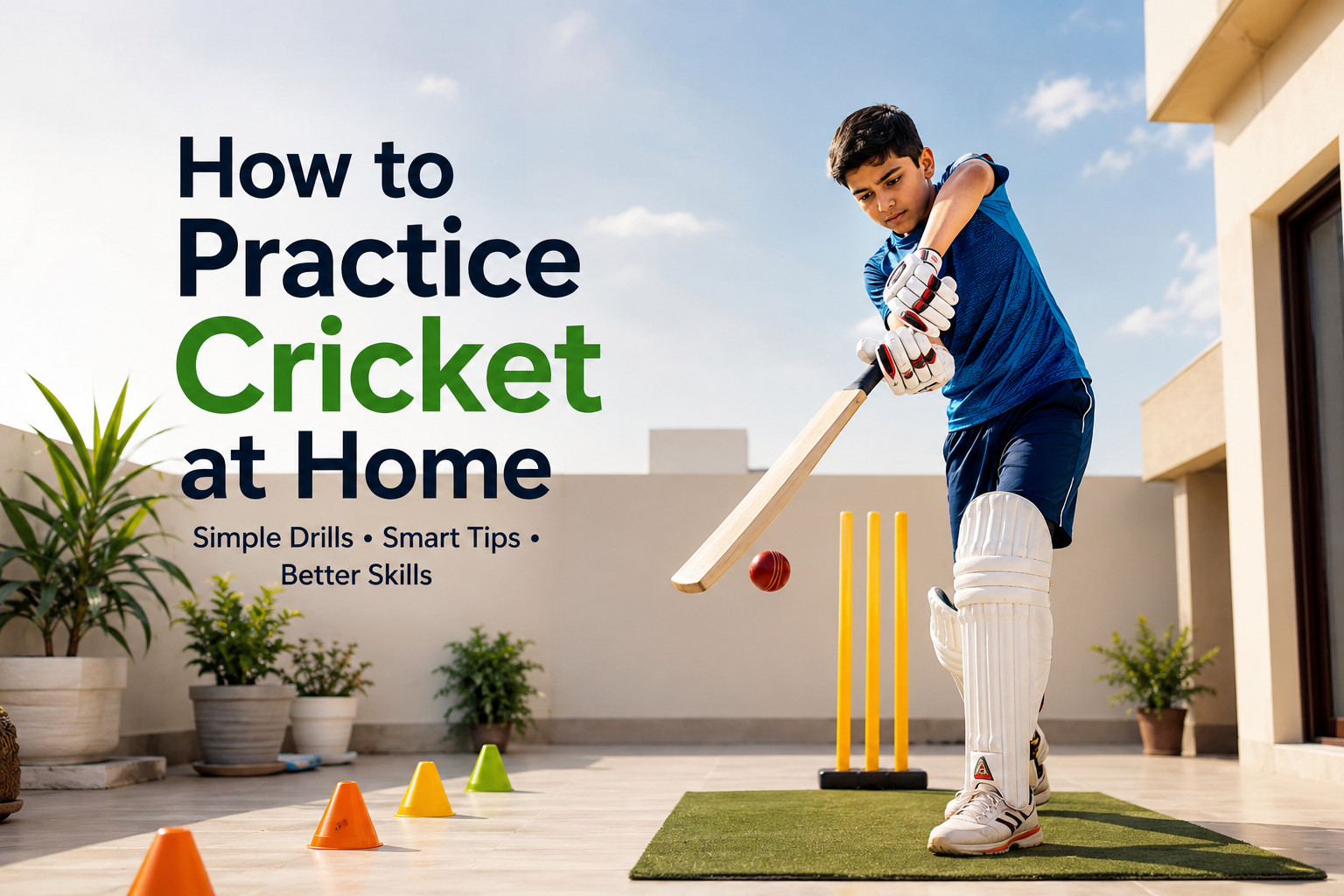
Cricket is a sport that improves through regular practice, and you do not always need a cricket ground to develop your skills. In my experience, even a small space at home can be useful when you practice with a clear plan. You can work on your batting technique, hand eye coordination, footwork, bowling action, catching, fitness, and reaction time with simple equipment.
The biggest advantage of practicing cricket at home is consistency. Instead of waiting for a match or training session, you can spend 20 to 40 minutes working on one particular skill. With regular practice, small improvements can become noticeable over time.
In this guide, I will share some simple ways to practice cricket at home safely and effectively, whether you are a complete beginner or already play regularly.
Start With a Proper Warm Up
Before practicing cricket at home, I recommend starting with a short warm up. This prepares your body for movement and helps you practice more comfortably.
You can begin with light jogging in place for two or three minutes. After that, move your arms, shoulders, wrists, hips, knees, and ankles gently. You can also perform jumping jacks and high knees for a short period.
A good cricket warm up should prepare the muscles you use for batting, bowling, throwing, and running. Even if your home practice looks easy, do not skip the warm up.
Practice Your Batting Stance
One of the easiest cricket skills to practice at home is your batting stance. You do not need a large area for this exercise.
Take your cricket bat and stand as if you are facing a bowler. Keep your feet comfortable, your knees slightly bent, and your head balanced. Hold the bat correctly and focus on keeping your eyes forward.
Practice getting into your stance repeatedly. Then move from your normal stance into different positions while keeping your balance.
I believe this simple exercise is useful because a comfortable stance gives you a strong starting position for every cricket shot.
Improve Your Bat Swing
You can practice your cricket bat swing at home without hitting a ball. This is particularly useful for beginners who want to improve their technique.
Stand in your batting position and practice controlled forward defensive movements. Then practice drives, pulls, and other basic strokes without trying to swing too hard.
Focus on balance rather than power. Your head should remain steady, and your movement should feel controlled.
Try ten repetitions of one shot before moving to another. This helps you understand the movement instead of simply swinging the bat randomly.
Make sure there is enough open space around you before using a cricket bat indoors or outdoors.
Use a Tennis Ball for Batting Practice
A tennis ball can be one of the most useful pieces of equipment for home cricket practice. It is lighter and softer than a cricket ball, making it more suitable for many home environments.
Ask a family member or friend to throw the ball gently toward you if you have enough safe space. You can practice watching the ball closely and playing simple shots.
If you are practicing alone, you can use a wall only when the area is safe and the wall is suitable for this type of activity. Throw the ball gently against the wall and prepare to play the returning ball.
The main goal is to improve timing and hand eye coordination. Do not worry about hitting the ball as hard as possible.
Practice Hand Eye Coordination
Good hand eye coordination is important for batsmen, bowlers, wicketkeepers, and fielders.
One simple exercise is to throw a tennis ball from one hand to the other. Start slowly and gradually increase the speed. You can also throw the ball against a safe wall and catch it after one bounce.
Another useful exercise is catching the ball with one hand. Start with easy catches and slowly increase the difficulty.
I like these exercises because they require very little equipment but can make your reactions quicker with regular practice.
Improve Your Cricket Bowling at Home
You can also work on your bowling technique at home, although you should be careful about the available space.
Start by practicing your bowling action without a ball. Work on your run up, body position, arm movement, and follow through.
If you have a safe outdoor area, you can use a tennis ball for gentle bowling practice. Place a target on the ground and try to land the ball close to it.
Accuracy should come before speed. When you learn to control where the ball goes, you can gradually work on increasing your bowling pace.
If you have limited space, focus mainly on your bowling action and fitness instead of trying to bowl at full speed.
Practice Your Cricket Footwork
Footwork can make a major difference to batting performance. You can practice it almost anywhere with a small amount of space.
Start from your normal batting position. Practice moving your front foot forward as if you are playing a straight drive. Return to your original position and repeat the movement.
You can also practice moving backward and across while keeping your body balanced.
Another simple exercise is placing two or three objects on the ground as movement points. Move between them while maintaining a low and balanced position.
Good footwork helps you get into a better position to play the ball.
Work on Your Fielding Skills
Fielding practice is also possible at home. A tennis ball is ideal for simple catching and throwing exercises.
Stand a few steps away from a wall and throw the ball gently. Catch the rebound with both hands first. As your confidence improves, try catching with one hand.
You can also practice picking the ball up from the ground and throwing it toward a target.
If you have someone available to practice with, ask them to roll the ball toward you from different directions. Move quickly, collect the ball, and return it accurately.
These exercises can improve your reaction time and basic fielding technique.
Practice Wicketkeeping Skills
If you want to improve wicketkeeping, you can practice your ready position and catching technique at home.
Bend your knees slightly and keep your hands in front of your body. Practice receiving tennis balls from different heights and directions.
A family member can throw soft balls toward you while you focus on watching the ball until it reaches your hands.
Do not worry about making the exercise extremely difficult at first. Clean catches are more important than spectacular catches.
Improve Cricket Fitness at Home
Cricket requires more than technical skills. You also need fitness, strength, flexibility, and stamina.
You can improve your fitness at home with simple bodyweight exercises. Squats can help develop your legs, while lunges can improve lower body strength and balance.
You can also include planks, mountain climbers, high knees, and short bursts of running if you have enough space.
Try to keep your fitness routine realistic. You do not need to exercise for hours every day. A short and consistent routine can be more useful than occasional long workouts.
Create a Simple Home Cricket Routine
Having a routine makes home cricket practice easier. Instead of doing random exercises every day, divide your time between different skills.
For example, you could spend five minutes warming up, ten minutes on batting technique, ten minutes on hand eye coordination, ten minutes on footwork, and five minutes on fitness.
On another day, you could focus more on bowling and fielding.
The important thing is to practice regularly. Even 30 minutes of focused practice can be valuable when you use the time properly.
Use a Target During Practice
Targets make cricket practice more interesting and measurable.
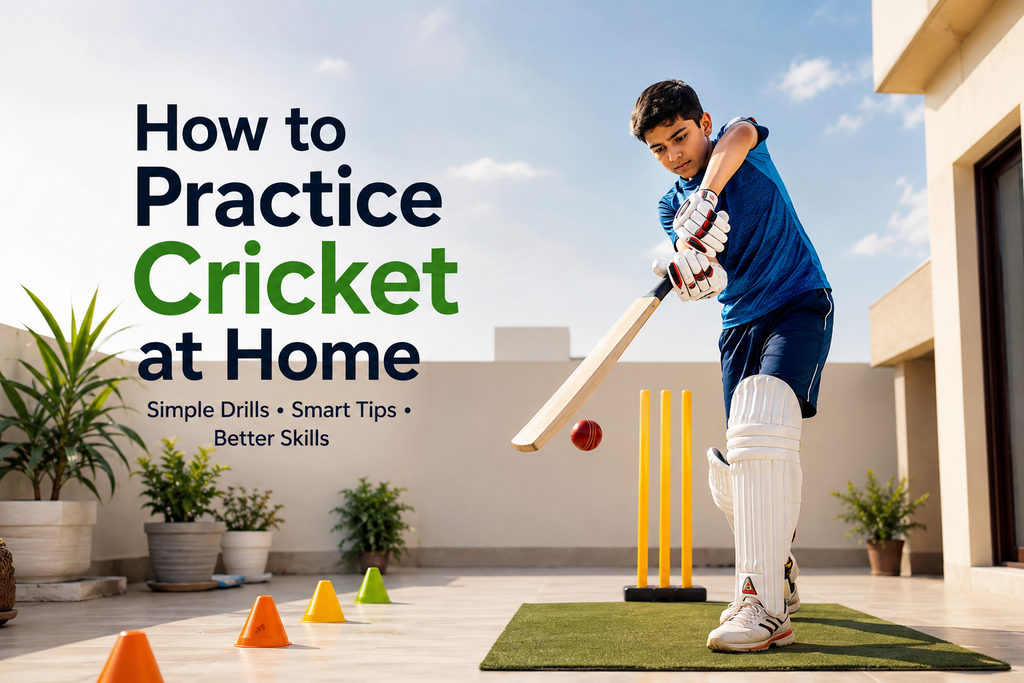
For batting, you can choose a safe target area and try to direct your shots toward it. For bowling, place a marker where you want the ball to land.
You can keep track of how many successful attempts you make.
For example, if you bowl ten tennis balls and hit your target four times, write it down. During your next session, try to improve that number.
This simple approach gives you something specific to work toward.
Watch Your Technique
One useful method I recommend is recording your practice with a phone when possible. Place the phone somewhere safe and record a few batting or bowling movements.
Later, watch the video and look at your stance, balance, head position, footwork, and follow through.
Sometimes a player does not notice a technical problem while performing the movement. Video can make those mistakes easier to identify.
You can also compare your technique with reliable cricket coaching resources and focus on one correction at a time.
Stay Safe While Practicing Cricket at Home
Safety should always come first. Before starting, check the practice area and remove objects that could cause an injury.
Do not swing a cricket bat near people, windows, vehicles, or valuable objects. If you are practicing with a ball, make sure there is enough space and use suitable equipment.
Indoor practice should generally focus on controlled movements and softer equipment. Outdoor areas provide more room for throwing, catching, and batting.
Also remember to take breaks when you feel tired. Poor technique becomes more likely when you are exhausted.
Common Mistakes to Avoid
One common mistake is trying to practice everything in one session. I think it is better to choose two or three skills and give them proper attention.
Another mistake is focusing only on power. Hitting a ball hard does not automatically mean you are improving as a batsman. Timing, balance, footwork, and shot control are equally important.
Some players also practice only when they have a match coming up. Regular practice is much more effective because cricket skills improve through repetition.
Finally, do not ignore fitness and recovery. Your body needs rest so that you can continue practicing consistently.
Final Thoughts
Learning how to practice cricket at home is mainly about using your available space intelligently and practicing with purpose. You do not need expensive equipment or a professional cricket ground to work on many basic skills.
A cricket bat, tennis ball, a few safe targets, and some open space can be enough to begin. You can practice your batting stance, bat swing, footwork, bowling action, catching, fielding, hand eye coordination, and fitness from home.
In my view, consistency is the most important part. Practicing for 20 or 30 minutes several times a week can be more beneficial than practicing for several hours once in a while.
Start with the basics, focus on good technique, record your progress, and gradually make your exercises more challenging. If you stay patient and practice regularly, your home cricket sessions can become an important part of your overall cricket development.