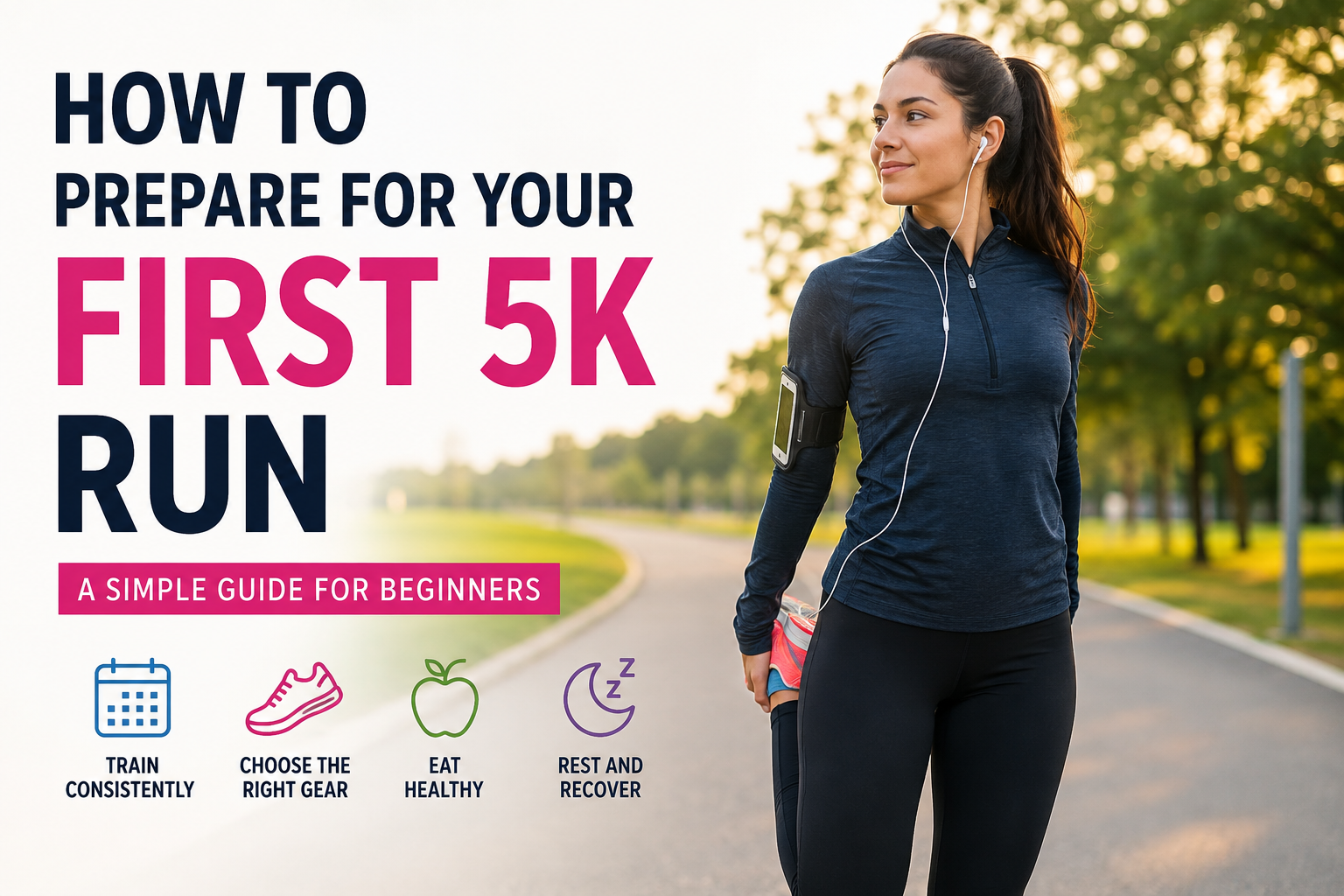
Running your first 5K can feel exciting, challenging, and a little intimidating at the same time. A 5K is 5 kilometers, which is about 3.1 miles, and it is one of the most popular distances for beginners. You do not need to be an experienced runner to complete it. With the right preparation, patience, and a simple training routine, almost anyone can work toward finishing their first 5K.
In my opinion, the biggest mistake beginners make is trying to do too much too quickly. Preparing for a 5K is not about running as fast as possible from the first day. It is about building your fitness gradually and giving your body enough time to adjust.
In this guide, I will explain how to prepare for your first 5K run, including training, running shoes, nutrition, rest, motivation, and race day preparation.
Set a Realistic 5K Goal
Before starting your training, decide what you want to achieve. Your first 5K does not have to be about finishing with a fast time. For many beginners, simply completing the distance is a great goal.
You may want to finish without stopping, complete the race within a specific time, or simply enjoy the experience. I recommend choosing a realistic goal based on your current fitness level.
If you have never run before, do not compare yourself with experienced runners. Everyone starts somewhere, and your first 5K should be about building confidence and enjoying the process.
Give Yourself Enough Training Time
One of the most important parts of preparing for a first 5K is giving yourself enough time. A beginner can often prepare with a structured training plan over several weeks.
A training period of around six to eight weeks can be a useful starting point for many people, although the right amount of time depends on your current fitness level.
If you already walk regularly or exercise several times a week, you may progress more quickly. If you are completely new to exercise, you may need more time.
The goal is not to rush. Consistent training is much more valuable than trying to complete difficult workouts every day.
Start With Walking and Running
If you are new to running, you do not need to run continuously from the beginning. A walk and run approach can make your first few weeks much easier.
For example, you could walk for several minutes to warm up and then alternate between a short period of easy running and a period of walking.
As your fitness improves, slowly increase the amount of time you spend running. Eventually, you may be able to run for longer periods without needing a walking break.
This method helped me understand that running does not have to feel like a competition. The most important thing is to keep moving and gradually improve.
Follow a Simple 5K Training Schedule
A beginner 5K training plan should include running, walking, rest, and recovery. You do not need to train hard every day.
A simple weekly routine could include three running or walk and run sessions. You can place rest days between workouts to give your muscles time to recover.
For example, you might run on Monday, Wednesday, and Saturday while using the other days for rest, walking, stretching, or another easy activity.
Your first weekly sessions should feel comfortable. Over time, you can gradually increase your distance or running time.
Avoid increasing your training dramatically from one week to the next. Small improvements are easier for your body to handle and can help reduce the risk of overuse problems.
Choose the Right Running Shoes
Good running shoes are one of the most important pieces of equipment for a beginner runner.
You do not necessarily need the most expensive shoes. Instead, look for a pair that feels comfortable and provides the support you personally need.
Your running shoes should fit properly and give your toes enough room to move naturally. Try walking and jogging in them before using them for a long training session.
I also recommend avoiding brand new shoes on race day. It is better to train in your race shoes beforehand so you know how they feel.
Comfort should be one of your top priorities when choosing running shoes.
Learn to Run at an Easy Pace
Many beginners start running too fast because they think running should feel difficult. In reality, most of your beginner training should be comfortable.
An easy running pace should allow you to speak a few words without feeling completely out of breath. If you cannot control your breathing or have to stop after a short distance, slow down.
Running slowly may feel strange at first, especially if you are used to fast walking. However, an easy pace allows you to spend more time running and gradually build endurance.
Once you become more comfortable, you can think about improving your speed.
Do Not Ignore Rest Days
Rest is an important part of any 5K training plan. Your body needs time to recover after exercise.
Training every day may seem like a good way to improve quickly, but it can leave you tired and increase the chance of getting injured.
Use rest days to relax, sleep well, and allow your muscles to recover. Easy walking or gentle movement can also be useful if it feels comfortable.
In my experience, rest should not be considered wasted training time. Recovery is part of the training process.
Pay Attention to Nutrition
You do not need a complicated diet to prepare for your first 5K. Focus on eating balanced meals that provide enough energy for your daily activities and workouts.
Include foods such as fruits, vegetables, whole grains, protein sources, and healthy fats. Your body needs a variety of nutrients to support exercise and recovery.
Try not to make major changes to your diet right before race day. Eating familiar foods can help you feel more comfortable during training and on race morning.
If you are training regularly, make sure you are eating enough to support your activity level.
Stay Hydrated
Hydration is another important part of running preparation. Drink water regularly throughout the day instead of waiting until you feel extremely thirsty.
How much fluid you need depends on factors such as temperature, exercise duration, and your individual needs.
For a short 5K, many runners can manage with normal hydration before the race and water when needed. However, hot or humid conditions can increase your fluid needs.
During training, learn what works for you so you are not experimenting on race day.
Add Basic Strength Training
Running is the main focus of your 5K preparation, but basic strength exercises can also support your training.
Simple exercises such as squats, lunges, calf raises, glute bridges, and controlled core exercises can help develop general strength.
You do not need to spend hours in a gym. One or two short strength sessions each week can be enough for a beginner.
Start with exercises you can perform safely and focus on good technique rather than lifting heavy weights.
Warm Up Before Running
A good warm up can help you prepare your body for exercise. Begin with a few minutes of easy walking before gradually moving into your running pace.
You can also perform gentle movement exercises that take your joints through a comfortable range of motion.
Avoid turning your warm up into another workout. The purpose is simply to prepare your body for the activity ahead.
After your run, a few minutes of easy walking can help you gradually bring your activity level down.
Listen to Your Body
One of the most important lessons I would give any beginner runner is to listen to your body.
Feeling tired after a workout is normal. However, sharp, severe, or persistent pain should not be ignored.
If something does not feel right, take a break and consider getting professional advice when necessary. Pushing through pain is not a sign of being stronger.
Your goal is to reach the starting line healthy and confident, not exhausted or injured.
Practice Your 5K Distance
As your training progresses, include at least a few longer sessions where you gradually approach the 5K distance.
You do not have to run the full 5K every week. In fact, doing so may not be necessary for a beginner.
Instead, gradually increase one of your weekly sessions until you become comfortable covering a longer distance. You can use a combination of running and walking if needed.
The purpose of these sessions is to build confidence and endurance.
When you know that your body can handle the distance, race day can feel much less intimidating.
Prepare for Race Day
The night before your first 5K, try to keep things simple. Prepare your running clothes, shoes, race information, and anything else you need.
Get enough sleep and eat a familiar meal. Avoid trying unusual foods or supplements just because someone else recommends them.
On race morning, arrive early enough to find the starting area, use the restroom, and complete your warm up without feeling rushed.
Starting the race calmly can make the entire experience more enjoyable.
Do Not Start Too Fast
This is one of the most useful race day tips I can give a beginner.
When the starting signal goes off, you may see many runners moving quickly. Do not feel pressured to follow them.
Start at a pace that feels comfortable for you. Remember that a 5K is more than the first few minutes.
If you start too quickly, you may become exhausted before reaching the halfway point. A controlled beginning gives you a better chance of finishing strongly.
If necessary, use walking breaks. There is absolutely nothing wrong with using a run and walk strategy during your first 5K.
Stay Positive During the Race
Your first 5K is a personal achievement. There may be moments when your legs feel tired or you start questioning whether you can finish.
Instead of focusing on how much distance remains, concentrate on the next small goal. You can think about reaching the next corner, completing the next kilometer, or simply continuing for another few minutes.
Positive self talk can make a difference. Remind yourself why you started and how much preparation you have already completed.
The finish line will come closer with every step.
Celebrate Your Achievement
When you finish your first 5K, take a moment to appreciate what you have accomplished.
Your finishing time is only one part of the experience. Completing your first race means you committed to a goal, followed a training routine, and challenged yourself.
Whether you ran the entire distance or used walking breaks, you should be proud of finishing.
After the race, cool down, drink water, eat a balanced meal, and give your body time to recover.
Final Thoughts
Preparing for your first 5K run does not require you to become an expert runner. It requires consistency, patience, realistic goals, and enough recovery.
Start slowly, follow a beginner friendly 5K training plan, wear comfortable running shoes, stay hydrated, eat balanced meals, and listen to your body. Most importantly, do not compare your progress with someone else’s.
Your first 5K is an opportunity to discover what you are capable of. With regular training and a positive mindset, you can build your endurance and arrive at the starting line feeling prepared.
For me, the best part of running is not always the distance or the speed. It is the feeling of becoming a little stronger and more confident with every session. Your first 5K can be the beginning of a healthy and enjoyable running journey.