
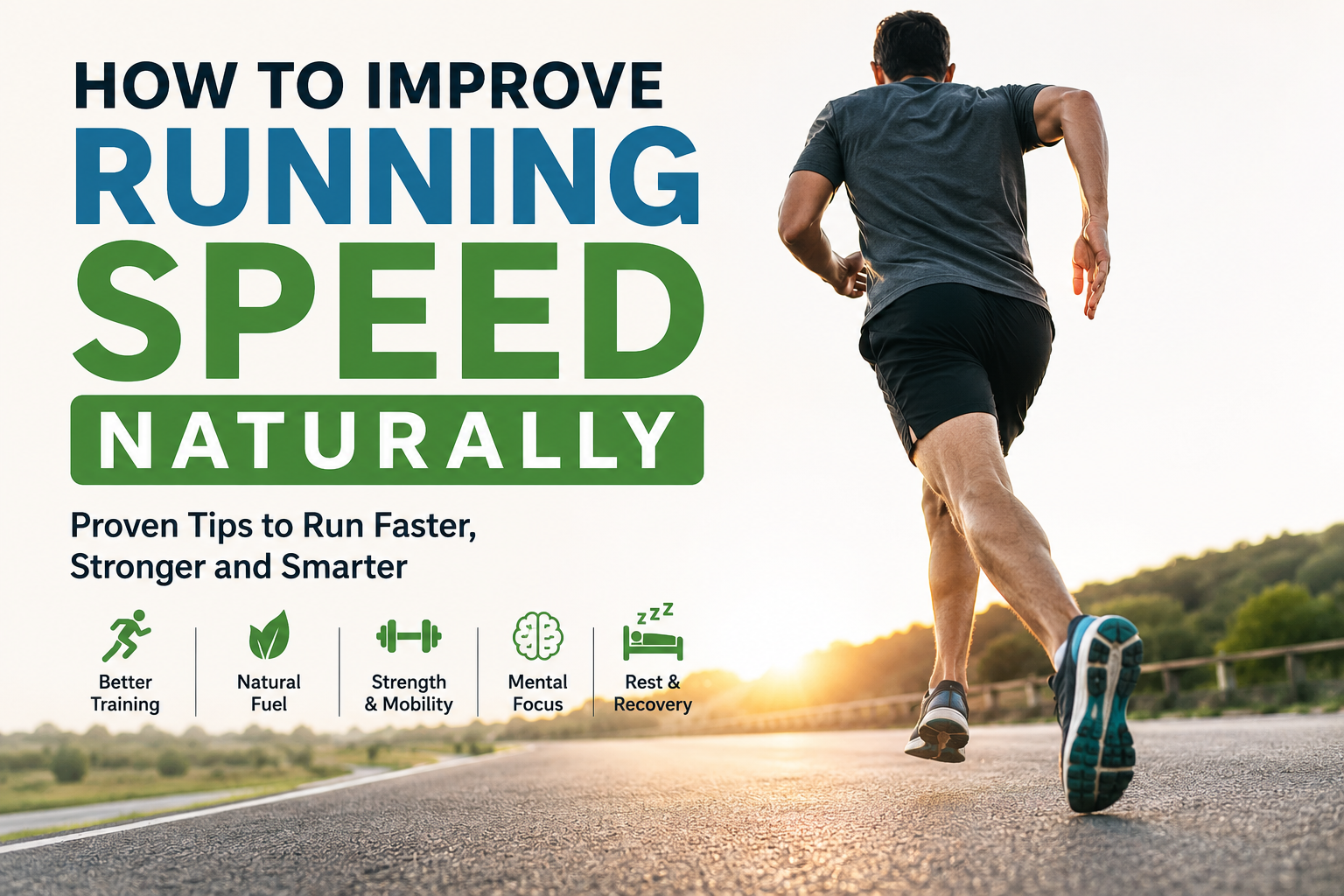
Improving running speed is a goal many runners share, whether they are just starting out or have been running for years. I believe getting faster is not only about pushing yourself harder every time you run. It is about training smart, giving your body enough time to recover, eating well, and building good running habits.
If you want to learn how to improve running speed naturally, you do not necessarily need expensive equipment or complicated training programs. With consistent practice and the right approach, you can gradually become faster and stronger while reducing your risk of injury.
In this article, I will share practical methods that I believe can help anyone improve running speed naturally and build better overall running performance.
Start With a Strong Running Foundation
Before trying to run faster, I think it is important to build a strong foundation. If your body is not used to regular running, suddenly adding speed workouts can put unnecessary stress on your muscles and joints.
Start by running consistently at a comfortable pace. Focus on completing your runs without feeling completely exhausted. Your first goal should be to develop endurance and make running a regular part of your routine.
Once your body becomes comfortable with regular running, you can gradually introduce faster sessions.
Improve Your Running Form
Running form can have a noticeable effect on speed and efficiency. Good running form allows your body to move efficiently instead of wasting energy.
Try to keep your upper body relaxed while running. Your shoulders should not feel tense, and your arms should move naturally. Keep your eyes looking forward and maintain a comfortable posture.
I also recommend avoiding an unnecessarily long stride. Instead of reaching far forward with your feet, try to keep your steps comfortable and controlled.
Small improvements in running form can make running feel easier and may help you maintain a faster pace for longer.
Add Interval Training
One of the most useful methods for improving running speed naturally is interval training. Interval training means alternating between periods of faster running and easier recovery.
For example, after warming up, you could run faster for one minute and then jog or walk for two minutes. Repeat this several times before finishing with an easy cooldown.
As your fitness improves, you can gradually increase the duration of your faster intervals or reduce your recovery time.
The important thing is not to start too aggressively. Speed training should challenge you, but it should not leave you unable to complete the workout.
Include Tempo Runs
Tempo running is another useful method for runners who want to improve their speed. A tempo run involves running at a comfortably hard pace for a sustained period.
The pace should feel challenging but controlled. You should not feel like you are sprinting.
For beginners, even 10 to 15 minutes at a faster controlled pace can be useful. More experienced runners can gradually increase the duration.
I like tempo runs because they teach the body and mind to stay comfortable while running faster than an easy pace.
Do Strength Training
Many people think running faster only requires more running. In my opinion, strength training can also play an important role.
Strong legs, hips, and core muscles can help you maintain better running mechanics. Exercises such as squats, lunges, calf raises, glute bridges, and step ups can support the muscles used during running.
You do not need to spend hours in a gym. Two strength sessions per week can be a useful addition to a running routine.
Start with exercises you can perform with good technique and gradually increase the challenge as you become stronger.
Work on Your Running Cadence
Running cadence refers to the number of steps you take per minute. Cadence can vary from person to person, so I would not recommend trying to copy someone else’s exact number.
Instead, pay attention to how your steps feel when you run faster. A slightly quicker and more natural step rhythm can sometimes help reduce overstriding and improve efficiency.
Do not force your feet to move unnaturally fast. Your cadence should develop gradually as your running technique and fitness improve.
Add Short Strides
Strides are short periods of faster running that can be added near the end of an easy run.
After completing most of your run, find a safe and relatively flat area. Run quickly for about 15 to 30 seconds while staying relaxed. Then walk or jog until you feel recovered.
Repeat this a few times.
Strides are useful because they allow you to practice faster running without turning an easy run into a very demanding workout.
Give Your Body Enough Recovery
One mistake I often see among runners is believing that more training always means faster results. In reality, recovery is an important part of improving running speed.
Your body needs time to repair muscles and adapt to training. If you run hard every day, you may become tired and your performance can suffer.
Make easy days genuinely easy. Take rest days when needed, especially after demanding workouts.
Sleep is also important. Try to maintain a regular sleep schedule and give your body enough time to recover after challenging sessions.
Eat for Better Running Performance
Nutrition can have a major influence on how you feel during training. Your body needs enough energy to support running and recovery.
Include a variety of nutritious foods such as whole grains, fruits, vegetables, eggs, beans, dairy products, nuts, seeds, and other sources of protein.
Carbohydrates are particularly useful for providing energy during running. Protein helps support muscle repair and recovery.
I believe there is no need to follow an extreme diet just to become a faster runner. A balanced eating pattern is usually a better long term approach.
Stay Hydrated
Hydration is another simple habit that should not be ignored. Losing too much fluid during exercise can affect how you feel and perform.
Drink fluids regularly throughout the day and pay attention to your thirst. During longer runs or exercise in hot conditions, you may need to pay additional attention to fluid and electrolyte intake.
Your hydration needs depend on factors such as weather, exercise duration, and how much you sweat.
Increase Training Gradually
When trying to improve running speed naturally, patience is extremely important.
Do not increase your running distance, intensity, and frequency all at once. Make changes gradually so your body has time to adapt.
A good approach is to focus on one improvement at a time. For example, you might add one speed workout to your weekly routine while keeping your other runs easy.
Over time, your body can become stronger and more efficient without unnecessary stress.
Run Hills
Hill running can be a great natural way to build strength and improve running ability.
Running uphill requires more effort from your legs and can help develop strength and power. You do not need to sprint up every hill. Start with short uphill efforts at a controlled pace.
Walk or jog slowly back down to recover.
Hill workouts can be demanding, so use them carefully and give yourself enough recovery afterward.
Track Your Progress
Tracking your running performance can help you understand whether your training is working.
You can record your distance, average pace, running time, and how you felt during each workout.
I recommend looking at your progress over several weeks rather than judging yourself based on one run. Your performance can change because of weather, sleep, stress, nutrition, and many other factors.
A slower run does not necessarily mean that you are getting less fit.
Avoid Comparing Yourself With Other Runners
Running speed is personal. Everyone starts with a different level of fitness, experience, body structure, and training history.
Instead of constantly comparing yourself with other runners, compare your current performance with your own previous results.
Maybe you can run one kilometer more comfortably than you could a month ago. Maybe your usual pace now feels easier. These are meaningful signs of improvement.
I believe consistency is much more valuable than trying to prove how fast you can run every day.
Listen to Your Body
Learning to recognize the difference between normal training discomfort and potential injury is important.
Muscle tiredness after a challenging workout can be normal, but persistent or worsening pain should not simply be ignored.
If something does not feel right, reduce your training and allow your body to recover. If pain continues or is severe, consider speaking with a qualified healthcare professional.
Running faster is never worth sacrificing your long term health.
A Simple Weekly Approach
A balanced running week could include easy running, one speed focused session, one longer easy run, and strength training.
For example, you might have an easy run on Monday, strength training on Tuesday, interval training on Wednesday, recovery or rest on Thursday, an easy run with strides on Friday, a longer easy run on Saturday, and rest on Sunday.
This is only an example. Your schedule should match your current fitness level, experience, and recovery needs.
The main idea is to combine different types of training instead of trying to run hard every day.
Final Thoughts
If you want to know how to improve running speed naturally, I believe the answer is consistency rather than shortcuts. Faster running develops through a combination of endurance, speed training, strength, proper running form, good nutrition, hydration, sleep, and recovery.
You do not need to become faster overnight. In fact, trying to improve too quickly can make your training harder than necessary.
Start with small changes and give yourself time to adapt. Add short intervals, practice good running form, strengthen your legs, include recovery days, and pay attention to how your body feels.
Most importantly, enjoy the process. When you stay consistent and train intelligently, you can gradually improve your running speed while becoming a stronger and more confident runner.