Basketball can look confusing when you first start watching or playing it. There are five players on the court for each team, and each player usually has a different role. Understanding basketball positions makes the game much easier to follow and can also help beginners decide which position suits their playing style.
In my opinion, learning the basic basketball positions is one of the first things every new player should do. You do not need to memorize complicated strategies at the beginning. You simply need to understand what each position does, where players usually move, and how they work together.
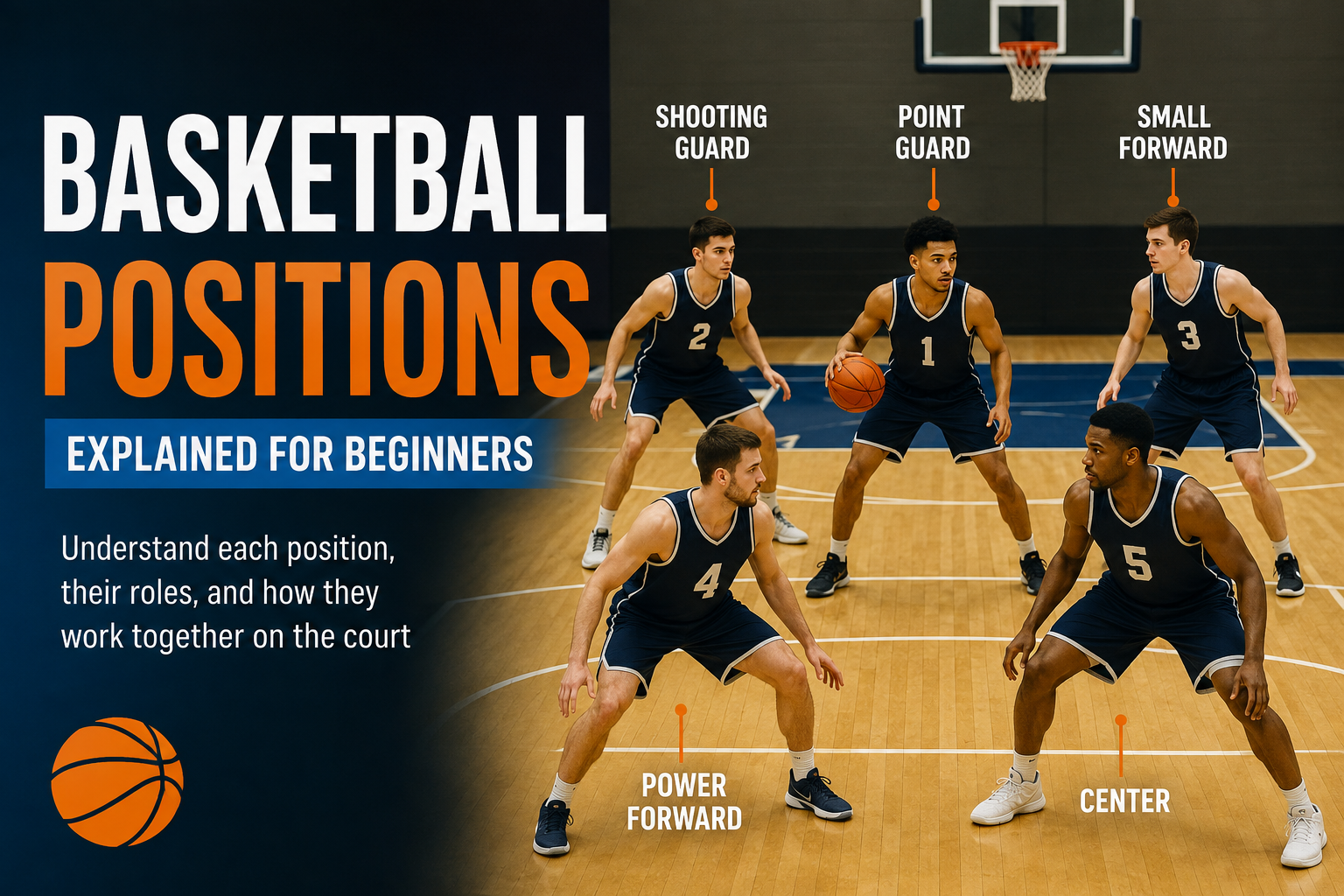
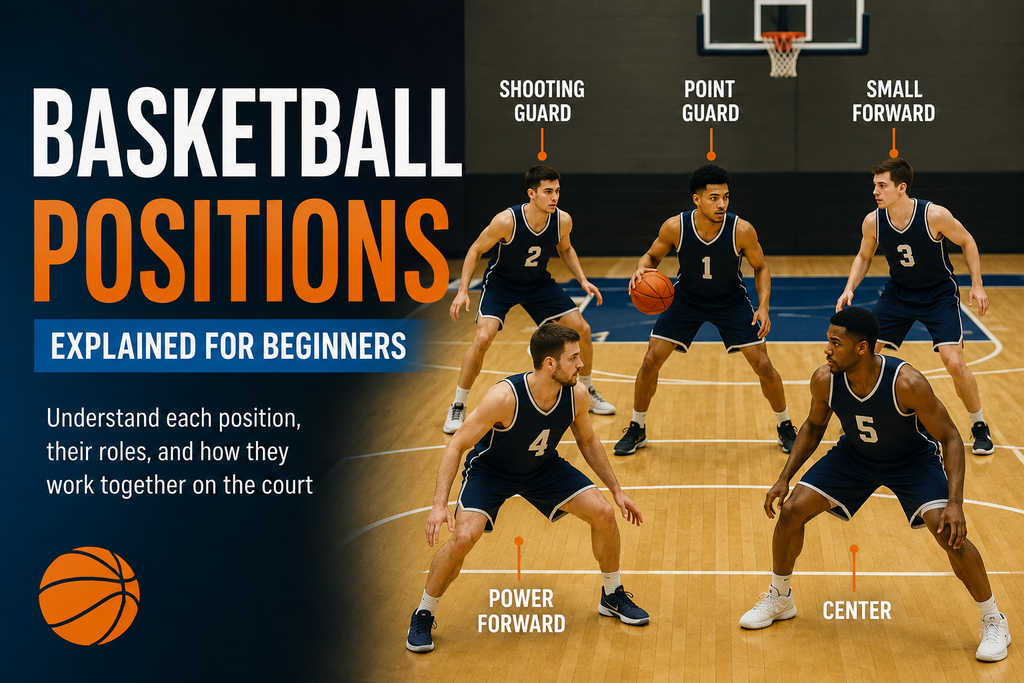
The five traditional basketball positions are point guard, shooting guard, small forward, power forward, and center. Modern basketball has become more flexible, so players often perform multiple roles. However, these five positions are still the best way for beginners to understand the game.
1. Point Guard
The point guard is often considered the main ball handler and playmaker on a basketball team. This position is commonly called position one.
A point guard usually brings the ball up the court and helps organize the offense. They need to see the court well, make quick decisions, and know where their teammates are.
One of the biggest responsibilities of a point guard is passing. A good point guard can create scoring opportunities by finding open teammates at the right time. They may also call plays and control the pace of the game.
Point guards usually need excellent dribbling skills. They should be comfortable handling the basketball under pressure and moving around defenders.
In my view, beginners who enjoy controlling the game and helping teammates may really enjoy this position. You do not have to be the tallest player to become a good point guard. Quick thinking, ball control, passing, and communication are extremely important.
A point guard should also play strong defense. Since they often defend the opponent’s main ball handler, they need good footwork and fast reactions.
2. Shooting Guard
The shooting guard is traditionally known as position two. As the name suggests, shooting is one of the most important skills for this position.
Shooting guards often play around the outside of the court and look for opportunities to score. They may receive passes from the point guard and take jump shots or drive toward the basket.
A good shooting guard needs reliable shooting skills. However, I would not recommend that beginners focus only on shooting. A complete shooting guard should also learn dribbling, passing, movement, and defense.
Shooting guards often move without the ball to create open spaces. They may run around screens, move to the corners, or cut toward the basket.
Defense is another important part of the position. A shooting guard may have to defend fast players who can shoot or drive.
If you enjoy scoring but also like moving around the court, the shooting guard position could be a good choice.
3. Small Forward
The small forward is traditionally position three. This position is one of the most flexible roles in basketball.
A small forward may need to score from outside, attack the basket, rebound, pass, and defend different types of players. Because of this, small forwards are often described as all around players.
In my opinion, this is one of the most interesting basketball positions for beginners who want to develop many different skills.
A small forward can shoot from the perimeter and then attack the basket on the next possession. They may also help with rebounding and defend both guards and forwards.
Physical ability can be helpful for this position, but skill and basketball awareness are equally important. A small forward needs to understand spacing and know when to attack and when to pass.
Modern basketball has made this position even more flexible. Many small forwards can play multiple positions depending on the team’s strategy.
If you like doing a little bit of everything, small forward may suit your style.
4. Power Forward
The power forward is traditionally known as position four. Power forwards have historically played closer to the basket than guards, although the modern game has changed this role considerably.
A power forward may be responsible for rebounding, defending, setting screens, scoring near the basket, and shooting from outside.
Rebounding is especially important. Power forwards often need to compete for missed shots and help their team gain extra possessions.
Strength and physicality can be useful for this position. However, modern power forwards are often expected to have good shooting and ball handling skills too.
A power forward may set a screen for a guard and then move toward the basket. They can also step outside and shoot a three point shot when the defense gives them space.
For beginners, I recommend learning both inside and outside skills if you want to play power forward. Being able to do more than one job can make you much more valuable to your team.
5. Center
The center is traditionally position five and is usually the player who plays closest to the basket.
Centers are often among the tallest players on the team. Their responsibilities commonly include rebounding, defending the basket, blocking shots, setting screens, and scoring near the rim.
A center can have a major influence on defense. When an opponent drives toward the basket, the center may be the final defender protecting the rim.
Rebounding is another major responsibility. Centers need to understand positioning and use their body effectively to gain space around the basket.
However, being a center does not mean you should only stand under the basket. Modern basketball has changed considerably. Many centers can now shoot from outside, pass effectively, and handle the ball.
For beginners, I think learning good footwork is extremely important if you want to play center. You should also practice rebounding technique, passing, finishing, and defensive positioning.
How Basketball Positions Work Together
Understanding individual basketball positions is useful, but basketball is a team sport. The five players must work together.
The point guard may start the offense by bringing the ball forward. The shooting guard can move into open space and prepare to shoot. The small forward may cut toward the basket or attack from the wing.
The power forward can set a screen or help create space, while the center may position near the basket.
These responsibilities can change quickly. A player may move from one area of the court to another depending on what the defense does.
This is why beginners should not become too focused on standing in one fixed location. Good basketball involves constant movement, communication, spacing, and teamwork.
Traditional Positions vs Modern Basketball
The traditional five basketball positions are still useful for learning the game, but modern basketball is much more flexible.
Players today are often expected to perform multiple roles. A tall player may shoot three point shots, while a shorter player may help with rebounding.
You may hear terms such as combo guard, stretch four, point forward, or positionless basketball. These terms describe players who do not fit perfectly into one traditional position.
For beginners, I recommend learning the five basic positions first. Once you understand them, it becomes easier to understand how modern players combine different responsibilities.
How to Choose Your Basketball Position
If you are new to basketball, you may wonder which position you should play.
Height can influence your position, but it should not be the only factor. Your skills, speed, strength, basketball understanding, and personal preferences also matter.
If you are quick and enjoy dribbling and passing, point guard could be a good option.
If you enjoy shooting and scoring, shooting guard may suit you.
If you like having multiple responsibilities, small forward could be a good choice.
If you enjoy rebounding and physical play, power forward may be suitable.
If you are tall and enjoy defending the basket and playing near the rim, center could be a natural option.
That said, I believe beginners should avoid choosing a position too quickly. Try different roles during practice. You may discover that you are better at a position you did not originally expect.
Skills Every Basketball Player Should Learn
Regardless of your position, some basketball skills are important for everyone.
Dribbling helps you control the ball and move around defenders. Passing helps your team create better scoring opportunities. Shooting allows you to contribute points.
Defense is also essential. Every player should learn how to stay in front of an opponent, move their feet, and communicate with teammates.
Rebounding is another skill that should not be ignored. Even guards can contribute by helping their team secure missed shots.
Basketball fitness also matters. Players need speed, balance, coordination, and endurance to perform effectively throughout a game.
Final Thoughts
Learning basketball positions is a simple way to understand how the game works. The five traditional positions are point guard, shooting guard, small forward, power forward, and center.
Each position has different responsibilities, but modern basketball allows players to perform multiple roles. That is why beginners should focus on developing complete basketball skills rather than limiting themselves to one job.
From my point of view, the best way to understand basketball positions is to watch games carefully and then practice different roles yourself. Pay attention to where players move, how they create space, when they pass, and how they defend.
The more you practice, the easier these concepts become. Once you understand basketball positions, you will not only follow games more easily but also become a smarter and more useful player on the court.